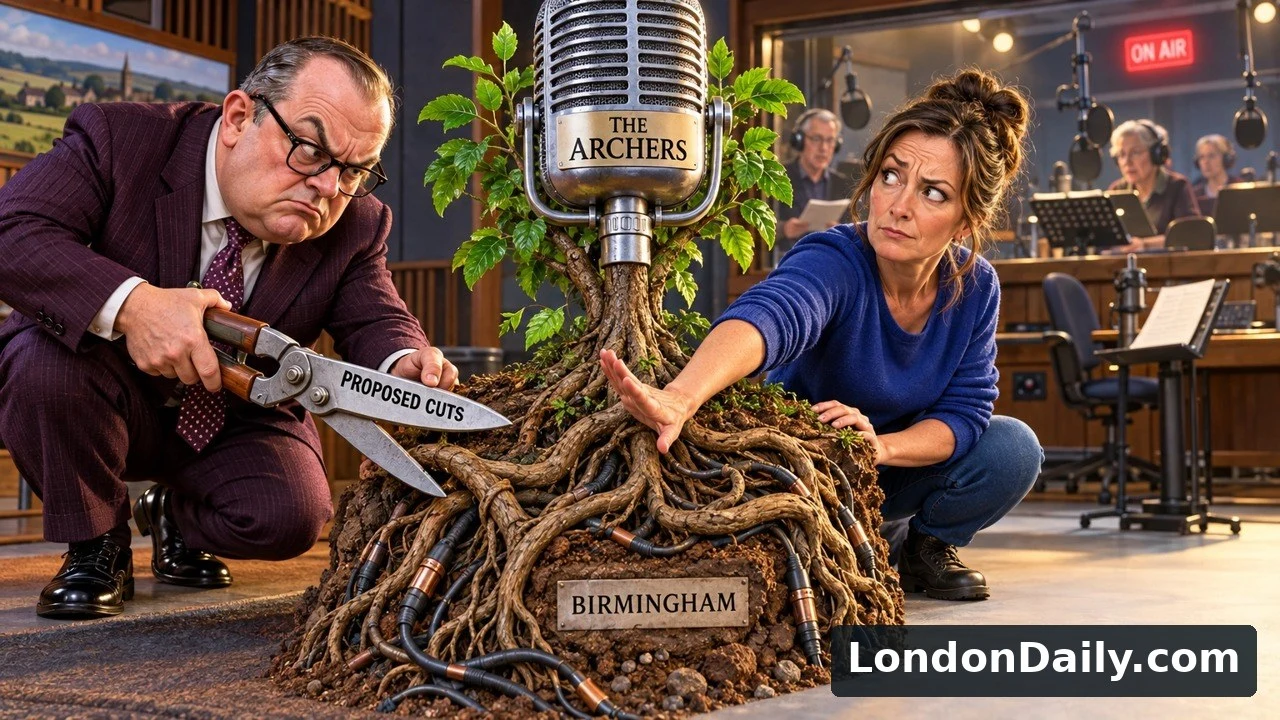
The Archers cast are protesting against proposals to move recording outside Birmingham for the first time, with actor Ben Norris warning that cost-cutting could damage the programme’s quality, threaten colleagues’ jobs and sever an important Midlands cultural connection.
Cast members and the arts and entertainment union Equity are staging protests at stops on the radio soap’s 75th anniversary live tour. They are urging listeners to lobby the BBC and their MPs to keep production in the city.
The BBC says financial pressures have prevented it from building a new recording studio at The Tea Factory in Digbeth, Birmingham. However, it is discussing alternatives in the area with programme makers and local stakeholders, and says nothing will change until 2028. A departure from Birmingham is therefore a possibility, not a settled outcome.
Norris, 34, has played Ben Archer for eight years and represents fellow cast members through Equity. He argues that the dispute concerns regional investment and identity rather than actors’ preferences about their workplace.
“This isn’t a campaign because we actors are feeling hard done by and sad to not have a shiny new studio,” he said. “We feel that it’s really important for the Midlands that the show keeps being made there.”
Broadcast since 1951, The Archers has aired more than 20,000 episodes and is set in the fictional West Midlands village of Ambridge. Norris compared its regional connection with those of EastEnders in the south-east and Coronation Street in the north-west, arguing that the Midlands deserves investment reflecting Birmingham’s size and vibrancy.
He described the proposals as “short-sighted”, warned that their consequences for cast and production staff could be “devastating”, and suggested relocation could ultimately increase costs. He also characterised the pressures facing the BBC as a “wider existential threat” to the organisation.
The corporation’s financial constraints extend well beyond the programme. Savings announced in June across its news, nations and content divisions are intended to contribute £160 million towards a £500 million target for 2028-29. About 2,000 jobs are expected to go across the wider process.
The BBC acknowledged the strength of feeling about the programme’s West Midlands legacy and said it remained committed to a long-term solution. The immediate question is whether an affordable local recording base can replace the abandoned Digbeth studio plan.








Join the conversation