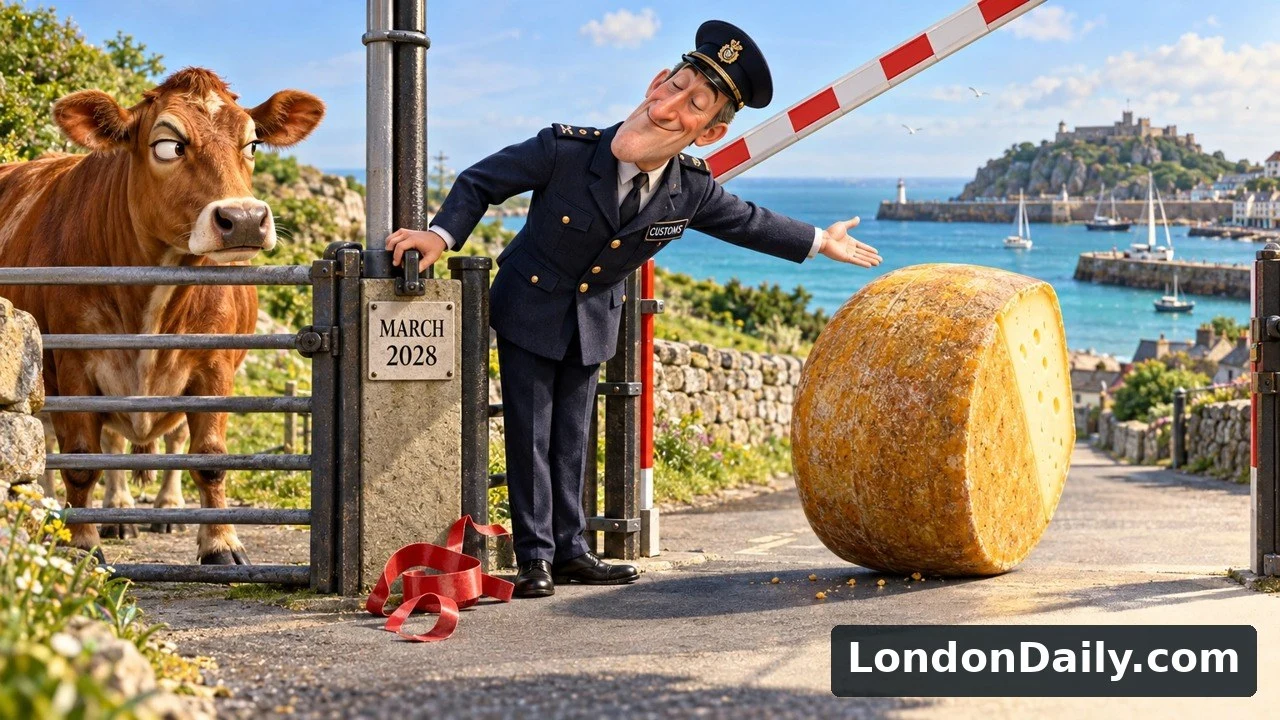
Most checks on food, fish and agricultural goods moving between the UK, EU and Crown Dependencies are set to end from March 2028 under a new agreement welcomed by Jersey’s and Guernsey’s governments.
The package, agreed by the UK and EU on Friday, combines easier trade with new opportunities for young islanders to spend time in Europe. It also preserves a specific protection for the islands’ dairy industries: an exemption secured with the EU means the ban on importing cows will remain.
The distinction matters for local producers. The agreement is intended to reduce barriers to moving agricultural goods without removing that restriction on bringing cows into Jersey and Guernsey.
Islanders aged 18 to 31 would be able to live, work, volunteer and study in the EU for up to two years. Channel Islands students attending UK higher education institutions would also be able to study in Europe. The return of pet passports is intended to make journeys between the islands and the EU easier for people travelling with animals. The wider deal also covers carbon emissions.
Guernsey’s Policy and Resources Committee president, Deputy Lindsay de Sausmarez, described the administrative burden that followed Brexit.
“Although Brexit was a decision for the UK, it inadvertently had a big impact on us here in the bailiwick, too.”
She said managing the additional legislation and local requirements had taken considerable time, effort and resources, while creating extra red tape for businesses and islanders.
Jersey’s External Relations Minister, Senator Ian Gorst, said officials had worked closely with the UK to ensure the island’s interests were understood during the negotiations. He welcomed the outcome and said attention would now turn to preparing Jersey for the changes from 2028.
Implementation remains the next step. De Sausmarez said Guernsey’s States would consider proposals early in the new year and, if approved, the benefits should begin to be felt in 2028.








Join the conversation