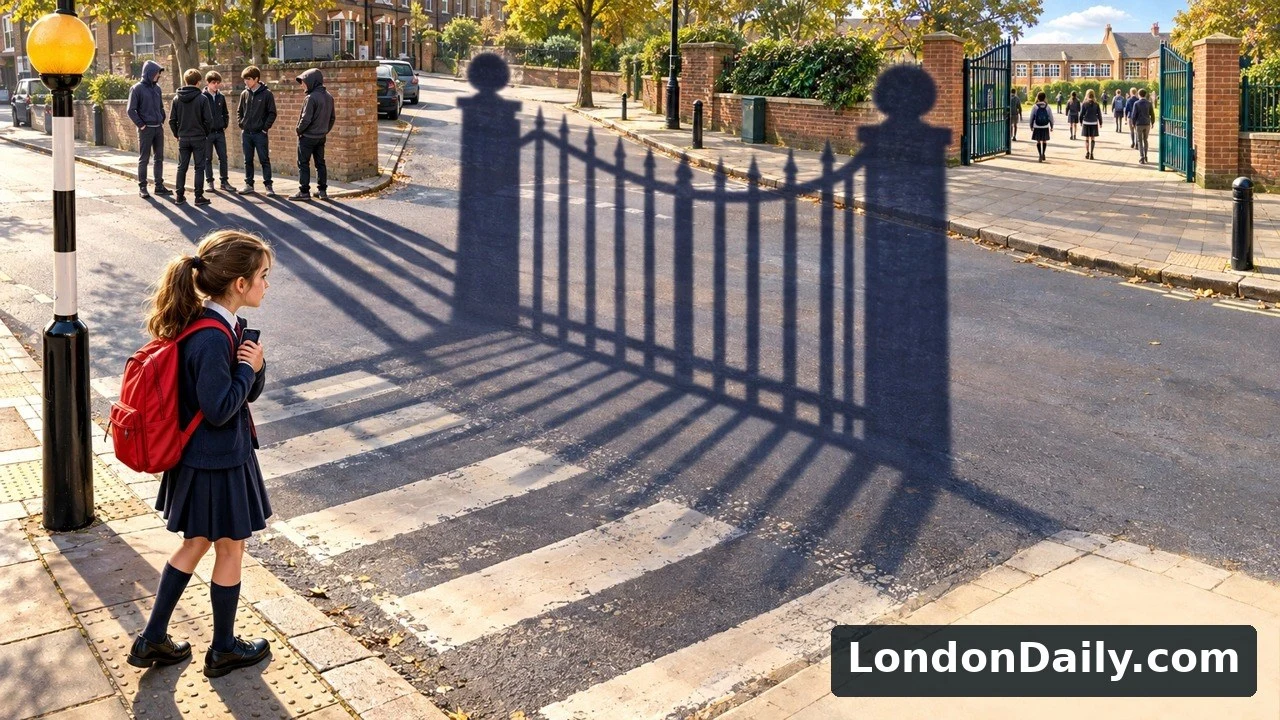
Schoolgirls as young as 11 are afraid to walk to school because of harassment, London Assembly member Marina Ahmad says, as she launches a campaign to map women’s and girls’ experiences in Lambeth and Southwark.
Ahmad, the boroughs’ Labour representative and deputy chair of the Police and Crime Committee, said accounts heard at public meetings helped prompt the initiative alongside her examination of police figures.
At a meeting in Streatham earlier in the month, she said, a mother described how her 11-year-old daughter had become too frightened to walk to school after being harassed on three occasions by a group of boys.
At a separate meeting about Streatham Hill, women described groups of men threatening to rape them as they walked past. Ahmad also recounted accounts of schoolgirls calling parents or carers to collect them because they were frightened to pass a group.
“This is not anti-social behaviour, this is criminal behaviour,” she said.
The campaign’s online tool allows women and girls to describe what happened and where. They can remain anonymous or leave their name and contact details if they wish to discuss their experiences further. Contributors can also suggest measures to City Hall Labour that would help them feel safer locally.
City Hall Labour’s analysis of police data found 2,385 sexual offences and 4,541 harassment offences recorded across Lambeth and Southwark last year. It described those totals as equivalent to one sexual offence every four hours and one harassment offence every two hours.
Its analysis also placed Lambeth second among London boroughs for recorded sexual offences, behind Westminster, and second for recorded rapes, behind Tower Hamlets. These are recorded offence totals; the campaign also seeks to understand experiences that never reach police records and the reasons people do not report them.
The launch coincides with the International Day for the Elimination of Violence Against Women and Girls on 25 November. That begins the 16 Days of Activism Against Gender-Based Violence, ending on Human Rights Day, 10 December.
Ahmad hopes mapping experiences will help identify safety improvements. “It’s up to you if you want to put your name and details, but I’m actually more interested in what happened and where it happened – it is a mapping exercise.”








Join the conversation