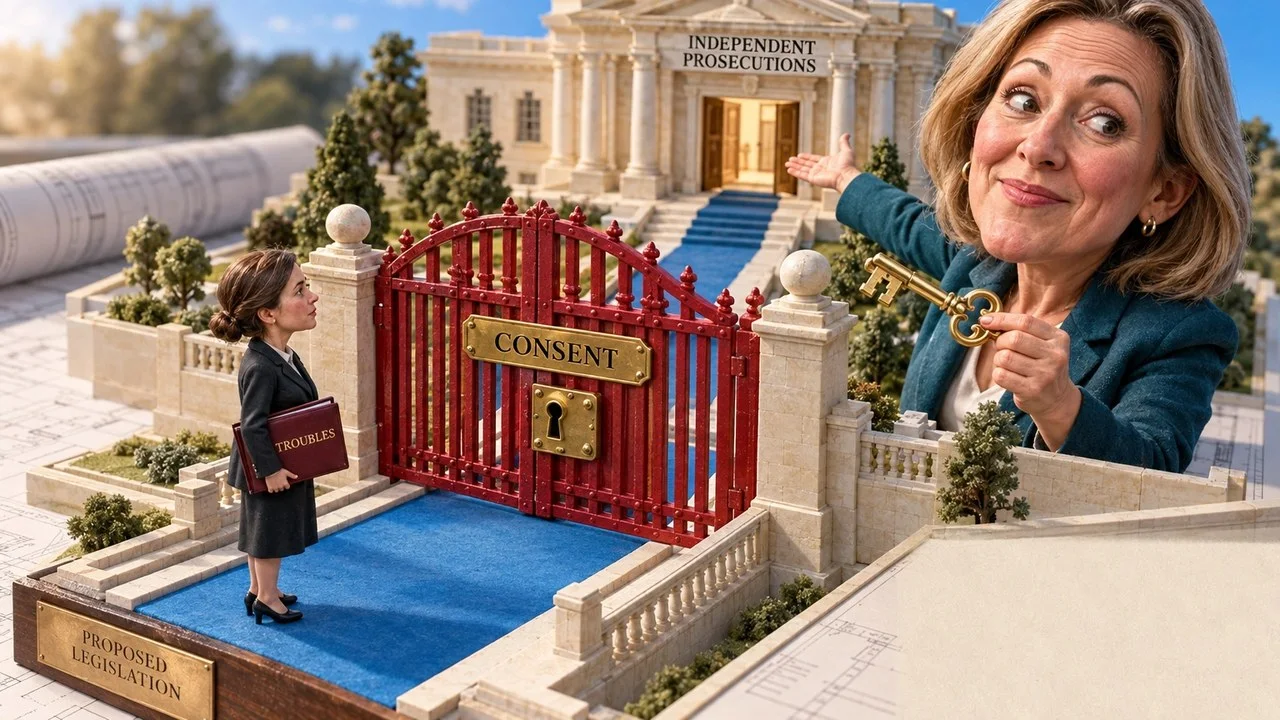
Attorney General Ellie Reeves has defended legislation requiring her consent for serious Troubles-related prosecutions, pledging that decisions would remain independent of government after a Labour MP warned of risks to prosecutors’ independence.
The Northern Ireland Troubles Bill would prevent prosecutions for indictable-only Troubles-related offences without consent from either the Advocate General for Northern Ireland or the Attorney General for England and Wales. Reeves holds both offices. The requirement covers offences such as murder, rape and robbery, which can be tried only in the Crown Court.
Challenging the provision in the Commons, Andy McDonald pointed to the Justice (Northern Ireland) Act 2002. It states that the functions of Northern Ireland’s Director of Public Prosecutions “shall be exercised by him independently of any other person”.
The Middlesbrough and Thornaby East MP described this as one of the “key safeguards ensuring the independence of prosecution decisions free from political interference”. He asked whether requiring Reeves’s consent risked “rolling back” that protection and urged her to reconsider the provision to safeguard the justice system’s independence and public confidence in it.
Reeves said there would be no political interference in decision-making. “All decisions would be made quasi-judicially and independent of Government,” she said.
She defended the requirement by citing precedents: the Attorney General’s consent is already needed for certain prosecutions in England and Wales. These include causing an explosion likely to endanger life or property and most spying offences under the Official Secrets Act 1989.
The distinction at the heart of the exchange is between how the consent power would be exercised and whether it should be required at all. Reeves promises an independent process; McDonald questions whether adding that approval would itself weaken an existing statutory safeguard.
The Bill has cleared the Commons and passed to the Lords for further scrutiny. Its second reading debate is listed for 2 December.








Join the conversation