

Most Googled questions on Brexit and answers
Despite a lengthy process from the first referendum – which has seen three different Prime Ministers in that span – PM Boris Johnson is still ironing out final details before Brexit is truly done.
With so much history, and so much that has changed over time, let’s take a look back at Brexit.
From who started it to what a no deal could mean, we answer your most Googled questions about Brexit.
Is Brexit happening?
Brexit is still happening, and the procedure has long been underway since the start of 2020.
You might recall ‘Get Brexit Done,’ the oft-repeated slogan from Boris Johnson’s campaign rally.
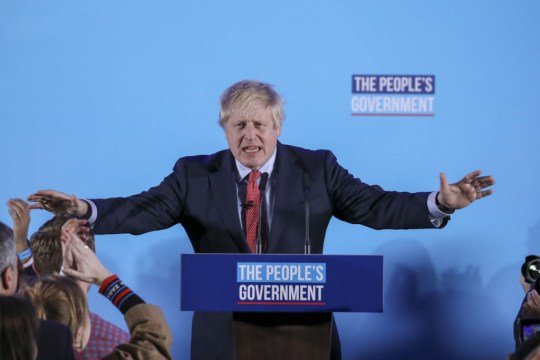
This was his mission statement and his vision for getting elected as Prime Minister, promising to carry out the wish of just over half of the population who voted to leave the EU.
Boris Johnson put forth a withdrawal agreement with the EU for a political exit on January 31, 2020, which led to the withdrawal of all UK MEPs in the European parliament.
However, Brexit wasn’t done by this point.
London and Brussels agreed an 11-month transition period from the end of January 2020, during which time the UK has followed all the same EU rules as before.
What happens after this transition period is what the Prime Minister and the EU are discussing still.
When is Brexit expected to happen?
The end of the agreed transition period will come right after December 31, 2020.
Starting in 2021, the United Kingdom will officially have left the European Union.
Who started Brexit?
Former Prime Minister David Cameron was the man who called for the referendum in 2015, asking people in the UK to vote to leave the EU or vote to remain.
Cameron himself was a huge supporter of Remain, and he resigned in 2016 after the referendum results showed that over half of the country voted to leave.
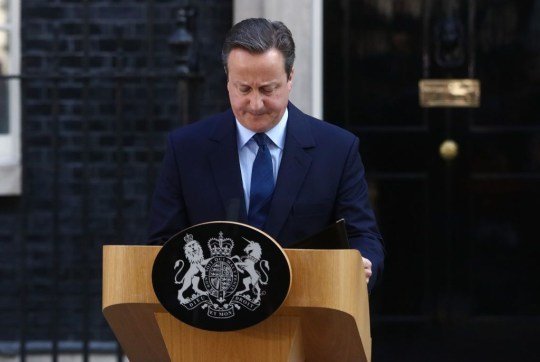
It can be argued that Cameron isn’t responsible for Brexit as his idea for a referendum was a tactic to help alleviate concerns raised by Conservative MPs about the extent to which the EU was involved in UK decision-making.
After Cameron resigned, Theresa May became Prime Minister.
She decided to go ahead with the decision to Leave, refusing calls to hold a second referendum.
Will there be a Brexit deal?
It is up to the UK government and Ursula von der Leyen, President of the European Commission, to hammer out a deal before the end of the transition period.
It was previously thought that a deal must have been struck well before the new year if it is to be ratified in time, however, with talks coming down to the wire, it is not yet known when or if a deal will be struck.
Last-ditch talks were still underway earlier this month, though sources revealed the offer was considered ‘unacceptable’ leaving a no-deal looking more and more likely.
If they cannot agree to a deal, we will have what is being called a ‘no-deal Brexit.’
What does a no-deal Brexit mean?
If we leave without a deal, the ramifications aren’t fully known yet, though the leaks of official documents have given an insight as to what could be on the horizon.
Months back, the leak of Yellowhammer – Whitehall’s codename for no deal preparations – revealed some of the fears and scenarios that could happen under a full no deal.
In the leak, it was revealed that the UK would be hit by three months of chaos and disruption at its ports, a hard Irish border, shortages of fresh food and reduced access to certain medicine.
What is imperative to note, however, was Yellowhammer was planning for a full ‘no deal’ – a worst case scenario.
We have already avoided this with the signing of the Withdrawal Agreement Bill (WAB) earlier this year.
The WAB, in a nutshell, outlines certain things, including money matters, citizens’ rights, border arrangements and dispute resolution.
It also contains a transition period and an outline of the future relationship between the UK and the EU.
There were fears the British government were trying to pass a second bill that breached this, however, after some progress in talks, the government dropped the controversial – and potentially law-breaking – clauses.
What is an Australian style Brexit deal?
When discussing the likelihood of a no deal Brexit, the phrase Australian-style Brexit may have been used.
This essentially just means that the UK would mirror the sort of trade deals that Australia and the EU currently share.
Tariffs (or taxes) are automatically applied to the trade in goods between Australia and the EU, but the two sides have agreements on things like wine exports and product standards, which make trading easier.
What is WTO?
Australia and the EU trade under the basic rules of the WTO – the World Trade Organisation.
If we have no deal, we will follow these too, meaning a range of tariffs introduced on all imports and exports.
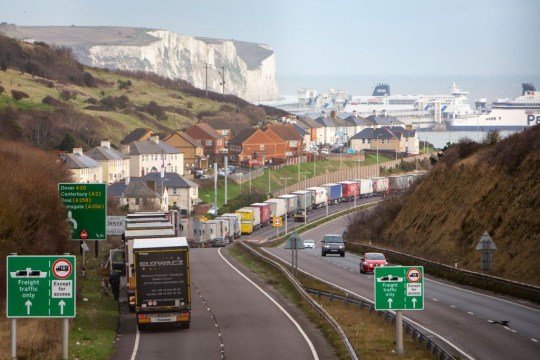
The difference between us and Australia, however, is that we trade significantly more with the EU.
In 2019, the EU accounted for 43% of all UK exports and 51% of imports – new tariffs on this level of trade could prove costly to many businesses and consumers.
In some good news, though, the government has created different deals with other trading partners such as Japan and Canada.
How will Brexit affect house prices?
Initially, in the run up to the political exit and the start of Brexit in January 2020, house prices tumbled.
This changed in the wake of the Conservatives winning the election in December 2019, with a surge in buyer demand which was dubbed the ‘Boris bounce’.
What will happen next remains to be seen – and experts within the sector are equally cautious to predict anything concrete.
Speaking to Metro.co.uk recently, David Price of 10ACIA suggested that a no-deal Brexit wouldn’t necessarily lead to the housing market being negatively impacted, even in the wake of Covid.
‘Given the enormity of such an unprecedented event Covid has presented, the price of the average house in the UK, contrary to prior popular predictions, hasn’t collapsed this year – in fact, its grown significantly – around 7%,’ he said.
‘On the other hand, Brexit has been a known quantity for some time now, and is a far more of a benign, long drawn out process, that the market had already adjusted to.
‘Financial markets are currently pricing in the Bank of England cutting interest rates below zero in the coming months to help support the economy. While negative interest rates probably wouldn’t result in a fall in average mortgage repayments from their current ultra-low levels, it would ensure they didn’t rise.’
Will I need a visa to travel to the EU after Brexit?
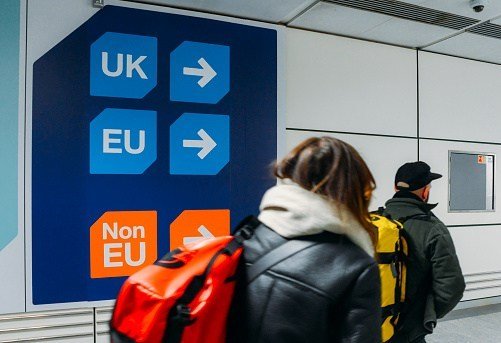
From January 1, 2021, you will not need a visa for short trips to most EU countries, Iceland, Liechtenstein, Norway and Switzerland.
You’ll be able to stay for up to 90 days in any 180-day period.
If you’re driving to an EU country in your own vehicle, you will need a green card and a GB sticker.
If you do travel around the EU after Brexit (and after coronavirus), the guarantee of free mobile phone roaming throughout the EU, Iceland, Liechtenstein and Norway will have come to an end.
You’ll need to check with your phone company to find out about any roaming charges you might get, though a new law means that you’re protected from getting mobile data charges above £45 without you knowing.
What food shortages will there be after Brexit and which foods will be more expensive after Brexit?
One of the biggest implications of Brexit that could be felt by the average Brit is a change in food supply, and food cost.
The Food and Drink Federation’s head of international trade Dominic Goudie described a no-deal outcome as ‘catastrophic’ for UK supply chains, and said it was ‘highly likely’ that any additional financial burdens would have to be passed on to consumers.
Marco Digioia, secretary general of the European Road Haulers Association, told The i: ‘You can expect empty shelves in supermarkets from the first week of 2021. It’s a complete nightmare scenario. It will last for weeks, even months.’
The UK imports roughly 45% of all its food, with 26% coming from the EU.
Experts have suggested the following foods could face a shortage following Brexit:
* Green leafy salads
* Citrus fruits
* Tomatoes
* Cheese
* Pork – the UK has faced a pork production shortage in the past, relying on around 1 million tonnes of carcass imported from the EU.
Foods that could be more expensive include chicken, halloumi and beef.
London School of Economics has estimated that some cheeses such as halloumi and Roquefort could be up to 55% more expensive.
However, Environment secretary George Eustice said to Andrew Marr that, though ‘there will be some impact on prices’… ‘the analysis that has been done by some of the economic modellers is that it is quite modest – less than 2% as a result of tariffs.’
Until the future relationship with the EU is known, it is hard to assess the impact.