London Daily

Focus on the big picture.
Sunday, Jul 19, 2026

More than 1.4 million households face higher fixed rate mortgage bills this year

More than 1.4 million households face higher fixed rate mortgage bills this year

A bill shock is on the way for many more households yet to suffer the impact of the market mayhem that followed the Truss government's mini-budget of last September.

More than 1.4 million fixed rate mortgage customers are facing the prospect of significant hikes to their monthly payments when their deals end this year, according to official figures.

The Office for National Statistics (ONS) said 57% of those coming up for renewal in 2023 were fixed at interest rates below 2%.

It added that deals set to mature next year will be from two-year fixed rate loans made in 2022 and five-year fixed rate deals made in 2019, when "mortgage rates were generally higher than 2%".

Its report on housing costs, using Bank of England data on transactions, showed that 353,000 fixed rate mortgages were due for renewal during the first three months of 2023.

It comes at a time when the cost of a fixed term home loan continues to recover from the peaks seen - way above 6% - last autumn when the market suffered a shock at the hands of the-then government.

Households on tracker and standard variable deals have endured rising bills for over a year - reflecting the surge in the cost of borrowing imposed by the Bank through interest rate rises to curb inflation.

The energy-led spike in the cost of living has added to a variety of bills - squeezing consumer spending power and leaving the country on the brink of recession, according to economists.

Fixed rate mortgage costs, however, were subjected to something of an own goal as they rose sharply in the wake of the Liz Truss government's uncosted mini-budget which spooked financial markets.

The mayhem prompted the cost of fixed term mortgage deals to rise as lenders pulled products temporarily to ensure they reflected higher funding costs.
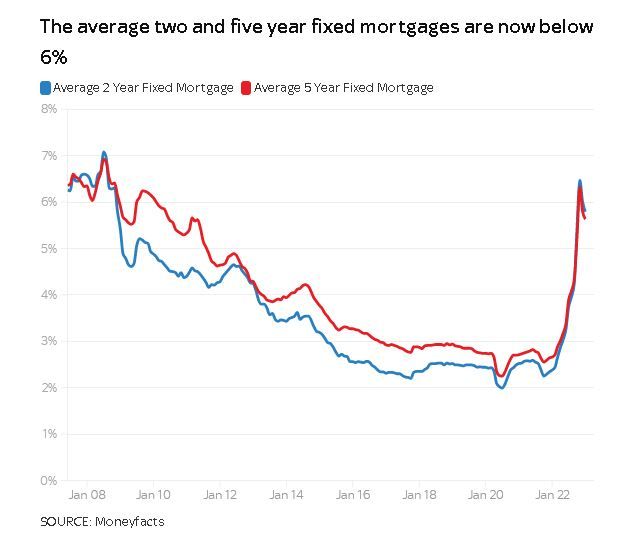

Data from financial information service moneyfacts.co.uk on Monday showed average two-year fixed rates at 5.75% - falling to 5.57% for five-year deals.

Both had stood just above 4% in early September - weeks before the now defunct growth plan was revealed.

The Bank of England warned last month that homeowners were facing an annual increase of £3,000 to mortgage bills - exacerbating the cost of living crisis.

It is widely expected that policymakers in Threadneedle Street will raise Bank rate further - from its current level of 3.5% - in the first half of 2023 in a bid to maintain pressure on inflation.

Analysis from the Resolution Foundation think tank, released separately on Monday, suggested families had only experienced half the lost income they are expected to endure so far because of rising costs.

Myron Jobson, senior personal finance analyst at interactive investor, said: "Housing costs are going through the roof and are set to become even more expensive for many Britons in the coming months.

"Housing is the biggest expense for most households, so even a modest percentage increase in these costs could translate to a significant amount in pounds and pence terms.

"The climb in interest rates over the past year has marked the end of the golden era of cheap mortgages.

"Home loans have hit levels not seen since the financial crisis and the spectre of further hikes in the base rate is set to pile more misery on mortgage holders and wannabe homeowners alike at time when household budgets are reeling from the cost-of-living squeeze on finances."

A spokesperson for loan trade association UK Finance said: "Lenders stand ready to help customers who might be struggling with their mortgage payments, with a range of tailored support available.

"Anyone who is concerned about their finances should contact their lender as soon as possible to discuss the options available to help."

Newsletter

Related Articles

0:00
0:00
Close
Brothers Andrew and Tristan Tate Who Turned "Toxic Masculinity" Into a Brand Arrested in Miami as Britain Seeks Their Extradition
Trump Administration Pressures Banks to Restrict Financial Access for Undocumented Immigrants
Passenger Bound for Germany Refused to Sit Beside a Woman on a Plane — Then Slapped a Flight Attendant
Ukraine’s Leadership Rift Spills Into the Streets as Protesters Target Army Chief
Ukrainian Drone Barrage Kills Eight and Strikes Russian Logistics Network
Key Trends to Watch
Financial Conduct Authority Warns Cloud and Digital Risks Are Becoming a Financial Priority
Jeffrey Donaldson Appeals Sexual Abuse Conviction as Democratic Unionist Party Opens Review
Welsh Health Authorities Launch Emergency Meningitis Vaccination Programme for Students
Scottish Business Activity Falls for Third Month as Companies Face Rising Costs
Bank of England Regulators Demand Better Access to Digital Banking Services
United Kingdom Cuts Bilateral Aid to Several African Countries by Up to Ninety Per Cent
United Kingdom Introduces Tougher Deportation Rules After Rochdale Exploitation Scandal
NHS England Launches Wearable Technology Plan to Reduce Sepsis Deaths
Amazon Web Services Billing Error Sends Trillion-Dollar Invoices to British Companies
Bank of England Takes Direct Regulatory Role Over Major Global Cloud Providers
Extreme Summer Heat Drives Record Fire Risk and Rising Deaths Across Britain
United Kingdom Nationalisation of British Steel Sparks Diplomatic Dispute With China
United Kingdom Economy Shows Weak Growth Ahead of Major Autumn Budget
Andy Burnham Set to Become United Kingdom Prime Minister After Labour Leadership Victory
The Ten World Cup Finals That Defined Football History
Smartphones Are Getting More Expensive, Sales Are Collapsing, and Even Apple Admits: "Prices Will Rise"
The Monaco Bombing Has Become a Test of Ukraine’s Intelligence Accountability
Leadership Change and Strategic Rivalry Redraw the Political Map
Energy Risk, Uneven Growth and the New Geography of Global Capital
The AI Race Enters Its Infrastructure Era
Security and resilience remain long-term national priorities
Britain balances growth ambitions with public finance pressures
Regional devolution becomes a defining theme of the next Labour era
Industrial strategy returns to the centre of British economic policy
Political Instability Remains a Challenge for UK Investment Confidence
Brexit Economic Debate Continues as Public Concerns Over Long-Term Impact Remain
UK Climate Risks Rise as Met Office Warns Extreme Weather Is Becoming More Common
Housing Shortages and Regional Inequality Become Key Priorities Under Incoming Labour Leadership
National Health Service Reform Remains One of Britain’s Biggest Political Challenges
Bank of England Remains at Centre of UK Economic Debate Over Inflation and Growth
UK Economy Shows Recovery Signs but Households and Businesses Remain Under Pressure
Britain Deepens European Defence Cooperation as NATO Allies Seek Stronger Security Capabilities
United Kingdom Expands Sanctions Against Russian Cyber Networks Over Security Threats
UK Industrial Strategy Faces Test After Government Takes Control of British Steel
British Businesses Seek Policy Clarity as Andy Burnham Prepares to Lead Labour Government
Andy Burnham’s Labour Leadership Signals Major Shift Toward Regional Power and Devolution
British Steel Nationalisation Creates New UK-China Tensions Over Control of Strategic Industry
For 36 Years, He Scammed About 300 Luxury Hotels — Until He Was Caught
England's World Cup Exit Expected to Cost Hospitality and Retail £334 Million
Former ICC Prosecutor Aide Speaks Publicly About Allegations Against Karim Khan
Opposition Raises Questions Over June Heatwave Power Grid Pressures
Mastercard Explores Sale of Majority Stake in UK Payments Operator Vocalink
Boeing Forecasts Global Commercial Aircraft Fleet Will Double by 2045
London GP Surgeries Receive £18 Million to Expand Primary Care Capacity
×