London Daily

Focus on the big picture.
Tuesday, Jun 23, 2026

Ministers accused of putting staff at risk by not wearing masks in Commons

Ministers accused of putting staff at risk by not wearing masks in Commons

Boris Johnson and most of his frontbench choose not to cover faces in packed parliamentary chamber

Cabinet ministers have been accused of undermining Covid advice and putting MPs’ and parliamentary staff’s safety at risk by declining to wear masks, as they packed the Commons chamber full to debate Afghanistan’s takeover by the Taliban.

Just two government frontbenchers chose to wear a face covering when parliament was recalled on Wednesday – the Cabinet Office minister, Michael Gove, and the new security minister, Damian Hinds – despite official guidance recommending they are worn in “crowded and enclosed spaces”.

Ministers lifted the mandatory requirement for masks to be worn in most places on 19 July, instead allowing people to make their own decisions about whether and where to use them. However, the Commons Speaker, Lindsay Hoyle, has urged MPs to continue wearing masks in the chamber, although he has admitted he cannot force them to do so.
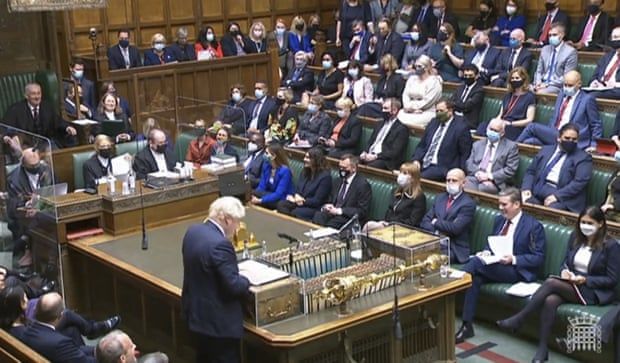
During the debate on the situation in Afghanistan, opposition Labour party MPs sat in parliament nearly all wearing face masks.


When Boris Johnson opened the debate about the collapse of the Afghan government he was without a mask, as were most of the other ministers sitting on the front green bench. The two who were masked were sitting on the end of the row close to Hoyle.

The sight of MPs rubbing shoulders was an unfamiliar sight for many Westminster watchers, as social distancing was only dropped a few days before parliament went into recess last month. There had previously been a capacity limit of 64 people in the chamber – but the first time this was notably exceeded was on Wednesday.

Among swathes of unmasked Conservatives, there were some other notable exceptions among the backbenchers: the former prime minister Theresa May, the head of the health select committee, Jeremy Hunt, and Dr Luke Evans.

All the Labour frontbenchers, including the party leader, Keir Starmer, and his deputy, Angela Rayner, wore masks.

Mike Clancy, the general secretary of the Prospect union, which represents many parliamentary staffers, said it was frustrating so many Conservative MPs “chose to ignore the Speaker’s very clear advice about wearing masks in an enclosed space”.

He added: “Not only does this show huge disrespect to the Speaker, it demonstrates contempt for the safety of their colleagues and the many staff attending the packed chamber who are required to wear masks.

“It is abundantly clear that large numbers of MPs believe that rules simply don’t apply to them, and are comfortable with recklessly undermining public health messaging.

“With the Commons set to resume full-time in just a few weeks, it is time to rethink the light-touch approach to mask wearing in the chamber. It has demonstrably failed, and more rigorous enforcement must be considered.”

Sir Jeremy Farrar, the director of the Wellcome Trust and a member of the government’s Scientific Advisory Group for Emergencies (Sage), tweeted that it was “sad and regrettable when an issue such as wearing of masks becomes a party political issue”.

A House of Commons spokesperson said: “Our priority is to ensure a safe and functioning parliament in line with government regulations.

“Passholders should continue to exercise caution when they are on the estate and we will, of course, monitor the situation from day to day.”


Newsletter

Related Articles

0:00
0:00
Close
UK Heatwave Disrupts Transport, Healthcare and Public Services as Red Weather Alerts Expand Nationwide
Barclays Warns of Growing Cyber Risk Divide Between Large UK Firms and Micro Businesses
European Defence Plans Including Ukraine Integration Prompt UK Strategic Reassessment
UK Equity Markets React as US–Iran Peace Roadmap Eases Oil Price Pressures
United Kingdom Expands Global Clean Energy Partnerships With Brazil, Morocco and Tanzania
Lord David Frost Urges Incoming UK Leadership to Abandon EU Regulatory Reset Strategy
Housing Groups Support Amendment to Strengthen Fire and Gas Safety Access Powers in Social Housing
South London NHS Estates Staff Ballot on Industrial Action Over Pay Structures in Hospital Maintenance Services
United Kingdom Government Invests £60 Million in AI Research Labs at Oxford and University College London
Barclays Cyber Security Report Highlights Rising Threat Exposure Among UK Small Businesses in AI-Driven Attacks
UK Met Office Heatwave Triggers Transport Warnings as Rail Operators Urge Cancellations Amid Infrastructure Strain
South London NHS Estates Workers Ballot for Strike Action Over Pay Disputes Across Major London Hospitals
Barclays Warns of Severe Cyber Security Gap Between Large Corporations and Small Businesses in the United Kingdom
United Kingdom Government Allocates £60 Million for Artificial Intelligence Research Laboratories at Oxford and UCL
National Health Service Approves Teplizumab Treatment to Delay Onset of Type One Diabetes in First European Rollout
Met Office Issues Rare Red Extreme Heat Warning Across London, South East and West Midlands as Transport and Health Systems Face Disruption
Prime Minister Keir Starmer Resigns After Labour Party Revolt Following Economic Stagnation and Local Election Losses
United Kingdom Economy Contracts for Second Consecutive Month as Private Sector Weakens and Job Loss Fears Rise
Taxpayer Support Grows for Higher Digital Levies on Multinational Tech Companies
Bank of England Signals Caution Over Inflation Despite Easing Energy Prices
Lloyds Banking Group Expands Artificial Intelligence Hiring Amid Sector-Wide Automation Shift
Film Producer Corporate Collapse Leaves Creditors Facing Unrecoverable Losses
UK Ten-Year Brexit Anniversary Highlights Ongoing Political and Economic Uncertainty
Nottingham Maternity Scandal Inquiry Reveals Systemic Failings in NHS Care
Met Office Heatwave Prompts Public Health Warnings Across United Kingdom
Concerns Rise Over Fiscal Stability as Political Uncertainty Weighs on UK Borrowing Costs
UK Taxpayers Back Higher Digital Taxes on Global Technology Firms, Survey Shows
Bank of England Holds Interest Rates Steady Amid Persistent Services Inflation
Reform UK and Opposition Leaders Call for General Election Following Starmer’s Departure
Ten Years After Brexit Referendum, UK Faces Ongoing Political Fragmentation and Economic Debate
Nottingham University Hospitals Maternity Inquiry Exposes Severe NHS Failures
Met Office Issues Heat Health Alerts as United Kingdom Faces Record-Breaking Temperatures
Andy Burnham Emerges as Front-Runner for Labour Leadership After Starmer’s Resignation
Keir Starmer Resigns as UK Enters New Phase of Political Leadership Transition
UK Expands Alcohol Ban Enforcement Using Tagging Technology Ahead of World Cup
UK Invests £50 Million in Critical Minerals Supply Chain Security
UK Appoints Special Envoy on Preventing Sexual Violence in Conflict
UK Introduces Fines for Landlords of Unsafe Rental Properties
Reform UK Leads Opinion Polls as Immigration Debate Reshapes UK Politics
Police Investigate Edinburgh Attacks as Potential Hate Crimes
King Charles to Publish Personal Tax and Royal Household Financial Records
Nottingham University Hospitals Maternity Inquiry Report Set for Publication
Heat-Health Alerts Issued Across London and Southern England Amid Rising Temperatures
UK Economy Shows Pressure From Middle East Conflict Despite Modest Growth
Brexit Anniversary Reignites Debate Over UK Economic and Political Direction
UK Parliament Continues Legislative Work Amid Leadership Transition
Financial Markets Hold Steady After UK Leadership Shake-Up
Andy Burnham Enters Labour Leadership Race With Strong Parliamentary Backing
Keir Starmer Resigns as UK Prime Minister After Two Years in Office
Reform UK MP Lee Anderson to Raise Pension Concerns Over British Coal Staff Superannuation Scheme
×