

'Millennial' and 'Generation X' votes at risk if UK government follows France in raising state pension age
France has been paralysed by strikes today as much of the country, as predicted, makes clear its unhappiness at President Emmanuel Macron's push to raise the state pension age from 62 to 64 years of age.
Mr Macron argues that the measure, which would save the French government an initial €17.7bn (£15.5bn) per year, is necessary because otherwise, due to the ageing population, the state pension will become unaffordable.
The French president believes raising the state pension age is preferable to either cutting the state pension or retaining the status quo by either increasing government borrowing or putting up taxes.
 Workers in France are holding a day of strikes and protests
UK state pension age rising to 68 by 2046
Events in France have prompted some to ask whether the pension age may also have to rise in the UK.
The answer is that it already is.
The pension age was set at 65 until November 2018, since when it has gradually risen to the current 66, which it hit in October 2020.
It is due to begin rising again from May 2026, again, on a gradual basis.
By the end of 2028 the state retirement age will be 67.
It is then due to begin gradually rising again from 67 to 68 between 2044 and 2046.
Under the changes, anyone born after 6 April 1978 (in other words, someone who will celebrate their 45th birthday this year) will have to wait until 2046, when they hit 68, to qualify for the state pension.
State pension bill expected to exceed £100bn
It is worth noting how far that latter change is into the future but some fear the Treasury will seek to accelerate the process.
A government review of the state pension age is due to be published by May this year, with the cost of the state pension due to increase in coming years from the current £100bn per year.
Even bringing forward by one year the point at which the pension age rises to 68 would save £10bn.
Ministers have already indicated they would like to accelerate the process so that the change to 68 is brought forward to between 2037 and 2039 rather than between 2044 and 2046.
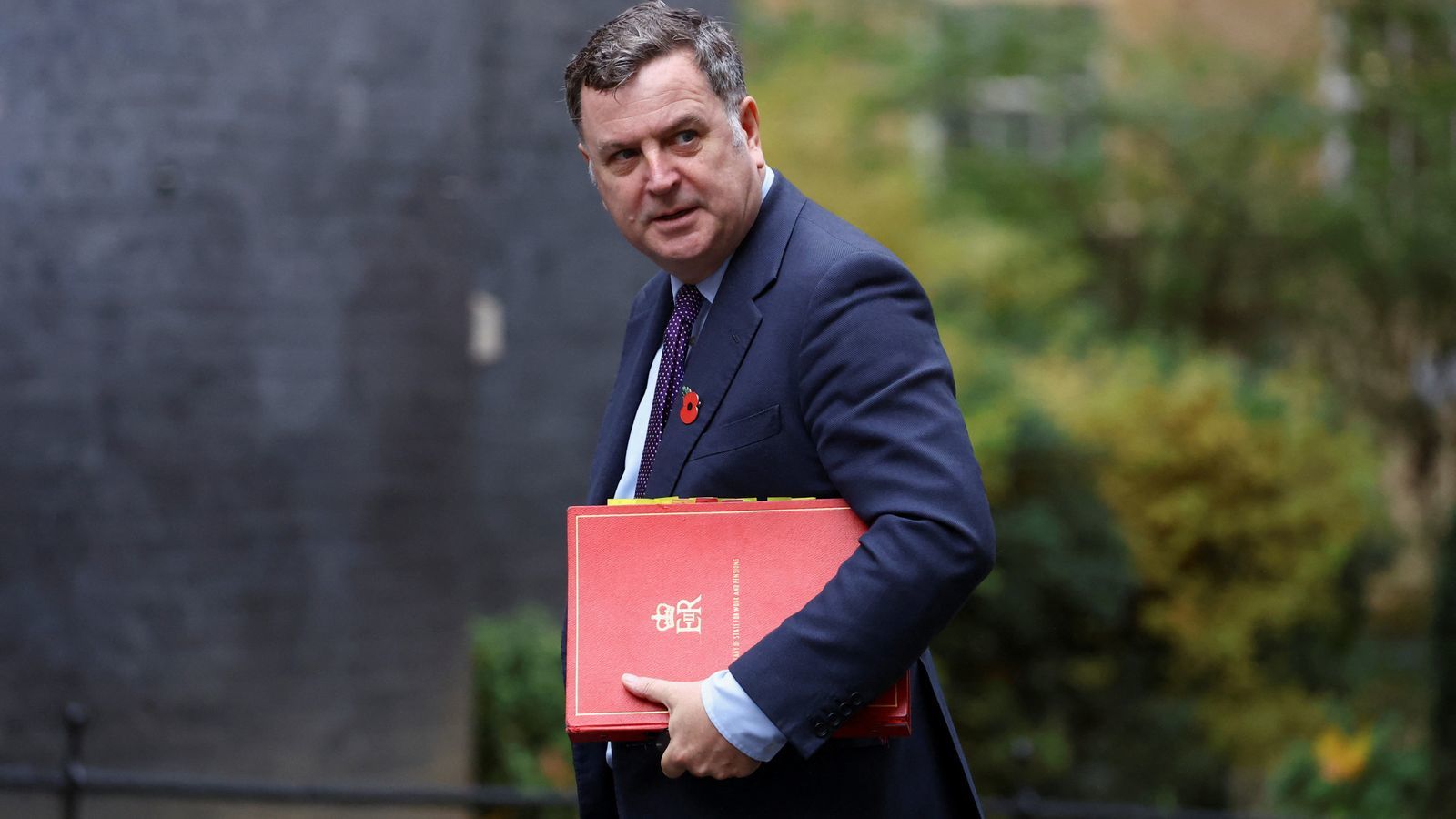 Work and Pensions
Secretary Mel Stride said bringing forward the age at which the state
pension rises to 68 would be fraught with danger
Work and Pensions
Secretary Mel Stride said bringing forward the age at which the state
pension rises to 68 would be fraught with danger'Generation X' and 'Millennial' votes may be at risk
Moving more rapidly than that would be politically risky because it would alienate 'Generation X' voters, those born between 1965 and 1980, who would be the first to be hit.
It would involve, effectively, ordering them either to postpone the date of their retirement and work for longer than they had anticipated or get by on whatever retirement savings they may have accumulated until they qualify for the state pension - but giving them little time to build the extra savings they may need.
More explosive would be how such a move would further anger 'Millennial' voters, those born between 1980 and 1995, many of whom are already disgruntled at their inability to get on the housing ladder and at having been the first generation saddled with university tuition fees.
These are a cohort the Conservatives desperately need to keep onside if they are to avoid defeat not only at the next general election but the one after that in around 2028 or 2029.
So bringing forward the age at which the state pension rises to 68 would be fraught with danger.
Mel Stride, secretary of state for work and pensions, has already warned that to do so would be "pretty hairy".
It is more likely that the government will, instead, look to introduce a timetable to raise the state pension age again to 69 or even 70 sometime in the latter half of this century.
There have also been suggestions that ministers may give some thought to means testing the state pension as happens, for example, in Australia.
This, though, overlooks that the state pension is effectively means tested already.
 French riot police clash with protesters at a demonstration against the French government's pension reform plan
'Baby boomers' already losing out
The generous pensions accumulated by the now-retiring 'Baby Boomer' generation, those born between 1945 and 1965, mean many of them are already seeing their state pension being clawed back in income taxes.
More than half of those currently in receipt of the state pension pay at least 20% of it back in taxes and, in a lot of cases, 40% or even 45%.
Such a measure would also be incredibly unfair on those now in or approaching their final decade in the workplace.
The state pension will have formed a big part of their retirement planning and to deprive them of it at relatively short notice would not give them enough time to accumulate further savings.
It might even have the opposite effect of making them stop saving for retirement, or burn through their existing savings, in order not to miss out on the state pension.
It is why Steve Webb, arguably the best pensions minister this country has had during the last half-century and certainly the most knowledgeable, has described means-testing of state pensions as a "terrible idea".
Accordingly, if it were to be introduced, it would need to be telegraphed many years in advance.
That also applies to any increase in the state pension age - or accelerating the current increase planned.