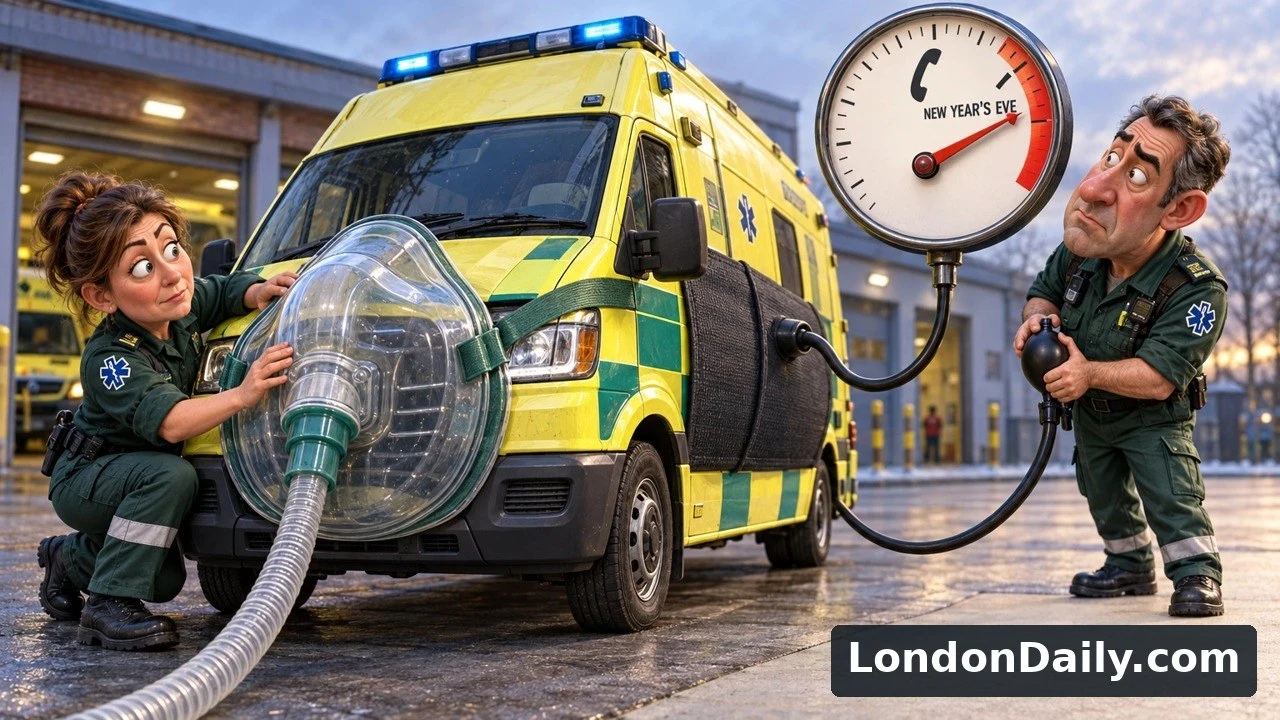
The London Ambulance Service has declared a critical incident after emergency calls exceeded typical New Year’s Eve demand for three consecutive days, with winter illnesses putting increasing pressure on its response to critically ill patients.
Call handlers received 7,326 calls on Monday, 7,366 on Tuesday and 7,369 on Wednesday. The service normally expects around 5,500 on a busy day and said daily demand was roughly 500 calls higher than the previous week.
The pressure involves more than the volume of calls. Life-threatening emergencies involving breathing difficulties have risen by almost 20 per cent so far this November compared with the same period last year. Category 1 calls, the most urgent emergencies, including cardiac arrests, are up 10 per cent year on year.
Chief operating officer Craig Harman linked the surge largely to colder weather and an early wave of respiratory and viral infections, warning there was “no sign of easing in November”.
“The number of calls has remained very high for several days, so we have declared a critical incident to take extra steps to reach patients who need us most urgently,” he said.
A critical incident declaration signals that severe pressure is affecting vital services. It allows measures such as stopping non-essential activity and returning managers to patient-facing roles; it does not mean people should avoid seeking emergency help.
The service is bringing in additional staff and putting more crews on the road at peak times under its winter plan. More clinicians are assessing and treating patients by telephone where an ambulance is not necessary, helping avoid unnecessary attendance at busy emergency departments.
It is also working with hospitals to speed up patient handovers and prevent ambulances queuing outside A&E. The winter plan includes AI tools to support the recording of patient notes. Preparations with partners across London have been under way for months.
Harman urged people to check on vulnerable neighbours and relatives, highlighting the risks cold weather poses to older people, young children and those with existing health conditions. Eligible people are encouraged to take up flu vaccination promptly to help protect vulnerable people.
The public advice remains to call 999 for serious or life-threatening emergencies. Less urgent concerns should go to NHS 111, a GP or a local pharmacy, preserving the emergency response for those who need it most.








Join the conversation