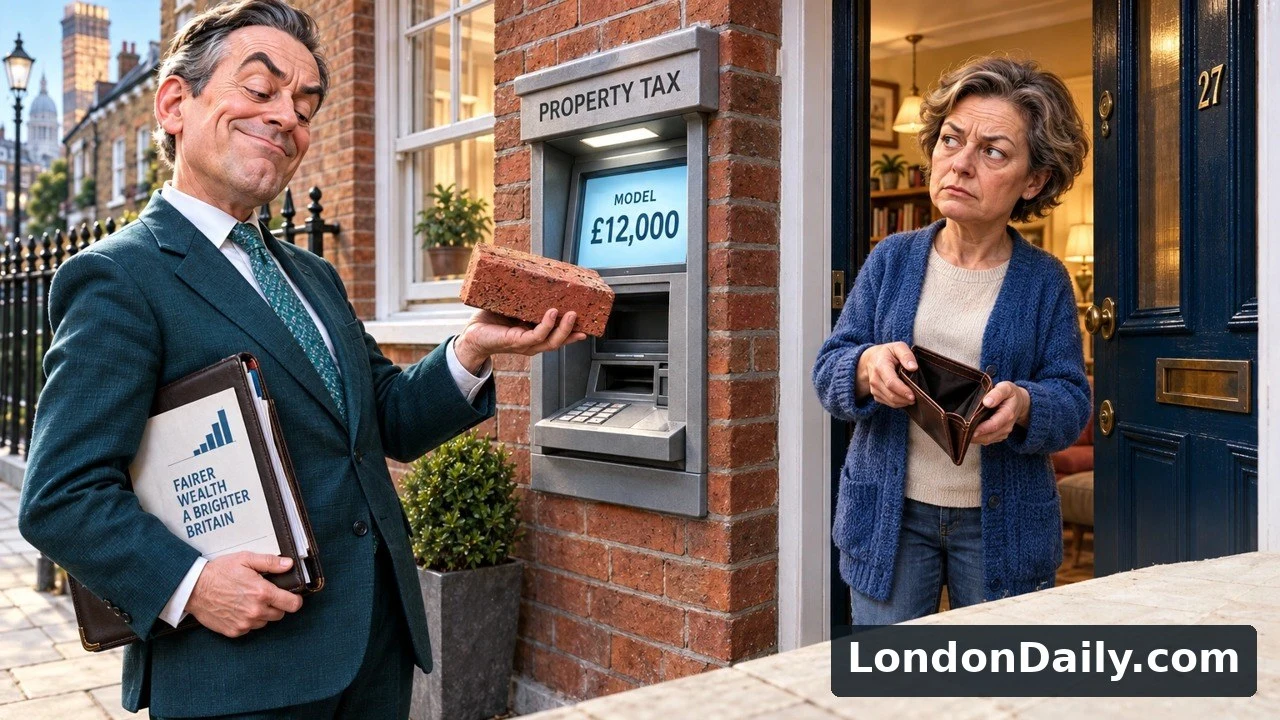
A group of Labour MPs has called for council tax to be replaced by a charge linked to property or land values, prompting warnings that families in London and the South East could face substantially higher annual bills.
During a parliamentary debate, supporters argued that the present system, still based on 1991 property valuations, places an unfair burden on cheaper homes while failing to reflect gains in property wealth elsewhere.
Afzal Khan, the MP for Manchester Rushholme, said his constituents paid hundreds of pounds more each year than residents of London’s wealthiest borough. He argued that outdated taxation compounded cost-of-living pressures.
Richard Burgon, the Leeds East MP, advocated a proportional property tax or land value tax, saying reform could make life more affordable for the vast majority of households. He added: “Crucially, we could do that without increasing the overall tax burden while protecting council funding.”
That distinction matters: keeping the total tax take unchanged would not prevent substantial increases for individual households. Critics warn that owners with large mortgages, or those who bought before prices rose, could struggle to meet charges based on their homes’ present value. Their objection concerns the gap between property wealth and money available to pay an annual bill.
Tax Policy Associates modelling published earlier this year illustrated the potential scale of the shift. It estimated that a band F flat in Islington could attract an annual charge of £12,000, against £2,900 in council tax. A band H property now worth millions in Westminster or Kensington could face upwards of £40,000. The model also projected a 19% fall in the value of average homes in Richmond. These are modelled outcomes, not announced charges or observed price falls.
Reservations also came from within Labour. Cat Eccles, the Stourbridge MP, recalled the riots, protests and departure of a prime minister associated with the poll tax, warning against assuming taxpayers would welcome another radical replacement.
The alternatives are distinct: a land value tax would assess undeveloped land value. Andy Burnham has previously said he is “persuaded” by the argument for it.
Since returning to power, Labour has changed local authority funding and introduced a “mansion tax” on high-value homes, but stopped short of ordering a countrywide council tax revaluation. The debate leaves unresolved how a replacement would reconcile supporters’ demand for fairer taxation with the affordability concerns of households facing increases.








Join the conversation