London Daily

Focus on the big picture.
Tuesday, Jun 23, 2026

Johnson’s Tories are no longer the party of business

Johnson’s Tories are no longer the party of business

Analysis: business leaders find themselves in the crosshairs when it comes to who will pay for the pandemic

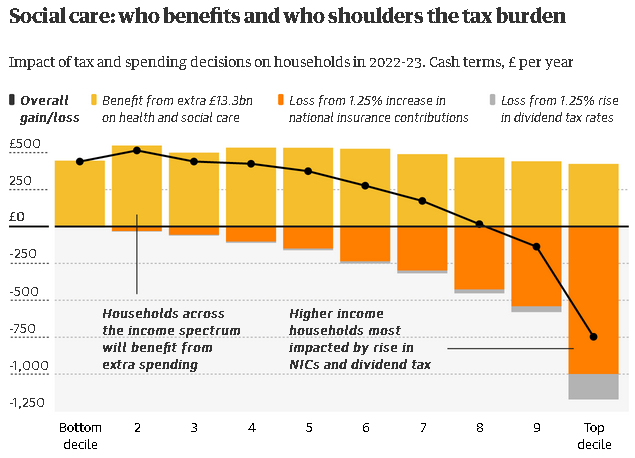
It has been billed in the press as the “death knell for Conservatism”. Culminating in Tuesday’s manifesto-busting national insurance rise, Boris Johnson’s Tories have used the past six months to announce £36bn a year in extra taxes – a bigger rise than in any budget since the mid 1970s.

For many business leaders it is taken as the final straw in a transformation for the low-tax Tories from a natural ally to an uncomfortable bedfellow. From the party of business, to “fuck business”.

The prime minister’s former employer, the Daily Telegraph, did not mince its words. Its front page declared not only the death of the Conservatism, but the trashing of Tory values.

Responding to the increase in national insurance contributions for workers and companies, as well as higher taxation of dividends, business leaders warn that raising their tax burden will hit investment and jobs in Britain’s fragile post-lockdown economy.

Colliding with Brexit and the end of Covid support schemes such as furlough and hospitality VAT cuts, the move comes at a time when the economy is under rising pressure despite the removal of pandemic restrictions. Shortages of workers and materials threaten to further choke off the recovery.

It is however in keeping with other changes imposed by the government, unwished for in the boardrooms of Britain. Brexit, with its friction for cross-border trade, the steadfast refusal to allow more EU workers to fill staff shortages and scrapping the industrial strategy. For libertarian business folk there have been other shocks: the railways nationalised, steel firms bailed out, workers’ pay subsidised and warning shots for US private equity firms looking to buy British companies.

That said, for all the complaints, business could have faced a far more radical reckoning.

Considerably larger sums could have been raised by taxing wealth, suggesting a readiness to sacrifice business on the altar of another key Tory constituency: the asset-rich.

Businesses will still benefit from among the lowest rates of corporation tax in the western world, despite a planned increase in the rate from 19% to 25%. A £25bn super-deduction tax break is offered, capital gains tax has not risen despite the recommendation of the Treasury’s office of tax simplification and the top bracket for income tax remains unchanged.

The Conservatives’ gradual shift away from low-tax libertarian dogma also highlights our transformed economic times. The long decade of austerity imposed by Johnson’s party after the 2008 financial crisis has fuelled public appetite for higher tax in exchange for better public services, leaving him with little choice but to respond, or face electoral punishment. The pandemic upended economic orthodoxy and is serving to turbocharge the demand for change.

Johnson is hardly alone among western leaders in soaking business to pay for the recovery. Joe Biden is pushing to raise more from companies to help fund a $3.5tn (£2.5tn) Covid recovery plan in the US, while 130 countries worldwide, including Britain and the US, plan to impose a global minimum corporation tax rate.

After the pandemic it is clear that taxes will rise. The only question is where the burden will fall. Unlike decades past, under Johnson business is in the Conservatives’ crosshairs.


Newsletter

Related Articles

0:00
0:00
Close
UK Heatwave Disrupts Transport, Healthcare and Public Services as Red Weather Alerts Expand Nationwide
Barclays Warns of Growing Cyber Risk Divide Between Large UK Firms and Micro Businesses
European Defence Plans Including Ukraine Integration Prompt UK Strategic Reassessment
UK Equity Markets React as US–Iran Peace Roadmap Eases Oil Price Pressures
United Kingdom Expands Global Clean Energy Partnerships With Brazil, Morocco and Tanzania
Lord David Frost Urges Incoming UK Leadership to Abandon EU Regulatory Reset Strategy
Housing Groups Support Amendment to Strengthen Fire and Gas Safety Access Powers in Social Housing
South London NHS Estates Staff Ballot on Industrial Action Over Pay Structures in Hospital Maintenance Services
United Kingdom Government Invests £60 Million in AI Research Labs at Oxford and University College London
Barclays Cyber Security Report Highlights Rising Threat Exposure Among UK Small Businesses in AI-Driven Attacks
UK Met Office Heatwave Triggers Transport Warnings as Rail Operators Urge Cancellations Amid Infrastructure Strain
South London NHS Estates Workers Ballot for Strike Action Over Pay Disputes Across Major London Hospitals
Barclays Warns of Severe Cyber Security Gap Between Large Corporations and Small Businesses in the United Kingdom
United Kingdom Government Allocates £60 Million for Artificial Intelligence Research Laboratories at Oxford and UCL
National Health Service Approves Teplizumab Treatment to Delay Onset of Type One Diabetes in First European Rollout
Met Office Issues Rare Red Extreme Heat Warning Across London, South East and West Midlands as Transport and Health Systems Face Disruption
Prime Minister Keir Starmer Resigns After Labour Party Revolt Following Economic Stagnation and Local Election Losses
United Kingdom Economy Contracts for Second Consecutive Month as Private Sector Weakens and Job Loss Fears Rise
Taxpayer Support Grows for Higher Digital Levies on Multinational Tech Companies
Bank of England Signals Caution Over Inflation Despite Easing Energy Prices
Lloyds Banking Group Expands Artificial Intelligence Hiring Amid Sector-Wide Automation Shift
Film Producer Corporate Collapse Leaves Creditors Facing Unrecoverable Losses
UK Ten-Year Brexit Anniversary Highlights Ongoing Political and Economic Uncertainty
Nottingham Maternity Scandal Inquiry Reveals Systemic Failings in NHS Care
Met Office Heatwave Prompts Public Health Warnings Across United Kingdom
Concerns Rise Over Fiscal Stability as Political Uncertainty Weighs on UK Borrowing Costs
UK Taxpayers Back Higher Digital Taxes on Global Technology Firms, Survey Shows
Bank of England Holds Interest Rates Steady Amid Persistent Services Inflation
Reform UK and Opposition Leaders Call for General Election Following Starmer’s Departure
Ten Years After Brexit Referendum, UK Faces Ongoing Political Fragmentation and Economic Debate
Nottingham University Hospitals Maternity Inquiry Exposes Severe NHS Failures
Met Office Issues Heat Health Alerts as United Kingdom Faces Record-Breaking Temperatures
Andy Burnham Emerges as Front-Runner for Labour Leadership After Starmer’s Resignation
Keir Starmer Resigns as UK Enters New Phase of Political Leadership Transition
UK Expands Alcohol Ban Enforcement Using Tagging Technology Ahead of World Cup
UK Invests £50 Million in Critical Minerals Supply Chain Security
UK Appoints Special Envoy on Preventing Sexual Violence in Conflict
UK Introduces Fines for Landlords of Unsafe Rental Properties
Reform UK Leads Opinion Polls as Immigration Debate Reshapes UK Politics
Police Investigate Edinburgh Attacks as Potential Hate Crimes
King Charles to Publish Personal Tax and Royal Household Financial Records
Nottingham University Hospitals Maternity Inquiry Report Set for Publication
Heat-Health Alerts Issued Across London and Southern England Amid Rising Temperatures
UK Economy Shows Pressure From Middle East Conflict Despite Modest Growth
Brexit Anniversary Reignites Debate Over UK Economic and Political Direction
UK Parliament Continues Legislative Work Amid Leadership Transition
Financial Markets Hold Steady After UK Leadership Shake-Up
Andy Burnham Enters Labour Leadership Race With Strong Parliamentary Backing
Keir Starmer Resigns as UK Prime Minister After Two Years in Office
Reform UK MP Lee Anderson to Raise Pension Concerns Over British Coal Staff Superannuation Scheme
×