

Inside Boris Johnson's post-Brexit bubble, where he's king of his party but cut off from reality
Drivers have been lining up at gas stations hoping to fill their cars, something made difficult by widespread fuel shortages. There are fears that that the cost of heating is about to surge, that more people will financially struggle to feed themselves, and that labor shortages will threaten food supplies at Christmas.
And on the island of Ireland, there is legitimate concern that the British government is about to suspend part of the Brexit deal that prevents tension between the north and south.
The fuel crisis was caused by a lack of truck drivers, a situation partially due to the Brexit that Johnson campaigned for. And there is plenty of evidence that the Prime Minister could have taken decisions months ago that would have avoided many of the wider problems.
It stands to reason that the buck stops with the UK leader, and he should be under enormous pressure from his own supporters to fix things and keep the public happy.
However, Johnson has proven time and again that, for him, the rules of conventional politics simply do not apply.
His party faithful have gathered in the city of Manchester this week for the first time since Johnson won a landslide election, "got Brexit done" and ended Covid-19 restrictions in the United Kingdom. The mood here is celebratory.
Celebratory mood
Whatever is happening to citizens out there in the real world, the giddy bubble of the Conservative Party conference isn't just ignoring these myriad crises because they are inconvenient. The truth is that neither Johnson nor his party are under any real political pressure or suffering any consequences -- despite being responsible for many of these issues.
Rather than reflect on the pandemic, considering ways to mitigate the impact Brexit is having on the economy or worrying about the opposition Labour party capitalizing on Johnson's blunders, Conservative party members appear to be making up for two years of being unable to celebrate Johnson's success.
And it really does feel as though it is Johnson's success they are enjoying. Normally, conferences such as these focus on a series of talking points spread across government departments, showcasing the breadth of talent in the ministerial team.
But this conference has really been about one thing: Johnson's at times ambiguous dream of "leveling up" the UK, which is about bringing poorer communities in line with wealthier areas in terms of quality of life, job opportunities and more.
The logic behind this is straightforward: if Johnson can make life better in areas that don't have the same opportunities as some cities, most notably London, the resentment in those run-down areas toward the elite will be reduced, Johnson will be hailed a nation-unifying hero and he will tighten his grip on the UK's electorate.
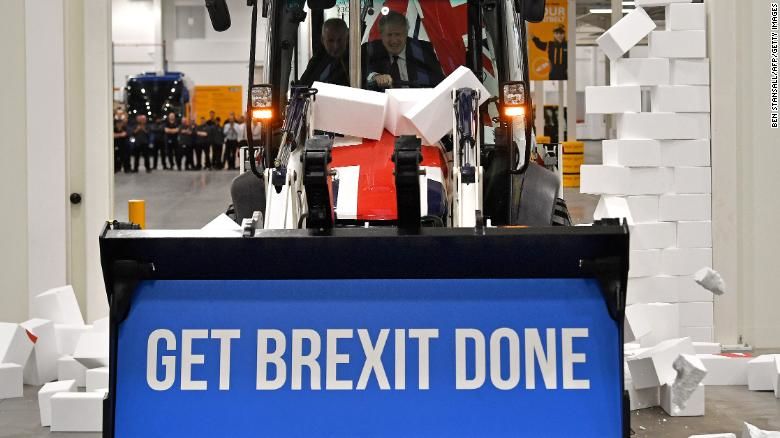 Boris Johnson on the campaign trail in 2019, when he pledged to "get Brexit done."
There are questions about how the PM plans to fund his ambitions. Yes, some members of his own cabinet have been outspoken about the government's idea to raise taxes in order to pay for things like social care. Others in the party, mostly traditional fiscal conservatives, are uncomfortable with the amount of state intervention and funding Johnson has seemed fine with during the pandemic.
However, when these grievances are weighed against the fact that Johnson delivered the Conservative party its largest majority since the 1990s, it turns out that power at any cost apparently tastes better than losing with honor.
One government minister told CNN on Monday night that "fuel problems, food shortages, arguments over tax, all this stuff is definitely happening. But riding on his wave of success is ultimately just more fun."
Poor opposition
CNN asked multiple government officials, including cabinet ministers, why the very real problems facing the country were not being discussed at all. Their replies all pointed to the fact that -- as they see it -- if an election were held tomorrow, Johnson would win comfortably.
"The party, the members, we are all unified around a personality who keeps winning on his own terms. It's absolutely intoxicating to be part of," said one government official.
The reasons for Johnson's success are most likely down to poor opposition on numerous fronts.
Within his own party, he is an unrivaled king for the reasons outlined above. It's very rare for any party leader to face as little public dissent as Johnson does. Even ministers who were sacked in the most recent reshuffle are full of praise for their leader.
Outside the gated conference in Manchester, the official opposition Labour party has also failed to make any real capital out of the recent crises plaguing the country.
Even at their own party conference last week, Labour members were more focused on internal party politics than attacking an incumbent government that has been forced to call in the army to deliver fuel.
Andy Burnham, the Labour mayor of Manchester, even offered to work with Johnson on his "leveling up" agenda, acknowledging that the country has suffered from far too much division following Brexit and the pandemic.
The truth is, there's probably very little to be gained from attacking the Prime Minister anyway.
Outside the gates in Manchester, even the numbers of anti-Conservative protestors are smaller -- and much less vocal -- than at other conferences in recent years, when British politics was deadlocked by Brexit.
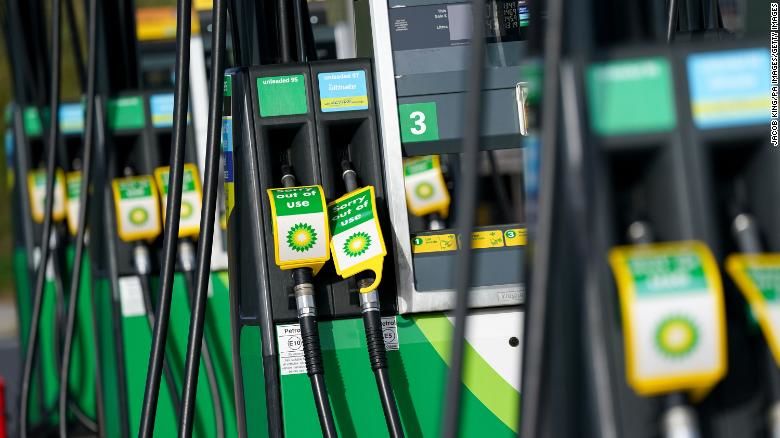 Out of use fuel pumps at a BP petrol station in Birmingham, England, on September 28, 2021.
On Monday night, the EU Commission held a reception in the conference center. Officials who spoke to CNN commented -- with some surprise -- on how little Brexit was being discussed. "They only seem to care about this leveling up thing," said one. "Whether it's a good or bad thing, they all seem to be on the same page and behind Boris."
Earlier on Monday, Johnson's bulldog-ish Brexit negotiator David Frost, had talked of unilaterally suspending the Northern Ireland Protocol in a matter of weeks.
The protocol, a key point of contention throughout the Brexit talks, was negotiated and signed with the EU by Johnson himself; it aims to eliminate the need for border controls between Northern Ireland and the Republic of Ireland. Suspending it could have wide-ranging and damaging consequences.
Somewhat surprisingly, Frost was seen chatting away with European officials like old friends at the same EU Commission reception.
Before the conference began, some Conservative MPs told CNN that the party needed to answer one question: Is the man who used his personality-led brand of politics to ram Brexit through, after years of deadlock, the right man to navigate the UK through years of turmoil and avoidable crises.
If the past few days in Manchester are anything to go by, the answer is an unequivocal yes.
Whatever is going on in the real world, Johnson retains a poll lead big enough to win an election. He holds a parliamentary majority that means he can get virtually any policy through the House of Commons. There is no one in the UK, in any political party or opposition group, who looks even close to weakening his grip on British politics any time soon.
The Prime Minister's sister once said that when he was a young man, Johnson wanted to be "world king." He might not be that, but he's currently the de facto king of British politics. And he has the means at his disposal to hold tight to that power for as long as he chooses.