

How tiny Jersey has played an outsized role in English history
For an island of just 45-square-miles that is mere spitting distance from the shores of mainland France, Jersey has often played an outsized role in British history.
During the English Civil War, it was Jersey that offered sanctuary on two occasions to King Charles II after the execution of his father, Charles I, by Oliver Cromwell’s parliamentarians. In 1649, Charles II was proclaimed King of England in St Helier’s Royal Square.
Charles II’s son, James, later granted the island’s governor, George De Carteret, a vast tract of land in North America which, named for the island, would become the state of New Jersey.
Jersey’s neighbouring island and rival, Guernsey, supported the parliamentarians during the English Civil War and, as such, has arguably remained in the shadow of its royalist neighbour ever since.
Jersey residents often hark even further back for the island’s links with England. The island, a mere 14 miles from France, became part of England after the Norman Conquest in 1066.
After King John lost his family’s vast French empire in 1204, Jersey was given the option of remaining part of England or joining France with the rest of Normandy. Jersey chose England and in return, was given the power to raise its own taxes independent of the crown.
Tax haven
In doing so, John - one of England’s most-maligned monarchs, not least in the stories of Robin Hood - invented the tax haven, a status that continues to enrich the tiny island 800 years on.
More recently, in June 1940 Jersey became the only part of the British Isles to be occupied by the Nazis, and remained under German occupation until May 1945. Jersey became something of an obsession for Adolf Hitler, who heavily fortified the island with military bunkers and tunnels.
The liberation of the island by British forces on May 9, 1945, is celebrated on May 9 every year in Jersey while everything from the local beer, Liberation Ale, to St Helier’s bus station, the poetic ‘Liberation Station’, pays homage to its freedom from the Nazi yoke 75 years ago.
But despite its patriotism, Jersey has always retained close cultural links with France, its closest neighbour. Although almost extinct, the island’s patois is a dialect of Norman French known as jèrriais and its roads, boroughs and many of its people have French rather than English names.
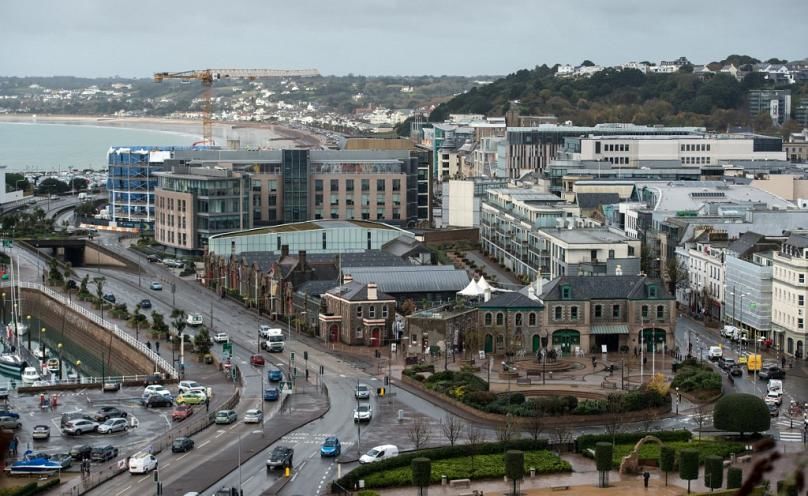
Daily ferries connect Jersey from the port of St Malo, in Brittany, and there is a less frequent service to Granville, in Normandy. Many islands have second homes on the French coast and the short hop across the water to France is rarely taxing for an experienced sailor.
But in May 2021, it is not yachts but fishing boats that have pulled Jersey into the centre of a political storm. French fishermen, angered by new regulations since Brexit, blockaded the island’s harbour, prompting the UK to send two Royal Navy vessels to Jersey waters.
Meanwhile, France has sent two military vessels, the Athos and the Themis, according to French maritime authorities, following the arrival of the HMS Severn and HMS Tamar from Britain. Around 50 boats remain outside the port at St Helier in protest.
Dimitri Rogoff, who heads a grouping of fishermen, told Associated Press news agency: “This isn't an act of war,” Rogoff said in a phone interview. “It's an act of protest.”
This is good because when it comes to war between the French and the English in the Channel Islands, the English have traditionally had the upper hand.
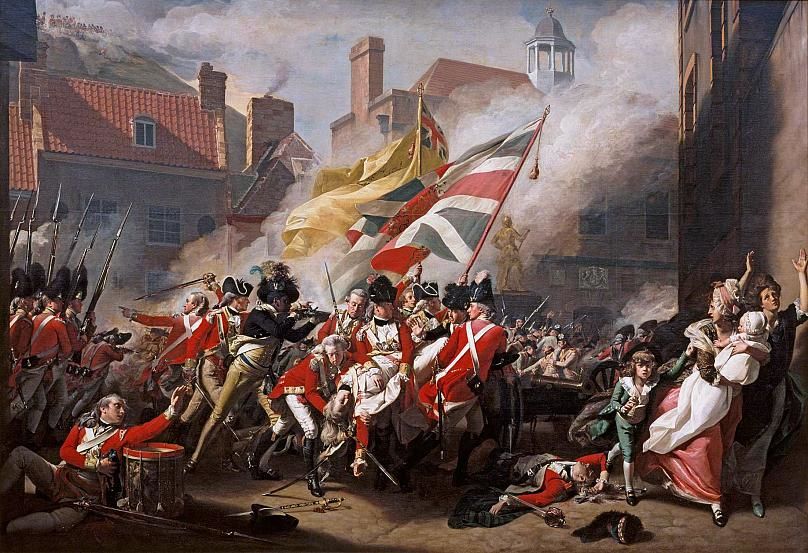
In 1781, French forces attempted to invade the island but were seen off by a contingent of troops led by 24-year-old Major Frances Peirson, who took command of the British forces after the French took Governor Major Moses Corbet captive and forced him to surrender.
Peirson wasn’t going to take it lying down. He led the British in a furious battle in St Helier’s Royal Square, at the end of which the British were triumphant but both Peirson and the leader of the French forces, Baron de Rollecourt, were dead.
The bullet that killed Peirson remains lodged in the wall of a shop just off the square to this day, opposite the building in which De Rollecourt died having been taken injured.
That building is now a popular island pub, called The Peirson.