London Daily

Focus on the big picture.
Wednesday, Jan 28, 2026

How do I get a coronavirus test?

How do I get a coronavirus test?

What are the tests for coronavirus, who are they for and how do they work?

An increase in demand for coronavirus tests has led to local shortages - with some people being directed to test sites hundreds of miles from their homes.

Testing people and then tracing the contacts of those infected is considered vital to stop the disease from spreading.

Should I get tested?


Anyone showing any of the three key symptoms of coronavirus should be able to be tested. The symptoms are:

* a fever
* a new continuous cough
* a loss of smell or taste

The idea of testing is to find people with the virus and keep them isolated to avoid it being spread through the wider community.

What are the Covid tests?


There are two types of tests.

The first checks if you are currently infected. A nose and throat swab is taken and then sent off to be processed at a lab.

New versions promising to deliver results in 90 minutes are being introduced in hospitals and care homes, where they can be processed using portable machines. But they're not yet widely available.

Tests on saliva are also being trialled, with samples analysed by laboratories.

The second test involves blood samples and looks for antibodies which indicate past, rather than current, infection.

At the moment, these are mainly being used by scientists to estimate what percentage of the population has had Covid, rather than to diagnose individuals.


How do I book a test to check if I have coronavirus?


The testing system has been experiencing a number of problems and many people have struggled to book.

The government maintains anyone with symptoms should still apply for one.

Until you can get a test it's important you and your household self-isolate.

How to get tested:

   * Go online, or call 119, before going to a drive-through or walk-through testing site - or a mobile testing unit. But people have faced long waits on the phone and have struggled to book online

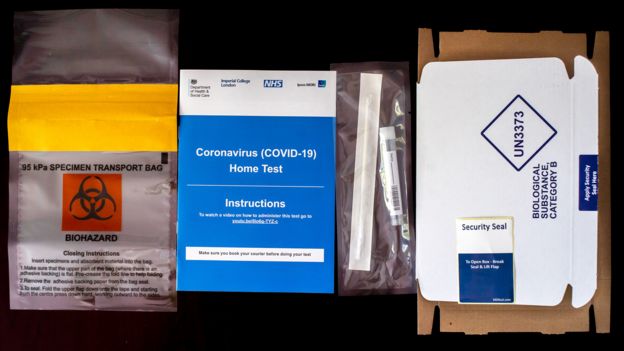
   * Order a home testing kit in the first four days of having symptoms - although some home kits are not being made available to clear backlogs in laboratories
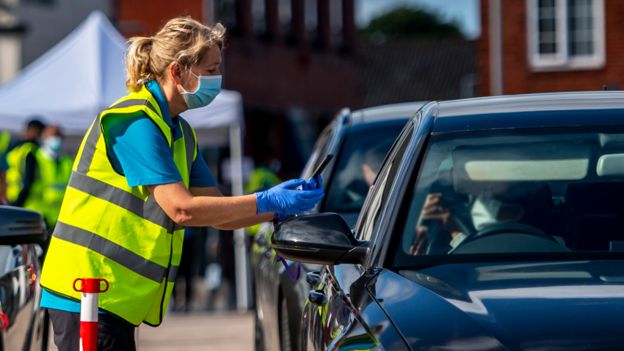


The Department of Health and Social Care has indicated lab capacity is the reason people have been unable to book tests in recent days.

Testing sites across the the UK:

* 236 mobile units
* 74 drive-through sites
* 58 walk-through sites
* 21 satellite sites (for specific groups - such as health workers)

There are 389 testing centres in total. The aim is to have 500.

How many tests are being carried out?


Figures available reveal testing capacity and the number of actual tests being done. They also show the extent of antibody testing and those tests used by scientists to estimate how widespread the virus is.

* About 220,000 individual tests are actually being processed each day
* Individual testing capacity (excluding antibody tests and virus spread testing) is about 245,000 a day
* 375,000 is the total current UK laboratory daily testing capacity (including antibody tests and virus spread testing)
* The UK government wants laboratory capacity to be 500,000 a day by 31 October

The government has pledged to bring in mass coronavirus testing by the end of the year, even among people with no symptoms.

The prime minister has spoken of his desire for 10 million Covid-19 tests a day by early 2021 - including some that give results in minutes. But experts warn laboratory capacity is an issue - and the technology for more rapid testing does not yet exist.

Can I be tested if I have no symptoms?


Generally only people with symptoms should apply for a test, with results expected within 48 hours.

However, staff and residents in care homes should now be receiving regular tests, regardless of symptoms. Some hospital staff are routinely tested, but there is no national guidance stating they must be.

If you don't have symptoms, the government says you should not apply for a test - unless you are living in a local lockdown area.


How reliable are the tests?


With the most common type of diagnostic test, scientists at the University of Bristol believe 20% of positive cases could falsely appear as negative - wrongly telling someone they are not infected.

This can be because the swab sample wasn't good enough, there were problems in the lab, or because of the stage of infection the patient was at when tested.


How does the UK compare to other countries?


Each country records testing slightly differently, so like for like comparisons won't be 100% accurate.

However, analysis from Our World In Data, a research team based at the University of Oxford, suggests the UK is now performing more tests than many other countries.

For example, the seven-day average up until 10 September showed the UK had carried out 2.8 tests per 1,000 people. This was ahead of European countries including France (2.1) and Spain and Germany (both 1.8).

Newsletter

Related Articles

0:00
0:00
Close
Starmer Seeks Economic Gains From China Visit While Navigating US Diplomatic Sensitivities
Starmer Says China Visit Will Deliver Economic Benefits as He Prepares to Meet Xi Jinping
UK Prime Minister Starmer Arrives in China to Bolster Trade and Warn Firms of Strategic Opportunities
The AI Hiring Doom Loop — Algorithmic Recruiting Filters Out Top Talent and Rewards Average or Fake Candidates
Amazon to Cut 16,000 Corporate Jobs After Earlier 14,000 Reduction, Citing Streamlining and AI Investment
Federal Reserve Holds Interest Rate at 3.75% as Powell Faces DOJ Criminal Investigation During 2026 Decision
Putin’s Four-Year Ukraine Invasion Cost: Russia’s Mass Casualty Attrition and the Donbas Security-Guarantee Tradeoff
Wall Street Bets on Strong US Growth and Currency Moves as Dollar Slips After Trump Comments
UK Prime Minister Traveled to China Using Temporary Phones and Laptops to Limit Espionage Risks
Google’s $68 Million Voice Assistant Settlement Exposes Incentives That Reward Over-Collection
Kim Kardashian Admits Faking Paparazzi Visit to Britney Spears for Fame in Early 2000s
UPS to Cut 30,000 More Jobs by 2026 Amid Shift to High-Margin Deliveries
France Plans to Replace Teams and Zoom Across Government With Homegrown Visio by 2027
Trump Removes Minneapolis Deportation Operation Commander After Fatal Shooting of Protester
Iran’s Elite Wealth Abroad and Sanctions Leakage: How Offshore Luxury Sustains Regime Resilience
U.S. Central Command Announces Regional Air Exercise as Iran Unveils Drone Carrier Footage
Four Arrested in Andhra Pradesh Over Alleged HIV-Contaminated Injection Attack on Doctor
Hot Drinks, Hidden Particles: How Disposable Cups Quietly Increase Microplastic Exposure
UK Banks Pledge £11 Billion Lending Package to Help Firms Expand Overseas
Suella Braverman Defects to Reform UK, Accusing Conservatives of Betrayal on Core Policies
Melania Trump Documentary Sees Limited Box Office Traction in UK Cinemas
Meta and EssilorLuxottica Ray-Ban Smart Glasses and the Non-Consensual Public Recording Economy
WhatsApp Develops New Meta AI Features to Enhance User Control
Germany Considers Gold Reserves Amidst Rising Tensions with the U.S.
Michael Schumacher Shows Significant Improvement in Health Status
Greenland’s NATO Stress Test: Coercion, Credibility, and the New Arctic Bargaining Game
Diego Garcia and the Chagos Dispute: When Decolonization Collides With Alliance Power
Trump Claims “Total” U.S. Access to Greenland as NATO Weighs Arctic Basing Rights and Deterrence
Air France and KLM Suspend Multiple Middle East Routes as Regional Tensions Disrupt Aviation
U.S. winter storm triggers 13,000-plus flight cancellations and 160,000 power outages
Poland delays euro adoption as Domański cites $1tn economy and zloty advantage
White House: Trump warns Canada of 100% tariff if Carney finalizes China trade deal
PLA opens CMC probe of Zhang Youxia, Liu Zhenli over Xi authority and discipline violations
ICE and DHS immigration raids in Minneapolis: the use-of-force accountability crisis in mass deportation enforcement
UK’s Starmer and Trump Agree on Urgent Need to Bolster Arctic Security
Starmer Breaks Diplomatic Restraint With Firm Rebuke of Trump, Seizing Chance to Advocate for Europe
UK Finance Minister Reeves to Join Starmer on China Visit to Bolster Trade and Economic Ties
Prince Harry Says Sacrifices of NATO Forces in Afghanistan Deserve ‘Respect’ After Trump Remarks
Barron Trump Emerges as Key Remote Witness in UK Assault and Rape Trial
Nigel Farage Attended Davos 2026 Using HP Trust Delegate Pass Linked to Sasan Ghandehari
Gold Jumps More Than 8% in a Week as the Dollar Slides Amid Greenland Tariff Dispute
BlackRock Executive Rick Rieder Emerges as Leading Contender to Succeed Jerome Powell as Fed Chair
Boston Dynamics Atlas humanoid robot and LG CLOiD home robot: the platform lock-in fight to control Physical AI
United States under President Donald Trump completes withdrawal from the World Health Organization: health sovereignty versus global outbreak early-warning access
FBI and U.S. prosecutors vs Ryan Wedding’s transnational cocaine-smuggling network: the fight over witness-killing and cross-border enforcement
Trump Administration’s Iran Military Buildup and Sanctions Campaign Puts Deterrence Credibility on the Line
Apple and OpenAI Chase Screenless AI Wearables as the Post-iPhone Interface Battle Heats Up
Tech Brief: AI Compute, Chips, and Platform Power Moves Driving Today’s Market Narrative
NATO’s Stress Test Under Trump: Alliance Credibility, Burden-Sharing, and the Fight Over Strategic Territory
OpenAI’s Money Problem: Explosive Growth, Even Faster Costs, and a Race to Stay Ahead
×