

Hospital delays: Calls for inquiry in the south west
Last week a Gloucestershire NHS Trust chief executive revealed she was driven to hospital by her husband, fearing an ambulance would take too long.
Patients in ambulances are waiting up to 14 hours to be handed over to hospital staff.
Local agencies say they are determined to overcome the challenges together.
Many put the delays down to hospitals being unable to discharge patients quickly enough.
South Western Ambulance Service currently has the longest wait times in England, with category-two calls, which include strokes and chest pains, taking nearly two hours on average to reach patients last month.
The target is 18 minutes.
And last week there was an average of 20 ambulances waiting outside the Gloucestershire Royal Hospital at any one time.
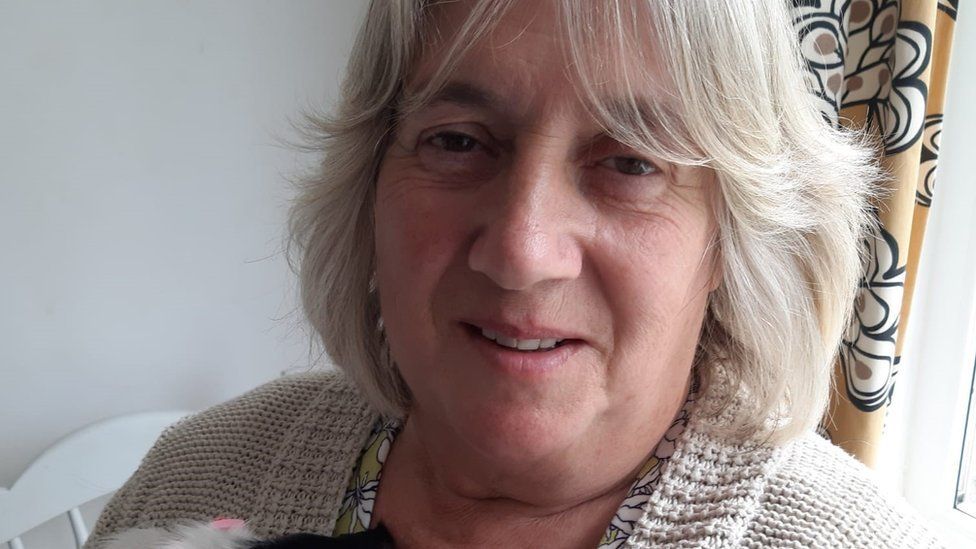 Carole Jarman said her friend was on the floor for 15 hours and waited a total of 27 hours before an ambulance arrived
Carole Jarman, 61, from Stroud, told BBC Radio Gloucestershire that her 89-year-old friend waited 27 hours for an ambulance last month after she had a fall.
Ms Jarman said it was "an awful experience".
Cathie Cooper said she waited 10 minutes to even get through to a call handler when requesting an ambulance while she was having an asthma attack.
Unison's South Western Ambulance lead for Gloucestershire, Shane Clark, said he now wants a central government inquiry.
"It would be really interesting to have a public inquiry to understand why the south west seems to be worse, why are we having this grassroots social care issue that doesn't seem to be happening elsewhere," he said.
 Unison's Shane Clark said while ambulances still queue in other areas of
the country, the wait times are not as long as in the south west
Unison's Shane Clark said while ambulances still queue in other areas of
the country, the wait times are not as long as in the south west
Mr Clark, who is from Gloucester, has worked for the ambulance service for more than 15 years.
He said while crews are providing the best standard of care they can for their patients, beds need to be available when they arrive at hospital.
He added that he was concerned about the capacity of community hospitals in Gloucestershire.
 Deborah Lee, chief executive of Gloucestershire Hospitals NHS Trust, has been praised by many on Twitter for her honesty
Posting on Twitter last week, Ms Lee said her husband had "bundled her into his car", after she had showed the signs of a stroke because he had heard her "lamenting ambulance delays".
She was clear to point out that the issues with ambulance waits were not at the "front door of hospitals" but at the back.
According to the NHS trust that runs them, Gloucestershire's two main hospitals regularly have more than 200 patients medically fit to be discharged, but they are unable to move them out and hospital bosses have admitted they are struggling with the high numbers of patients.
Some of the issues contributing to the delay in discharging people include a reduction in the numbers of beds in community hospitals, difficulties in getting GP appointments, meaning more people are turning up at A&E, and how long it takes to organise adult social care in the community.
Adult social care is overseen by the county council so that people who are well enough can going back to their own homes, but with short-term support.
For those who need a longer term plan, the council works with other health partners, which might mean moving patients into care homes.
Executive director of Adult Social Care and Public Health at Gloucestershire County Council, Sarah Scott, said it is a "complex situation".
"We are working really really hard on this [problem] and if it was simple, we would have solved it by now," she said.
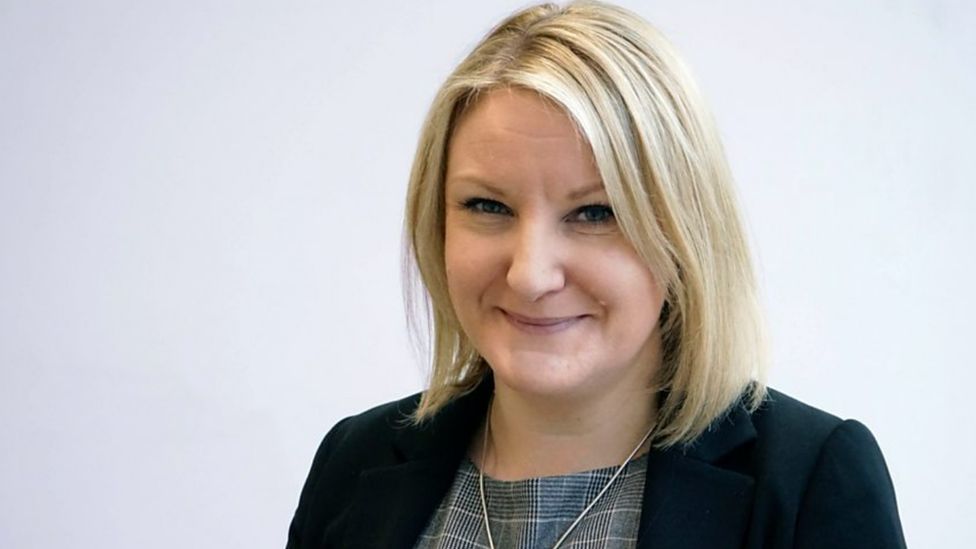 Executive director of Adult Social Care and Public Health at
Gloucestershire County Council, Sarah Scott, said there are no easy
answers to the problems faced
Executive director of Adult Social Care and Public Health at
Gloucestershire County Council, Sarah Scott, said there are no easy
answers to the problems faced
"It is easy to think well there are 200 people in the hospital, lets put them all in a care bed, but actually not all of them need a care bed.
"We know only half of them need some adult social care support, so an even smaller proportion of that 100 will actually need a care home bed."
She added that one of the issues is a shortage of staff in the sector.
Charity Crossroads said hospitals have to be careful as they can be responsible for a "dereliction of duty" for discharging patients too early.
Jamie Webb, a registered manager at Crossroads Care - which helps people return home after being in hospital - said the sector is struggling.
"The community-based care is vastly under staffed, that's having a knock-on effect for the hospitals in order for them to be able to discharge because there just isn't the staffing levels to be able to increase those packages of care," he said.
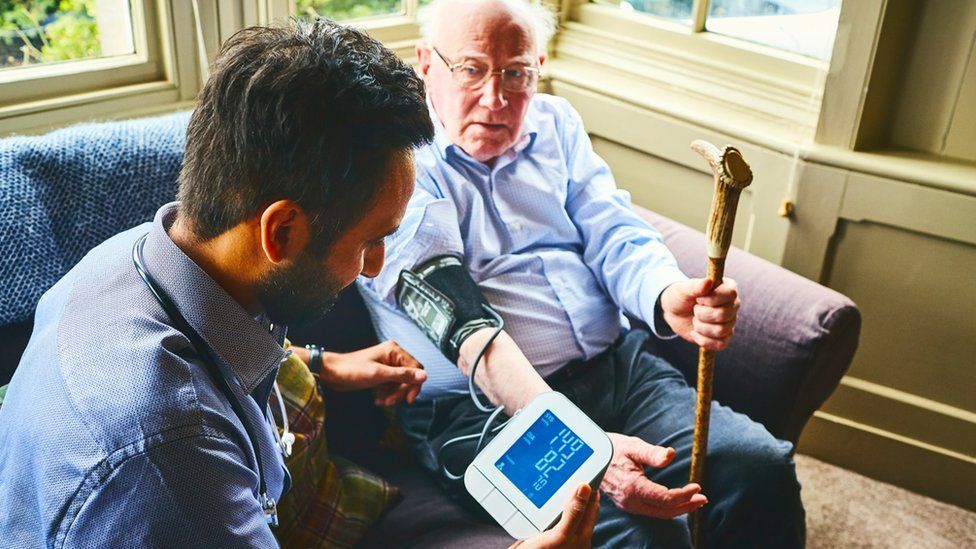 Local agencies say they are determined to overcome the challenges together with the aim of keeping communities safe
Mr Webb said that results in many people coming to him that have not fully recovered, with them ultimately ending up back into hospital.
The acting chief executive of Gloucestershire Hospitals, Professor Mark Pietroni, said: "We are committed to getting the safe discharge process right for everyone involved and work closely with health and social care colleagues, patients and their families to ensure that people can be discharged safely to the right environment for their onward care."
Gloucestershire Health and Care Trust, for community hospitals, added in statement that it is "working tirelessly" with the NHS and local authority partners to improve flow between services in hospitals, community clinics and within people's own homes.