

Hong Kong elections reform ‘aims to stop separatist, foreign infiltration’
Beijing’s drastic planned shake-up of the Hong Kong elections system is designed to prevent separatists or foreign agents from infiltrating the administration of the city, while restoring stability after the chaos of recent years, according to the finance minister.
Paul Chan Mo-po said on Sunday that the central government’s plan also aimed to fix the problems embedded within the current arrangements for city polls.
“The reforms are for rectifying the deficiencies and plugging the loopholes of the existing electoral systems, preventing the separatist forces or foreign agents from infiltrating into Hong Kong’s governing structures, or using this platform to endanger national, and Hong Kong’s, security and benefits,” the city’s financial secretary wrote in his official blog.
“Alongside the national security law enacted last year, the National People’s Congress (NPC), through combination punches, has enabled Hong Kong to tackle many problems concerning the constitutional order as well as the social turmoil.”
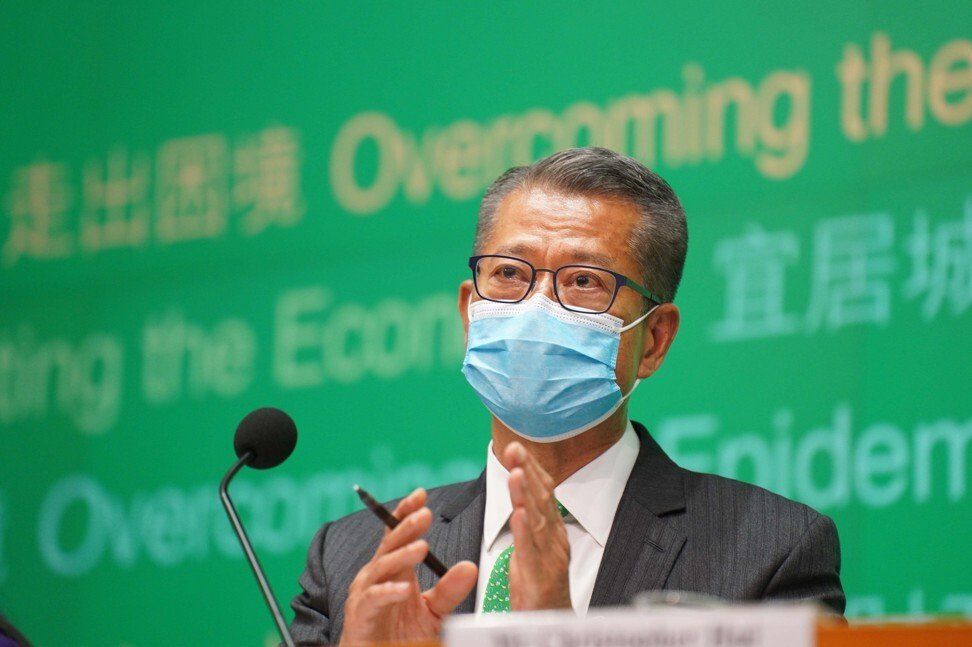 Hong Kong’s finance chief Paul Chan.
NPC Standing Committee chairman Li Zhanshu last week used the phrase “combination punches” when describing the proposed reforms, which would mark the biggest shake-up of Hong Kong’s elections system since the city’s handover from British to Chinese sovereignty in 1997.
The NPC, China’s national parliament, last Thursday formally approved the reforms, which include expanding the Legislative Council from 70 to 90 members, with some lawmakers to be returned from the Beijing-friendly Election Committee which selects the city’s chief executive. The committee’s membership will grow from 1,200 to 1,500 to further strengthen its pro-establishment dominance.
A new body will also be set up to vet candidates running for the Election Committee, Legco and the chief executive post.
Premier Li Keqiang hailed the move as key for improving the “one country, two systems” governing policy for Hong Kong after the mass anti-government protests and political turmoil of 2019, saying it would ensure that “patriots” administer the city.
Chan said there had in recent years been a rapid emergence in Hong Kong of radical elements instigating protests on the streets and inside Legco. Some sought overseas support for their political campaigns and had even evolved into separatist forces, he added.
The financial secretary referred in his blog post to calls during the Occupy Central movement in 2014 for protesters to block roads and paralyse the city’s financial district, and the sweeping months-long protests that roiled the city in 2019 initially over the now-withdrawn extradition bill.
“The rampaging violence in the second half of 2019, and the vandalism of Legco have caused serious social turmoil and taken a heavy toll on the economy … If this continued, Hong Kong’s stability and prosperity would come to an end,” he said.
“[The crisis] has shown that there has been a lack of considerations regarding safeguarding national security for Hong Kong’s constitutional development in the past. There has been a neglect of the possibility that Hong Kong might be used to overthrow the state’s sovereignty,” he said.
Chan contended that Hong Kong could achieve effective governance through Beijing’s reforms for ensuring only patriots governed the city.
He added the changes to the Election Committee and Legco could balance the interests of different stakeholders in society and enable them to tackle deep-seated social and economic problems.
“The executive branch and Legco could have more rational interactions which facilitate the strength of the executive-led system … This could also allow Hong Kong to step out of its political predicament and restore its political stability and social safety,” he said.
The city’s deputy leader, as well as the ministers for financial services and development, also defended the planned overhaul of the elections system.
Chief Secretary Matthew Cheung Kin-chung dismissed the suggestion that Hong Kong’s democratic development was moving backwards and emphasised that anyone was entitled to take part in city politics.
“Since Hong Kong’s actual situations have become very worrying, Beijing has been forced to step in … This is not democratic regression or for restricting people’s participation in politics. Neither is it aimed at kicking out some people with specific views,” he said. “Anyone could still enjoy the opportunity of participating in politics in accordance with the law.”
He said the government would implement the local legislation required to facilitate the reforms in a speedy manner and roll out a large-scale campaign to explain the changes to the public, as well as to local and foreign media and international communities, in an attempt to dispel any rumours and misconceptions.
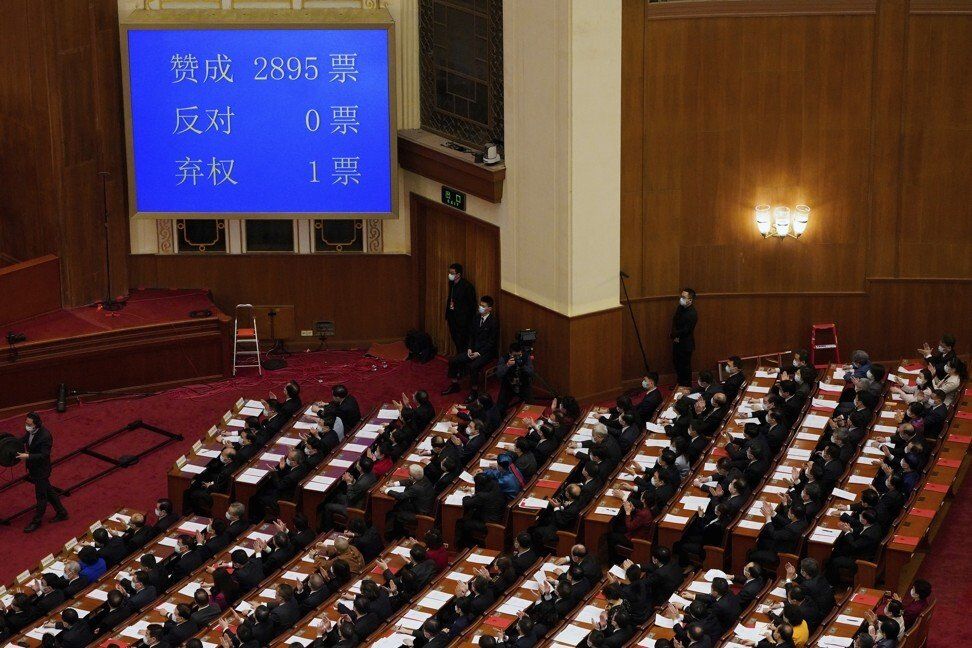 Delegates of the NPC applaud the passing of a sweeping resolution to shake up Hong Kong’s elections system.
Secretary for Financial Services and the Treasury Christopher Hui Ching-yu said only through implementing elections reform to ensure that only patriots governed Hong Kong could the city move forward.
He added that without this safeguard, lawmakers might still use every means available to disrupt and undermine the legislative process.
“Only patriots are really concerned about the interests of our nation and Hong Kong … the SAR [special administrative region] government could have more room to join hands with Legco to develop the economy and improve livelihoods,” he said.