

Heatwave: Fires blaze after UK passes 40C for first time
Thermometers hit 40.3C at Coningsby in Lincolnshire, while 33 other locations went past the UK's previous highest temperature of 38.7C, set in 2019.
Several fire services declared major incidents after a surge in fires. A major blaze in Wennington, in east London, left homes gutted.
Some rail services were cancelled after tracks overheated or buckled and overhead cables failed.
Hundreds of firefighters tackled fires across London, including in Wennington, where a grass fire spread to properties.
Residents, who had to be evacuated, told the BBC about eight homes and possibly a local church had been destroyed in the fire, while one firefighter at the scene described it as "absolute hell".
Tim Stark, who alerted the fire brigade and whose own house was destroyed in the blaze, told BBC 5 Live he and his son had spotted the fire in his neighbour's garden but despite their best efforts with a hose and watering can, had been unable to stop it spreading amid the dry conditions.
"I reckon about 15-20 houses might be gone, or uninhabitable," he said.
"My house is completely gone, as is the next door neighbour's and three or four other houses along that bit."
There have also been fires elsewhere in the country with major incidents declared in Leicestershire, East, North and South Yorkshire and Lincolnshire, Hertfordshire, Suffolk and Norfolk.
Home Secretary Priti Patel said she had been updated on the "dangerous fires" and urged the public to follow safety advice from their local fire service.
In the capital, people were urged not to have barbecues or bonfires and to be careful when disposing of cigarettes.
Two people were taken to hospital to be treated for smoke inhalation after a fire in Dagenham, east London, while further north a nursery was caught in a blaze in Milton Keynes.
London Fire Brigade assistant commissioner Jonathan Smith said some of the fires in the city were the result of "tinderbox" conditions and said Tuesday evening would be "critical" in ensuring the fires were kept under control.
"It would be premature to say we are out the other end of this incident," he added.
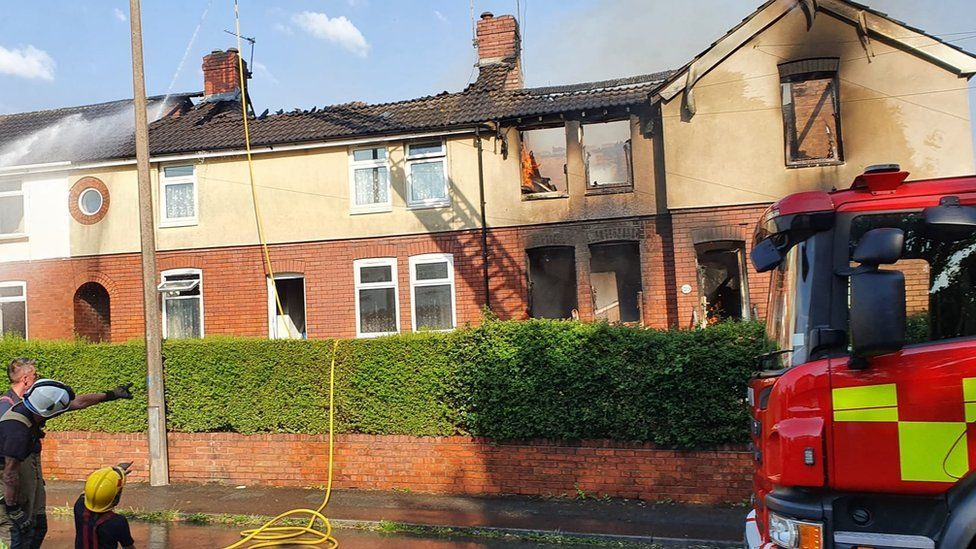 Several home were damaged by fire in Maltby, Rotherham, with no reported injuries
Heathrow Airport was the first place to break the 40C mark, hitting 40.2C at 12:50 BST but several other places also passed 40C during the afternoon, including Gringley on the Hill in Nottinghamshire and St James's Park, Kew Gardens and Northolt - all in London.
A large swathe of eastern England, from Surrey to South Yorkshire, saw temperatures between 39C and 40C, and at least 34 weather stations exceeded the previous UK temperature record.
Scotland also saw a new record, according to provisional Met Office figures, with 34.8C recorded at Charterhall, in the Scottish borders - beating the previous record of 32.9C recorded in 2003.
In Wales, Hawarden in Flintshire registered 36.2C, provisionally the second highest temperature on record in Wales, but below Monday's 37.1C.
Met Office chief of science and technology Prof Stephen Belcher said exceeding 40C was "virtually impossible" in an undisrupted climate, but due to climate change "driven by greenhouse gasses" such extreme temperatures had become a reality.
He said if there continued to be high emissions "we could see temperatures like this every three years".
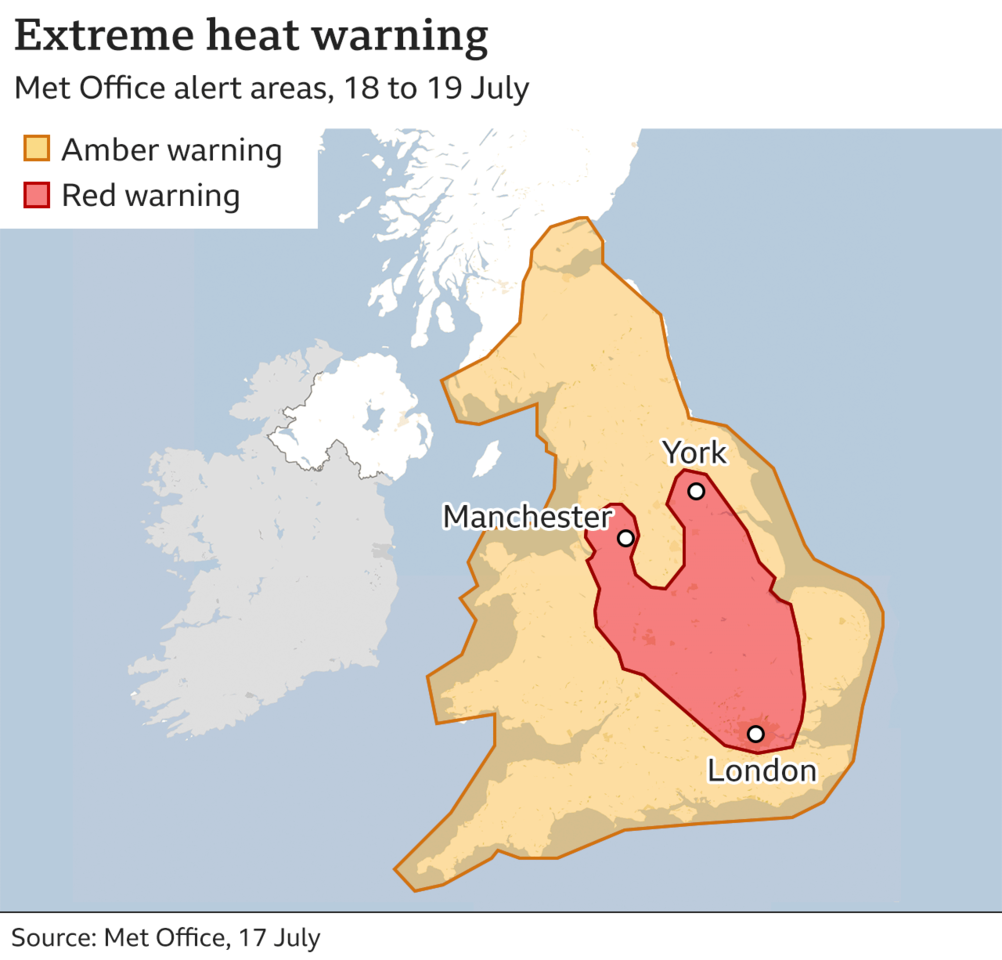
The two days of extreme temperatures prompted the Met Office to issue a red extreme heat warning for the first time, which expires at midnight on Tuesday.
The hot weather has begun to give way, with rain beginning to fall in several parts of the country and cooler temperatures expected on Wednesday.
Warnings were also issued for people to be careful around water after at least five people died in and around water over the past two days.
The body of a teenage boy who went missing on Monday was recovered from the River Thames in Richmond, west London, on Tuesday afternoon, the Metropolitan Police said.
Amid the extreme heat Network Rail had warned against travel, road surfaces have warped, and a number of power cuts were reported.
Rail services on Wednesday morning could continue to face some disruption as problems are fixed, and several rail companies have warned of a knock-on impact on services.
In other developments:
* Five people were rescued and a sixth is missing after a search off Clacton Pier in Essex
* A man has died after being pulled from the sea on the Isle of Wight
* Sagging conductors and overheating transformers caused faults with the power network in Yorkshire, Lincolnshire and the North East
* The heat caused issues with IT servers at Guy's and St Thomas' Hospitals in London
The extreme warning, indicating a threat to life, covers an area stretching between London, Manchester and York.
There was a markedly cooler outlook for Penzance, Cornwall, where thundery storms hit the popular holiday destination during the morning.
And across the country, the heatwave is forecast to come to a sudden end with cooler weather expected on Wednesday and thunderstorms forecast for parts of the east and north-east of England.
Provisional figures showed the UK experienced the warmest night on record from Monday into Tuesday.
Emley Moor in West Yorkshire is likely to have broken that record, where 25.9C was recorded overnight, according to the Met Office.
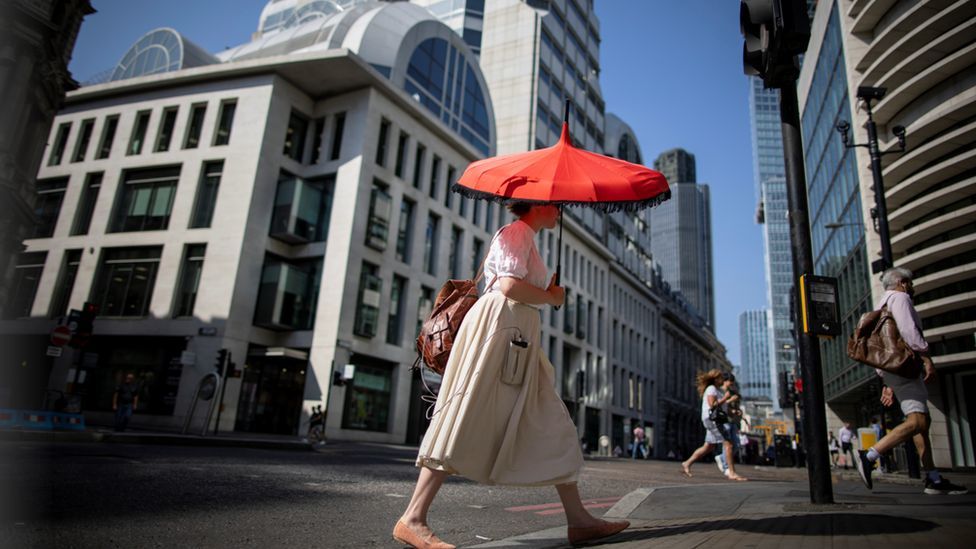 The heat soared in the morning - with temperatures hitting a record 40.2C by 12:50 BST
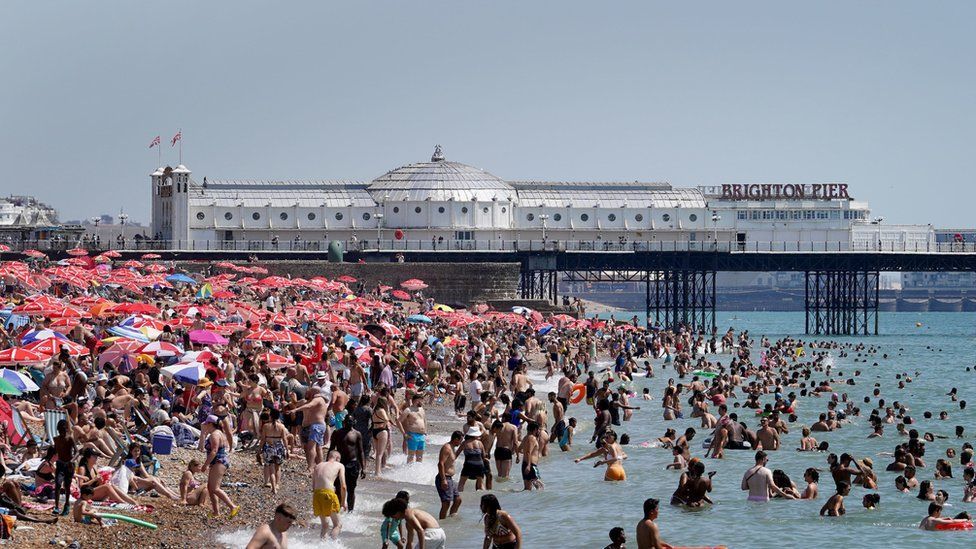 People flocked to the beach at Brighton
 It was warm enough for ice cream at Loch Lomond, in the village of Luss in Argyll and Bute, Scotland
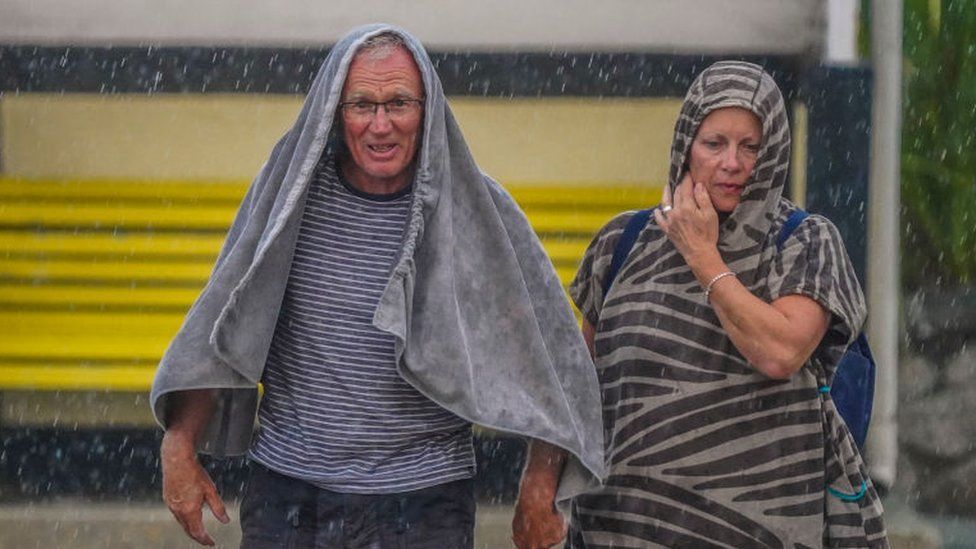 But showers in Cornwall dampened down the heat
Rail services were heavily impacted by the extreme heat, Network Rail said, with buckled rails reported and overhead wire systems failing.
A record rail temperature of 62C was recorded in Suffolk.
Jake Kelly, the group director for system operation at Network Rail, said it had taken "the difficult and regrettable" decision to close the East Coast Mainline and the Midland Mainline on Tuesday due to record temperatures.
Transport Secretary Grant Shapps said the UK's rail network could not cope with the extreme heat, adding that it would take "many years" before upgrades would mean services could handle the hotter climate.
Water companies in southern and eastern England warned increased demand was leading to low pressure - and even interrupted supply - for some households.
Heatwaves are becoming more likely and more extreme because of human-induced climate change.
The world has already warmed by about 1.1C since the industrial era began, and temperatures will keep rising unless governments around the world make steep cuts to emissions.
We are living in the hottest period for 125,000 years, according to the UN's climate science body, the Intergovernmental Panel on Climate Change.
Farmers have warned the UK is not equipped to deal with water shortages caused by the changing climate, with Minette Batters, the president of the National Farmers' Union, saying the unprecedented temperatures were "really highlighting issues with water security".
Much of Europe and North Africa has also experienced extreme heat with wildfires breaking out in France, Spain, Portugal, Greece and Morocco.
Temperatures look likely to drop across the UK on Wednesday, with heavy showers and thunderstorms causing potential disruption from 13:00 BST to 23:00 across the south east of England.
Blazes are raging near the village of Wennington on the outskirts of London
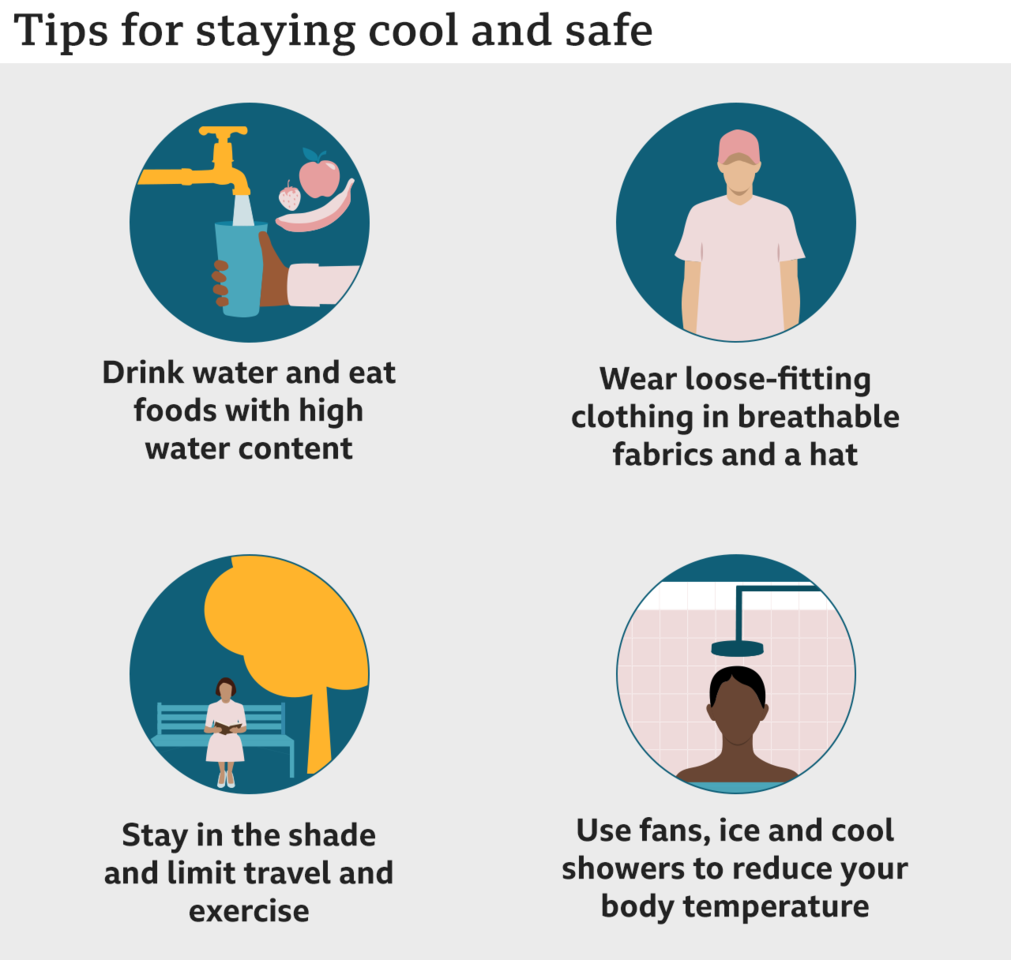
Heatwave: Top tips to stay cool in 60 seconds