

Football club-owners face new licensing regime in bid to avert future collapses
Professional football club-owners in England will be overseen by a new licensing regime forcing them to demonstrate fully-funded three-year business plans under proposals to be set out by a former sports minister this week.
Sky News has learnt that a review of football's governance led by Tracey Crouch, the Conservative MP, will outline the new structure as one option to avert future financial collapses of the kind seen at Bury in 2019.
It was unclear whether the new regime would apply to existing owners or only to those seeking to take control of clubs in future.
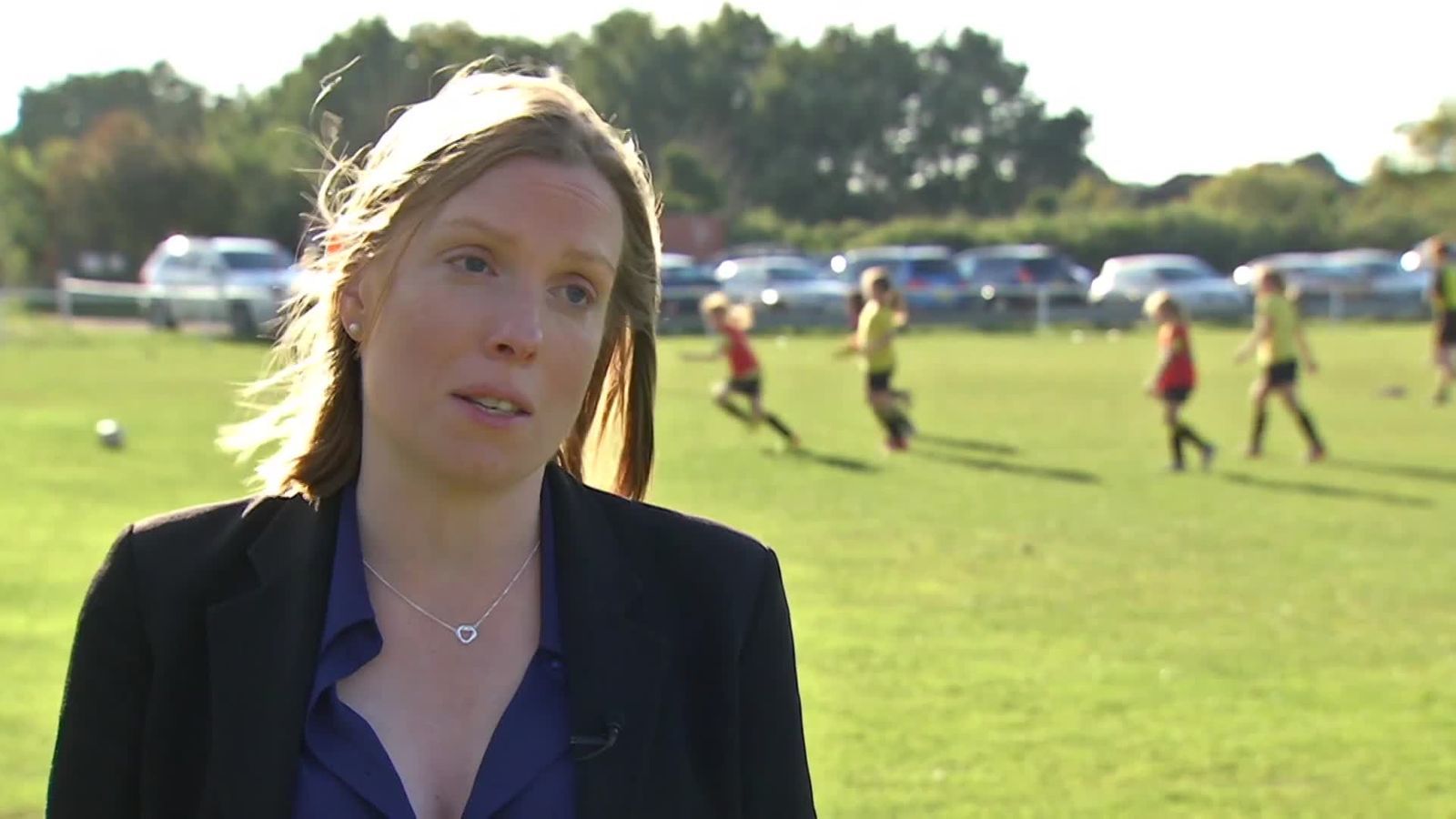 The report by Tracey Crouch is due to be released on Thursday
Ms Crouch is expected to make roughly 50 recommendations in her review, which runs to approximately 150 pages and will be published on Thursday.
Some of the recommendations will require legislation to ensure their implementation, a process that could take several years depending upon the availability of parliamentary time.
The government is expected to formally respond to Ms Crouch's review in the next few months.
Under the proposals, clubs could be required to set up 'shadow boards' for fans, which would allow them to influence non-football matters such as plans to relocate from their existing stadium or alter their badge or the colour of their home kit.
These would form a series of "protected rights" that an owner or board would not be able to override without fans' endorsement.
Ms Crouch floated the idea earlier this year of creating a 'golden share' that would give "veto powers over reserved items, to...a democratic legally constituted fan group".
Her Independent Fan-Led Review of Football Governance is understood to raise a number of alternatives for promoting fan engagement.
 Arsenal, Chelsea, Liverpool, Manchester City, Manchester United and Tottenham Hotspur were involved in the ESL plan
Oversight of club-owners and directors, which is currently handled by the Premier League and English Football League (EFL), would pass to a new industry-funded Independent Regulator for English Football (IREF) under her proposals.
In her interim findings, published in July, Ms Crouch said IREF would "address issues that are most relevant to the risks to the game and already at least partially a matter of English law - particularly financial regulation, corporate governance and ownership".
"The related requirements are likely to include cost controls, real time financial monitoring, minimum governance requirements (including a requirement for independent non-executive directors on club boards) and revised separate tests for owners and directors of clubs on an initial and ongoing basis," she wrote in a letter to Mr Dowden in the summer.
One Whitehall source said the report would be a "powerful fulfilment" of the mandate given to Ms Crouch by Boris Johnson and Oliver Dowden, the then culture secretary, when they commissioned the review in April.
It was triggered by the outcry over plans by six Premier League clubs - Arsenal, Chelsea, Liverpool, Manchester City, Manchester United and Tottenham Hotspur - to join a new European Super League that would have earned the participants hundreds of millions of pounds, widening the financial gulf between them and the rest of English football.
The ESL was abandoned by the English clubs within 48 hours following interventions by public figures including Mr Johnson and the Duke of Cambridge, who is also president of the Football Association, but the project's collapse failed to allay concerns about risks to the long-term health of the national game.
Some of the likely recommendations in Ms Crouch's review, such as a requirement for the Premier League to commit additional funding to the rest of the English football pyramid, have already been partially addressed.
The Premier League announced last week that it would allocate a further £25m to the EFL - the three divisions below the top flight - and the National League, which have been hit hard by the pandemic.
Clubs from the top tier down have been forced to take on substantial new debts in order to continue funding themselves, raising fears that more may face going out of business.
Derby County, which fell into administration last month, was this week hit by an additional nine-point deduction after acknowledging breaches of the EFL's profitability and sustainability rules.
Last week, the Daily Mail reported that the EFL chairman Rick Parry had expressed support for the principle of an independent football regulator, although the idea has been rejected by the Premier League's chief executive, Richard Masters.
Earlier this week, Sky News revealed that Gary Hoffman, the Premier League chairman, was to resign amid pressure from clubs over its handling of the controversial Saudi-led takeover of Newcastle United.
A spokesman for the Department for Digital, Culture, Media and Sport (DCMS) declined to comment on Tuesday.