London Daily

Focus on the big picture.
Thursday, Jan 22, 2026

Extreme weather: What causes flash flooding?

Extreme weather: What causes flash flooding?

Flash flooding affects cities across the world and has become more common because of climate change.

Parts of London and the south of England were left underwater after heavy rain in July.

What is flash flooding?


Flash floods usually happen during intense rainfall - when the amount of water is too much for drains and sewers to deal with.

It can occur very quickly and without much warning.

Roads can become unpassable - with vehicles abandoned - and homes and shops damaged by floodwater.

Floods can affect key public infrastructure including transport networks and hospitals. In London, some hospitals had to ask patients to stay away after they lost power.

Why does it happen in cities and towns?


Urban areas are more likely to experience this type of "surface water" flooding because they have a lot of hard surfaces - everything from paved front gardens to roads, car parks and high streets.

When rain hits them it can't soak into the ground as it would do in the countryside.

An example was seen when New York City was hit by Storm Elsa in July, flooding the subway system.

The city's transit authority president, Sarah Feinberg, said "if the drains at the street level can't handle the water, it goes over the curb and then makes things even worse". Water had come through subway vents and down the stairs, she said.

In many places - including much of the UK - old sewer systems were built based on historic rainfall projections.

Dr Veronica Edmonds-Brown of the University of Hertfordshire said the growth of London was also a problem as its Victorian era drainage system "cannot cope with the huge increase in population".

Is flash flooding becoming more frequent?


Many factors contribute to flooding, but climate change makes extreme rainfall more likely.

A warmer atmosphere can hold more moisture and so these storms become more intense.

According to Prof Hayley Fowler, of the UK Climate Resilience Programme, flash flooding used to be "relatively unusual".

But she said warming means "these heavy short-duration bursts from thunderstorms which cause flash flooding are becoming more common".

Ms Fowler's research suggests flash floods - measured as 30mm of rain per hour - "will increase five fold by the 2080s", if climate change continues on its current track.

What can be done?


Changes could be made in towns and cities to protect against the worst effects of flash floods.

Dr Linda Speight, a flood expert at Reading University, says urban areas could benefit from changes like "permeable pavements and green roofs that can help rain water to soak away rather than causing floods".

Knowing that heavy rainfall is on its way can make it easier to mitigate against the risks of flash flooding.

Dr Speight says "weather and flood forecasting science has improved rapidly and it is now often possible to forecast surface water flooding events in advance".

How can I protect my home?


You can check if your area is at risk of flooding, and sign up for flood warnings on the Met Office website.

Living away from a river does not necessarily mean you are safe from flooding.

The Met Office recommends creating a flood plan, for example moving valuables out of the basement and to a safe place.

It is also possible to take preventative measures.

If you are making changes to your home, choose tiled flooring instead of carpets and move plug sockets further up the wall.

What else should I do?


Drivers also need to be careful to avoid rising waters, as many flood-related deaths are in vehicles.

According to the AA, just 30cm of water is enough to move a car.
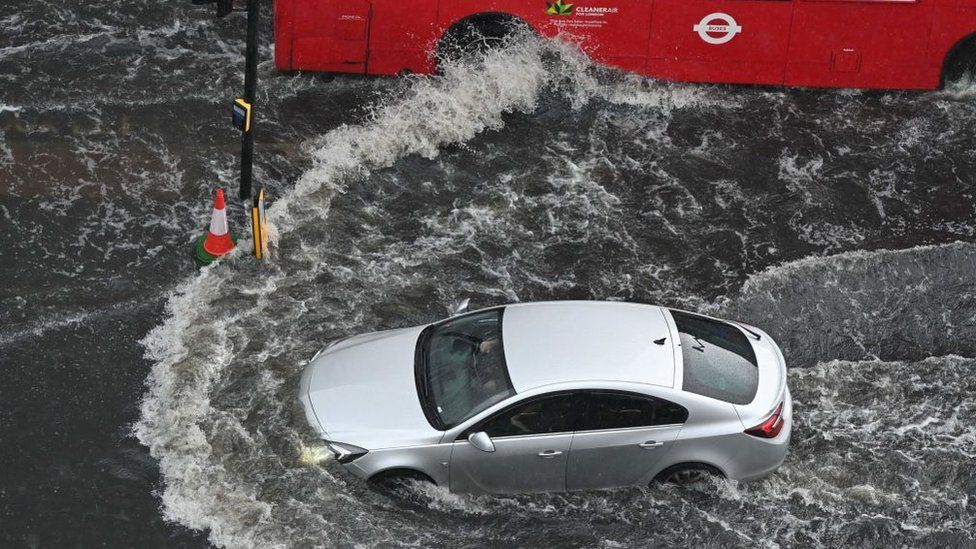
The AA warns motorists against driving through flood water


UK flood advice in your area


Environment Agency Floodline: 0345 988 1188

Floodline Scotland: 0345 988 1188

Wales Floodline: 0345 988 1188

Northern Ireland flooding incident line: 0300 2000 100


Heavy rain floods subways and submerges cars in New York

London flooding: What happened when a month of rain fell in one go


Newsletter

Related Articles

0:00
0:00
Close
Trump Reverses Course and Criticises UK-Mauritius Chagos Islands Agreement
Elizabeth Hurley Tells UK Court of ‘Brutal’ Invasion of Privacy in Phone Hacking Case
UK Bond Yields Climb as Report Fuels Speculation Over Andy Burnham’s Return to Parliament
Trump’s Board of Peace: Breakthrough Diplomacy or a Hostile Takeover of Global Order?
The Greenland Gambit: Economic Genius or Political Farce?
Will AI Finally Make Blue-Collar Workers Rich—or Is This Just Elite Tech Spin?
Prince William to Make Official Visit to Saudi Arabia in February
Prince Harry Breaks Down in London Court, Says UK Tabloids Have Made Meghan Markle’s Life ‘Absolute Misery’
Malin + Goetz UK Business Enters Administration, All Stores Close
EU and UK Reject Trump’s Greenland-Linked Tariff Threats and Pledge Unified Response
UK Deepfake Crackdown Puts Intense Pressure on Musk’s Grok AI After Surge in Non-Consensual Explicit Images
Prince Harry Becomes Emotional in London Court, Invokes Memory of Princess Diana in Testimony Against UK Tabloids
UK Inflation Rises Unexpectedly but Interest Rate Cuts Still Seen as Likely
AI vs Work: The Battle Over Who Controls the Future of Labor
Buying an Ally’s Territory: Strategic Genius or Geopolitical Breakdown?
AI Everywhere: Power, Money, War, and the Race to Control the Future
Trump vs the World Order: Disruption Genius or Global Arsonist?
Arctic Power Grab: Security Chessboard or Climate Crime Scene?
Starmer Steps Back from Trump’s ‘Board of Peace’ Amid Strained US–UK Relations
Prince Harry’s Lawyer Tells UK Court Daily Mail Was Complicit in Unlawful Privacy Invasions
UK Government Approves China’s ‘Mega Embassy’ in London Amid Debate Over Security and Diplomacy
Trump Cites UK’s Chagos Islands Sovereignty Shift as Justification for Pursuing Greenland Acquisition
UK Government Weighs Australia-Style Social Media Ban for Under-Sixteens Amid Rising Concern Over Online Harm
Trump Aides Say U.S. Has Discussed Offering Asylum to British Jews Amid Growing Antisemitism Concerns
UK Seeks Diplomatic De-escalation with Trump Over Greenland Tariff Threat
Prince Harry Returns to London as High Court Trial Begins Over Alleged Illegal Tabloid Snooping
High-Speed Train Collision in Southern Spain Kills at Least Twenty-One and Injures Scores
Meghan Markle May Return to the U.K. This Summer as Security Review Advances
Trump’s Greenland Tariff Threat Sparks EU Response and Risks Deep Transatlantic Rift
Prince Harry’s High Court Battle With Daily Mail Publisher Begins in London
Trump’s Tariff Escalation Presents Complex Challenges for the UK Economy
UK Prime Minister Starmer Rebukes Trump’s Greenland Tariff Strategy as Transatlantic Tensions Rise
Prince Harry’s Last Press Case in UK Court Signals Potential Turning Point in Media and Royal Relations
OpenAI to Begin Advertising in ChatGPT in Strategic Shift to New Revenue Model
GDP Growth Remains the Most Telling Barometer of Britain’s Economic Health
Prince William and Kate Middleton Stay Away as Prince Harry Visits London Amid Lingering Rift
Britain Braces for Colder Weather and Snow Risk as Temperatures Set to Plunge
Mass Protests Erupt as UK Nears Decision on China’s ‘Mega Embassy’ in London
Prince Harry to Return to UK to Testify in High-Profile Media Trial Against Associated Newspapers
Keir Starmer Rejects Trump’s Greenland Tariff Threat as ‘Completely Wrong’
Trump to hit Europe with 10% tariffs until Greenland deal is agreed
Prince Harry Returns to UK High Court as Final Privacy Trial Against Daily Mail Publisher Begins
Britain Confronts a Billion-Pound Wind Energy Paradox Amid Grid Constraints
The graduate 'jobpocalypse': Entry-level jobs are not shrinking. They are disappearing.
×