London Daily

Focus on the big picture.
Saturday, Jul 18, 2026

Covid: Plans for fewer rules in Wales to be revealed

Covid: Plans for fewer rules in Wales to be revealed

The extent Wales will go to in scrapping coronavirus restrictions will be announced on Wednesday.

Ministers are expected to settle on their plans for reducing the legal rules that have governed businesses and social contact during the pandemic.

But First Minister Mark Drakeford has said he will not abandon them "wholesale".

His government has already announced face masks will continue to be required on public transport.

It is not expected Mr Drakeford will move as fast as the UK government, with Boris Johnson planning to scrap most rules in England on 19 July.

The Scottish government is hoping it can lift most legal restrictions on 9 August, but has said it will keep laws on the use of face masks for some time.

Despite rising cases in Wales, officials believe the vaccination programme has weakened the link between catching Covid, serious illness and death.

Mr Drakeford's cabinet will make the final decision on Wednesday morning, with a statement to the Welsh Parliament expected that afternoon.

He is expected to confirm whether Wales can now move to "alert level one" - with the easing of some restrictions that had been delayed because of the Delta variant.

They included the reopening of ice rinks and allowing six people from any household to meet in private homes.

He is also expected to publish an updated coronavirus control plan which will set out a future alert level zero, with fewer legal restrictions.

But this is not expected to be implemented immediately, with the next three-weekly review not due until early August.

Mark Drakeford is expected to announce his cabinet's decision in the Senedd on Wednesday afternoon.

His ministers have already announced they will keep laws requiring face masks on public transport and in health and social care.

The Welsh government is also deciding if they should be mandatory in shops, a move backed by trade unions and Plaid Cymru.
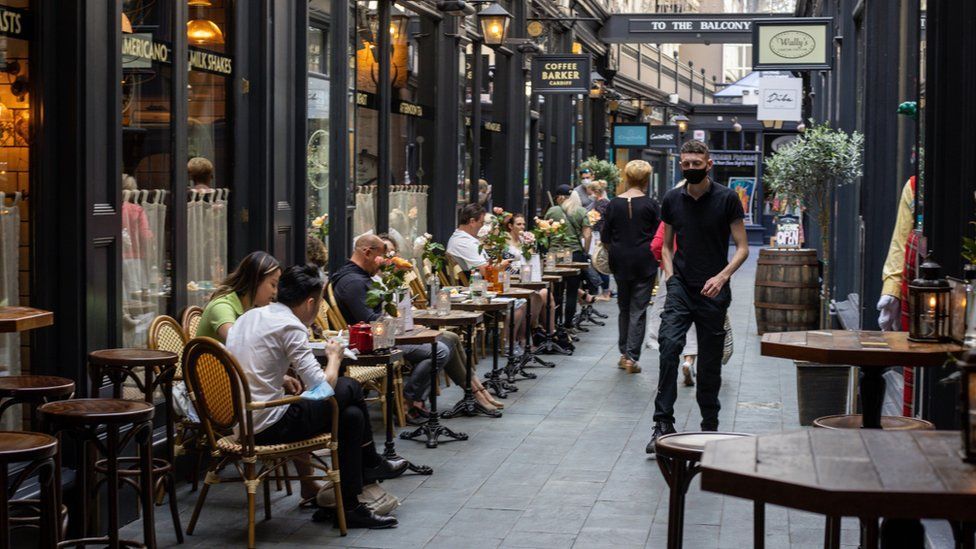
The hospitality sector has called for social-distancing rules to be relaxed

Ministers have indicated Wales will move to "increasing normality", but on Tuesday the first minister said he did not want to ease restrictions "wholesale".

"The mood of Welsh people is not a mood of thirsting for some spurious freedom day," he said.

Wales' case rate on Tuesday stood at 138.2 per 100,000 people, with the number of positive tests running at an average of 623 a day.

That compares with 466 a day the week before, and about 77 a day a month ago.

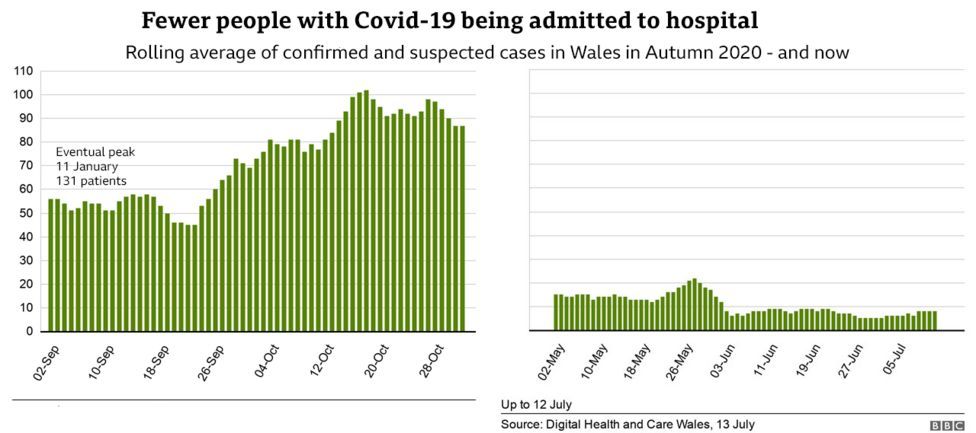
But officials say the link between cases and serious illness and death has weakened. At the start of July, only 1.1% of Covid cases were admitted to hospital.

The Welsh Conservatives' Senedd leader Andrew RT Davies called for a "detailed plan for the restoration of freedoms in Wales".

"Given the data trends, the Welsh Labour government now has the flexibility to provide families, workers and businesses with their plan for restoring all freedoms and releasing restrictions in Wales," he said.

Plaid Cymru's deputy leader Rhun ap Iorwerth criticised the Welsh government's plans for a press conference on Wednesday evening, saying it would clash with a debate in the Senedd calling for a Wales-only public inquiry into ministers' handling of the Covid pandemic.

"Throughout the pandemic, we've seen announcement after announcement made by press release, rather than in our Parliament where proper scrutiny can take place. Sadly, here's another example of a government snub," he said.

Although most businesses are now allowed to trade, under current restrictions they must do so under social-distancing laws.

These apply to pubs, cafes and restaurants and the sector has lobbied for them to be scrapped.

Nightclubs remain closed in Wales, while organisers of large events are waiting to find out if they can take place.

Legal limits on numbers that can meet outdoors remain in Wales, while meetings in private homes are currently restricted to those who are in extended household groups.

Newsletter

Related Articles

0:00
0:00
Close
Ukrainian Drone Barrage Kills Eight and Strikes Russian Logistics Network
Key Trends to Watch
Financial Conduct Authority Warns Cloud and Digital Risks Are Becoming a Financial Priority
Jeffrey Donaldson Appeals Sexual Abuse Conviction as Democratic Unionist Party Opens Review
Welsh Health Authorities Launch Emergency Meningitis Vaccination Programme for Students
Scottish Business Activity Falls for Third Month as Companies Face Rising Costs
Bank of England Regulators Demand Better Access to Digital Banking Services
United Kingdom Cuts Bilateral Aid to Several African Countries by Up to Ninety Per Cent
United Kingdom Introduces Tougher Deportation Rules After Rochdale Exploitation Scandal
NHS England Launches Wearable Technology Plan to Reduce Sepsis Deaths
Amazon Web Services Billing Error Sends Trillion-Dollar Invoices to British Companies
Bank of England Takes Direct Regulatory Role Over Major Global Cloud Providers
Extreme Summer Heat Drives Record Fire Risk and Rising Deaths Across Britain
United Kingdom Nationalisation of British Steel Sparks Diplomatic Dispute With China
United Kingdom Economy Shows Weak Growth Ahead of Major Autumn Budget
Andy Burnham Set to Become United Kingdom Prime Minister After Labour Leadership Victory
The Ten World Cup Finals That Defined Football History
Smartphones Are Getting More Expensive, Sales Are Collapsing, and Even Apple Admits: "Prices Will Rise"
The Monaco Bombing Has Become a Test of Ukraine’s Intelligence Accountability
Leadership Change and Strategic Rivalry Redraw the Political Map
Energy Risk, Uneven Growth and the New Geography of Global Capital
The AI Race Enters Its Infrastructure Era
Security and resilience remain long-term national priorities
Britain balances growth ambitions with public finance pressures
Regional devolution becomes a defining theme of the next Labour era
Industrial strategy returns to the centre of British economic policy
Political Instability Remains a Challenge for UK Investment Confidence
Brexit Economic Debate Continues as Public Concerns Over Long-Term Impact Remain
UK Climate Risks Rise as Met Office Warns Extreme Weather Is Becoming More Common
Housing Shortages and Regional Inequality Become Key Priorities Under Incoming Labour Leadership
National Health Service Reform Remains One of Britain’s Biggest Political Challenges
Bank of England Remains at Centre of UK Economic Debate Over Inflation and Growth
UK Economy Shows Recovery Signs but Households and Businesses Remain Under Pressure
Britain Deepens European Defence Cooperation as NATO Allies Seek Stronger Security Capabilities
United Kingdom Expands Sanctions Against Russian Cyber Networks Over Security Threats
UK Industrial Strategy Faces Test After Government Takes Control of British Steel
British Businesses Seek Policy Clarity as Andy Burnham Prepares to Lead Labour Government
Andy Burnham’s Labour Leadership Signals Major Shift Toward Regional Power and Devolution
British Steel Nationalisation Creates New UK-China Tensions Over Control of Strategic Industry
For 36 Years, He Scammed About 300 Luxury Hotels — Until He Was Caught
England's World Cup Exit Expected to Cost Hospitality and Retail £334 Million
Former ICC Prosecutor Aide Speaks Publicly About Allegations Against Karim Khan
Opposition Raises Questions Over June Heatwave Power Grid Pressures
Mastercard Explores Sale of Majority Stake in UK Payments Operator Vocalink
Boeing Forecasts Global Commercial Aircraft Fleet Will Double by 2045
London GP Surgeries Receive £18 Million to Expand Primary Care Capacity
Health Advisers Recommend Nationwide Meningitis B Vaccination for Teenagers
OECD Warns UK Economy Faces Slower Growth and Weak Productivity
Treasury Places Major Global Cloud Providers Under Direct Financial Oversight
Financial Markets Rally as Shabana Mahmood Emerges as Leading Treasury Candidate
×