

Covid: GCSE and A-levels in Wales cancelled for 2021
Education Minister Kirsty Williams said it was impossible to guarantee a level playing field for exams due to the ongoing impact of the Covid pandemic.
Head teachers would work on a "national approach" to ensure consistency, she said.
Assessments will be done under teacher supervision, and will begin in the second half of the spring term.
They will be externally set and marked but delivered within the classroom.
She added cancelling exams would also give time for teaching to continue through the summer term.
Teachers would have flexibility on when to take the assessments, within the "context of results timelines".
However one teaching union questioned whether the announcement would mean ending up with "exams by stealth".
Why have the exams been cancelled?
Confirming the decision, Ms Williams said: "The well-being of learners and ensuring fairness across the system is central in our decision making process.
"We remain optimistic that the public health situation will improve, but the primary reason for my decision is down to fairness; the time learners will spend in schools and colleges will vary hugely and, in this situation, it is impossible to guarantee a level playing field for exams to take place.
"We have consulted with universities across the UK and they have confirmed that they are used to accepting many different types of qualifications."
Ms Williams said it remained a "highly challenging year" but the announcement would remove pressures from learners and provide "clear time for teaching and learning".
What's the view from the classroom?

A-level student Cerys Harris, 17, from Rhyl, has already had four weeks of self-isolation this term because of cases in her "bubble".
She wants to start a degree next September in England.
Although the education minister said universities are familiar with different qualifications, Cerys said she did not feel reassured, and was looking forward to more detail as to how the system is going to work.
"I've taken from [the announcement] that exams are cancelled, but it's not very straightforward," she said.
Fellow Rhyl A-level student Jonathon Dawes, who studies at Coleg Cambria and is also a member of the Welsh Youth Parliament, said he welcomed the decision, but was looking forward to getting more detail.
"I'm looking forward to more guidance coming out to make sure it's as fair and transparent as possible, to make sure pupils get the grades they deserve and it's not different from school to school."
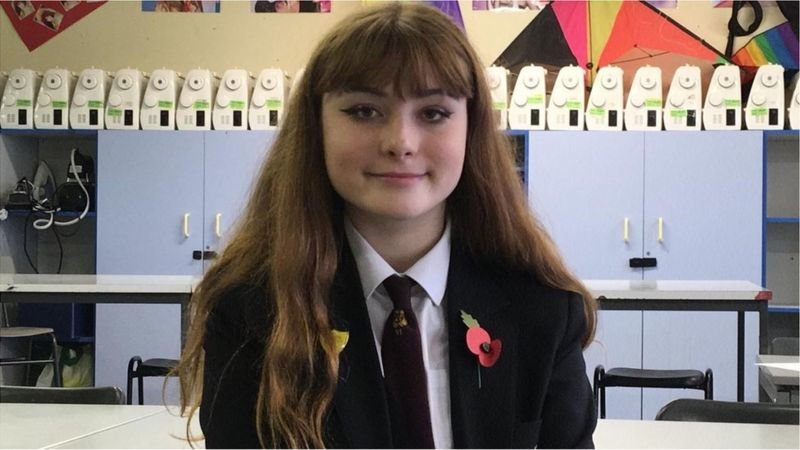
Jess Foster, 17, who is taking her A-levels at Bassaleg School in Newport, was "immediately relieved".
"I stress out about things personally a lot. To hear that taken off me instantly just felt really good," she said.
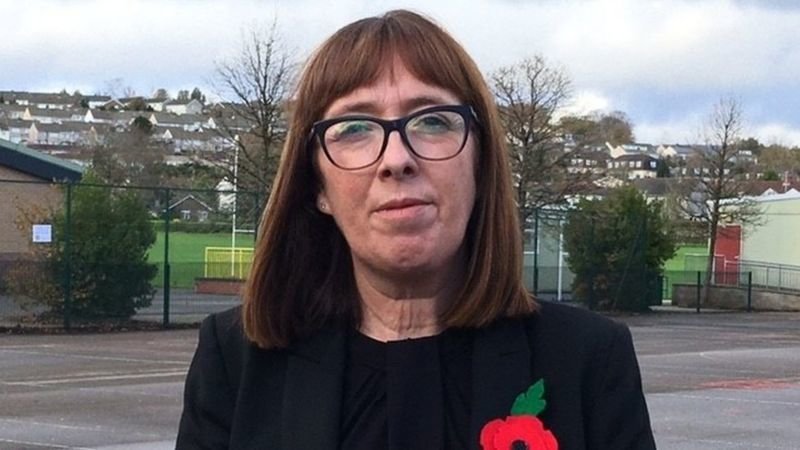
Her head teacher, Victoria Lambe, welcomed the announcement, describing the move as "brave" and the "fairest" decision for young people.
"It very much places trust is the teaching profession. I think it will enable us to continue to put robust measures in place for monitoring pupils' progress," she said.
"It's been an incredibly stressful period for all members of the school community and this will enable us to really reduce stress levels."
What is the situation elsewhere in the UK?
In England, exams are still going ahead but some have been moved back by three weeks to allow for more teaching time, and with reduced content in some subjects.
In Scotland, the GCSE-equivalent National 5 exams are cancelled and replaced by teacher assessments and coursework, but Higher and Advanced Higher exams will just be delayed by two weeks.
Exams in Northern Ireland are still going ahead but the number of papers in some subjects has been reduced.
Downing Street said there was no change to the plan to hold exams in England following Ms Williams's announcement.
The prime minister's official spokesman said: "We continue to think that exams are the fairest way of judging the students' performance."
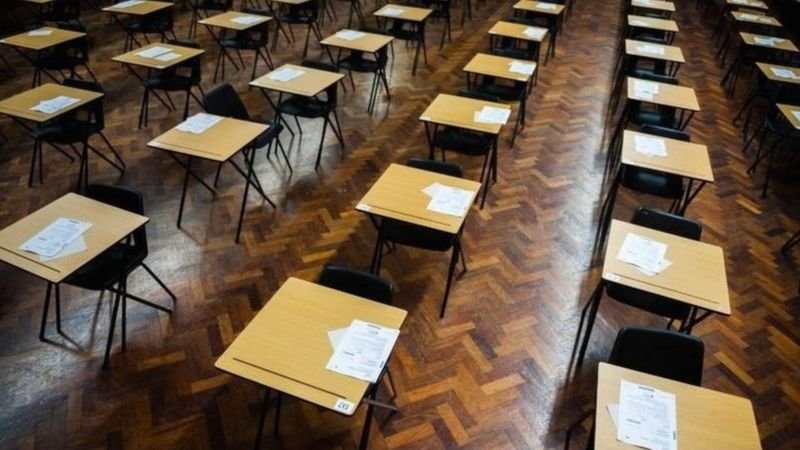
Exam regulator Qualifications Wales, which advised the minister on her decision, said: "We recognise this has been a difficult decision and there are no easy answers. We are considering the decision and what it could mean in practice.
"In the meantime, we will provide advice to the Independent Design and Delivery Advisory Group."
Wales secretary of the National Education Union David Evans said: "We must ensure that young people have a consistent assessment process in place which means their abilities are recognised for their next steps.
"But this must not mean extra work for everyone involved - both staff and students alike. The education system is already struggling."
Children's commissioner for Wales Sally Holland said Ms Williams had made the right decision.
She said: "This should be a year of learning, not worry. Young people should now rest assured that the decision will enable them to work towards their qualifications."
Her words were echoed by Eithne Hughes, director of the Association of School and College Leaders (ASCL) Cymru, who said it would maximise "fairness" for students.
"This is the right decision for our young people," she added.
"It recognises the fact that they will have been affected to differing extents by the impact of the pandemic and it allows for as much teaching time as possible to catch-up with lost learning."
But the head of the school leaders' union NAHT raised concerns of ending up with "exams by stealth".
Ruth Davies said: "It has been announced that pupils will still be given externally set and marked tests, just in the classroom.
"We can't see how that isn't an exam. There is an awful lot of detail still to be determined, and we await further clarification, but we are worried we will end up with exams in all but name."
Future generations commissioner Sophie Howe said GCSEs should be permanently replaced with assessments which were centred around pupils "not testing".
Plaid Cymru's education spokeswoman Sian Gwenllian MS said with so much variation in how much education a pupil had received, a "one size fits all" approach would not have been fair.
The Conservative spokeswoman Suzy Davies said: "The critical issue for me is that assessments are externally set and externally marked. This will give them some comparability with previous years' exams and protect teachers against any accusations of unintended bias."
Reform MS Mandy Jones asked the government to review the announcement to allow students to sit exams if they wished.
Who was consulted over the decision?
The 2020 exams were cancelled following the start of the first lockdown and results were eventually based on teacher-predicted grades.
Ms Williams said her decision for the 2021 exams came after she considered detailed advice from Qualifications Wales on available options as well as interim findings of a review of the 2020 exam process.
She also spoke to students, school and college leaders, universities and the children's commissioner.
She said: "In line with the recommendations of both Qualifications Wales and the Independent Review, there will be no exams for GCSE or AS level learners next year.
"A-level students will also not be required to sit exams."