

Covid and schools: 'Children know things aren't right'
Relatively few pupils have tested positive, but hundreds of thousands have had to learn from home after being required to self-isolate.
What impact is that having on schools, parents and pupils themselves, as many prepare for exams?
'Pupils give us a look of dread'
Even before mid-October, when Northern Ireland's "huge wave" of cases came to Lisneal College in Londonderry, principal Michael Allen says about five of the GCSE year group of 135 pupils had not returned because of mental health and anxiety issues.
He says the impact of self-isolation was to reduce overall attendance to below 85%. At that level, for an individual student, the school would normally refer families to education welfare services, Mr Allen says.
The first case meant 60 pupils in year 12 - Northern Ireland's GCSE exam year - had to go into self-isolation, just weeks before exams started in November.
"We have just had 20 Year 12s return from two weeks of self-isolation, and at 9.30am many of those young people had to walk into an exam hall and sit a single-award GCSE chemistry exam," Mr Allen said.
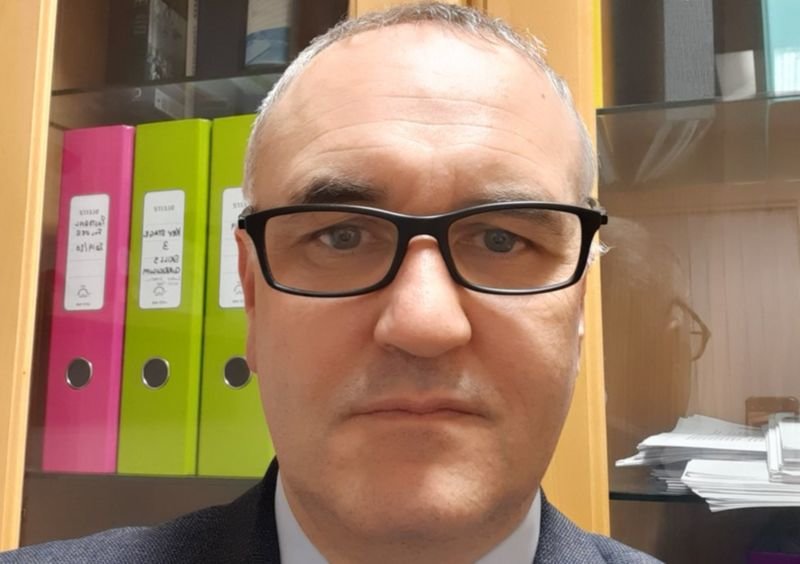
There is "total and utter disregard" for the disadvantage pupils like this face in the exam system, he says, with pupils with special education needs being especially badly affected.
Remote teaching is made harder because teachers cannot work simultaneously with pupils in the classroom and those working at home. "That's not living in the real world," Mr Allen said.
The work of contact tracing falls to school leaders themselves, meaning they have to respond to sudden alerts of positive cases at any time.
Mr Allen said pupils give him or his vice-principal a "look of dread" when they walk into the classroom, because they know it means someone will end up missing school. Some have begged them to review the contact tracing process.
"Two weeks ago we had a girl in tears asking us to go back and measure the two metres. No one seems to be taking any notice of what these young people are going through."
'I feel so sorry for the parents'
"It's been a bit of a nightmare", said Emily Proffitt of the asymptomatic spread that forced her to temporarily close Cooper Perry Primary School in Staffordshire on the advice of public health officials.
First, a staff member tested positive over half-term, forcing a few others to self-isolate. Then a few days later another member of the team tested positive.
But there was no traceable connection to other positive cases, so public health authorities said all the staff at the small village school - which has open-plan teaching spaces - needed to be tested.
That eventually uncovered another three asymptomatic cases. By that point so many staff had to self-isolate that the school was forced to close for a week.
They reopened this week, only for a pupil to test positive, meaning two year groups and five members of staff were sent home.
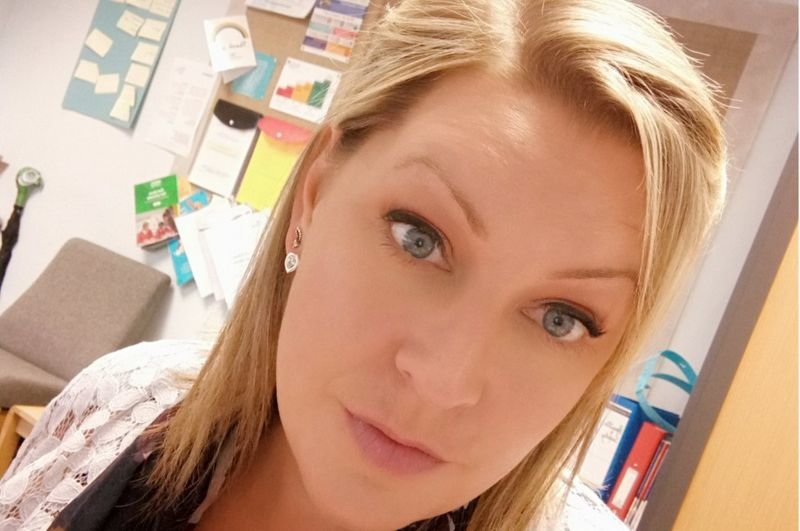
"For the parents, I feel so sorry for them," Ms Proffitt said. With several pupils having had four weeks out of school since half-term, some of their parents will have had to take time off work. For some of them, they will have been unpaid.
She said she was worried it looked like the school had not prepared for the risk, when in reality "we've got hands that are red-raw from sanitising".
Pupils are anxious, with some asking to wear masks even when they are not required. Staff are working in isolation from each other and are stressed, as many prepare two sets of lessons for in-person and remote teaching, Ms Proffitt said.
"We're looking at probably a decade of attachment and trauma issues that are going to be related back to Covid."
"However much we paint our smiles on in the classroom, and we're good at that, children read us very well and they know things aren't quite right."
'It's stressful to even think about exams'
Merseyside has been one of the areas worst-hit in the UK's second wave of the pandemic.
And at The Prescot School in Knowsley that has meant a collective 700 days in the classroom lost for the year 11 students preparing for exams in the summer.
One student, Ben, told the BBC: "Year 11 is such a crucial year, you've got exams and mock exams and that's the main thing that's going to set you for life.
"As someone who's self-isolated already, I think it's really stressful to even think about the exams that we've got to do in a few months' time when we've missed out a large chunk of school."
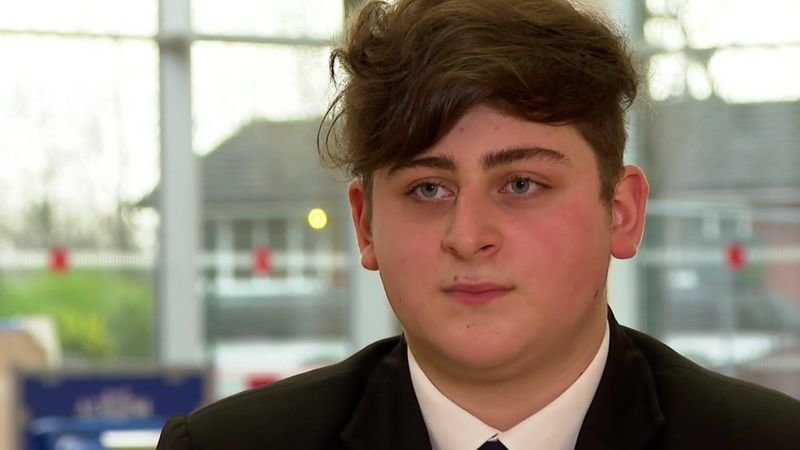
He says the year group is still learning content that they had missed when schools were closed in the first lockdown.
"In any other time period we would be revising and going over past things now."
"I don't really think it's fair," he said, pointing out that some areas have seen much more disruption to education in this wave of the virus, while everyone will face the same exam conditions.
"We've obviously all gone through Covid and it's been strange for everyone. But there are other places it hasn't affected as much as here," he says.
'Remote learning has been a pleasant surprise'
Felicity Sandford said her daughter Cerys was the only one in her form to be sent home after contact with another child in her Spanish class who had tested positive.
"She was a bit traumatised to be pulled out of her class and not know what was going on, and she was the only one," Felicity said.
Students were reassured they had not done anything wrong but had to wait a while before they learned why they were being taken out of class. "I had to go and meet her and she was pretty upset."
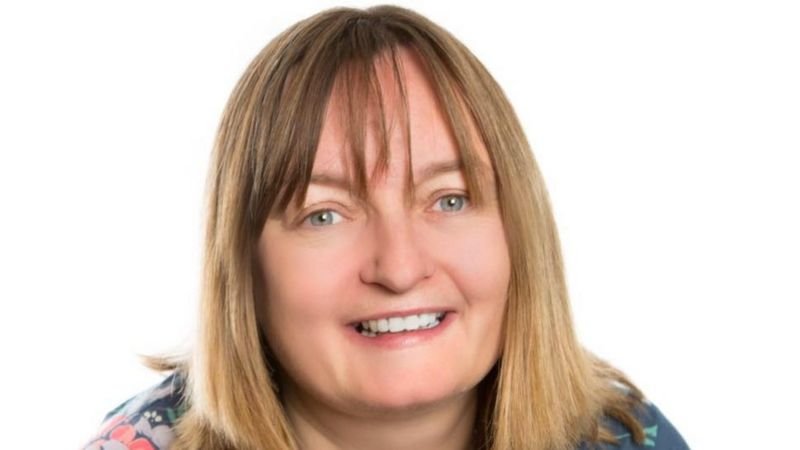
Felicity said she was "absolutely gutted" herself as her work as a marketing consultant for children's activity providers in west London was hitting a busy time.
But she says it was a "pleasant surprise" how organised the remote learning has been, with Cerys using Microsoft Teams to keep in touch, taking online lessons from Oak National Academy and logging her homework and progress with photographs.
"In lockdown, at primary school there wasn't any structure. With this one I haven't had to get very involved," Felicity says.
The strict remote learning regime surprised Cerys too, who had hoped "she might just get to chill out in her pyjamas" only to find that her schedule of work had been emailed the night before.
But with both parents working from home, finding space in the house has been one of the main challenges. "I've actually been working from her bedroom today while she's been at the dining table," says Felicity.
'A sign of how important school is'
Tasos Konidaris says his daughter Mathilde took it "quite heavily" when she was told by her school she needed to self-isolate because of contact with a student who tested positive.
A year 11 student, Mathilde already felt unprepared because of missed classes during the pandemic's first wave, Tasos says. "She thinks, how am I going to deal with this? Is it fair?"
He says the school adapted well to online classes with students able to watch most lessons remotely.
But eventually the whole year had to isolate as the case load became too great.
And when his daughter tested positive, the family had to self-isolate too.
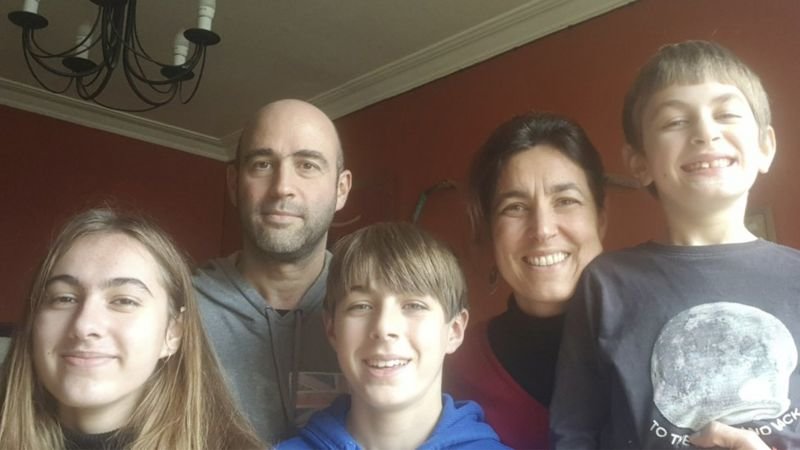
With sons Hector, 13, and Alexander, 10, also learning from home, it put the parents under extra strain. "You're having to suddenly be a parent, a teacher and do your work. It's quite wearing," he said.
But Tasos said it gave them a renewed appreciation of what teachers do.
"When you have your kids looking you in the eye and telling you with a sad face, I want to go back to school - which is funny to hear from a teenager - it's a tell-tale sign about how important it is."