London Daily

Focus on the big picture.
Friday, Oct 23, 2026

COVID-19: Britons must take coronavirus test before travelling to Ireland

COVID-19: Britons must take coronavirus test before travelling to Ireland

Failure to produce a negative test result could mean a fine of up to €2,500 (£2,261) and/or imprisonment for up to six months.

Visitors to Ireland will have to produce a negative COVID-19 test taken within the previous 72 hours, as the country's government brings in a raft of tough new restrictions.

The requirement for a PCR test will initially apply to travellers from Great Britain and South Africa - who until Friday night are banned from entering Ireland.

The new arrangements will begin on Saturday before being extended to all countries.

However, even with a negative test result, visitors must still self-isolate for 14 days. Failure to produce the negative test result could mean a fine of up to €2,500 (£2,261) and/or imprisonment for up to six months.


Ireland has seen a surge in COVID-19 cases due to a loosening of restrictions in the run-up to Christmas and the arrival of the more contagious variant of the virus, which was first detected in the UK.

Of the positive cases that had arrived from Britain in December, 41.3% had been the new variant, said Prime Minister Micheal Martin.

The country is already in its top tier (Level 5) lockdown, but continuing record daily case numbers meant new restrictions had become an inevitability.

Besides the new travel requirements, the country's schools will now remain shut for the remainder of January (except for final-year students), and non-essential construction projects, previously permitted, will have to shut.

Non-essential retailers will no longer be allowed provide a "click-and-collect" service, and will be restricted to delivery only.

Mr Martin said "we simply have to suppress this surge, and flatten the curve once again", and warned of the "tremendous harm that can be done if we let our guard down in any way".

Today's new measures will remain in place until at least 31 January.
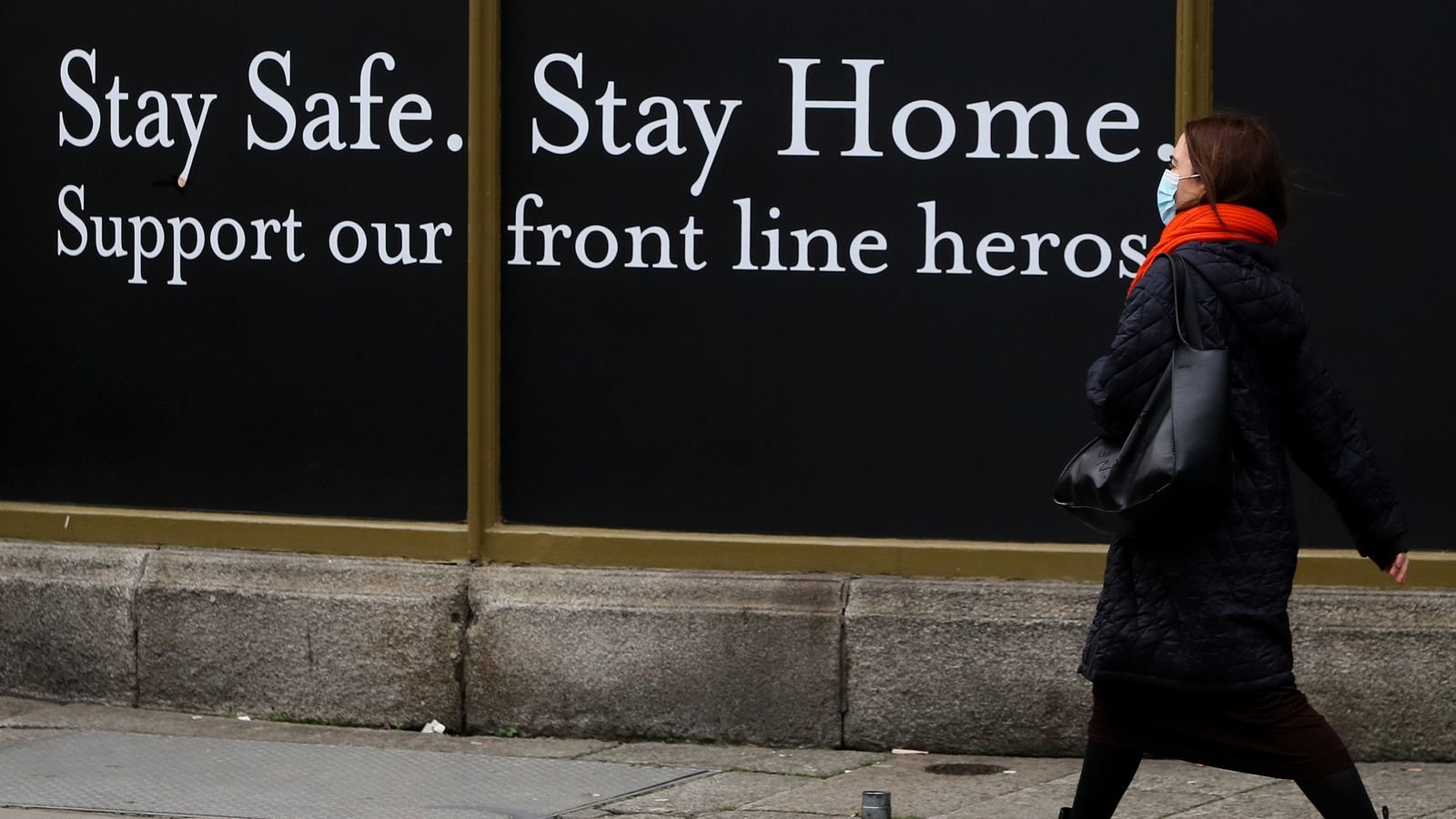

A woman walks past a closed bar in Dublin. File photo


Meanwhile, there are suggestions bars and restaurants in Ireland are likely to remain shut until the end of March due to coronavirus restrictions.

When asked about those establishments, Deputy Prime Minister Leo Varadkar: "If I was running a business now, I would be thinking that it's a probability that I'll be closed until the end of March."

Current public health measures are due to be reviewed at the end of January, but Mr Varadkar said the country was not going to be "out of the woods" by then.

Analysis: The difficulty with this kind of arrangement remains Northern Ireland


Critics call it a case of shutting the barn door after the horse has bolted, but finally visitors to Ireland will have to show they've been tested for COVID.

There had been calls for this measure as far back as the first wave, and opposition politicians have said it's too little, too late.

From Saturday, visitors from Britain will have to provide a negative PCR test result, taken within the previous 72 hours.

Even then, a two-week isolation period beckons. But as always, the difficulty with this kind of arrangement remains Northern Ireland.

There is no requirement for a test to enter Northern Ireland from the rest of the UK.

As seen during the Brexit negotiations, the open border between North and South is sacred to the Dublin government, and it will not contemplate any form of checks there.

Theoretically, there is nothing to stop someone circumventing Ireland's new rules by flying into Belfast and driving south.

When I asked Ireland's prime minister about this challenge, he admitted "it is a problem".

He spoke of continuing engagement with the Northern Ireland Executive, but as his transport minister Eamon Ryan added: "Stormont will have to make their own call."

Newsletter

Related Articles

0:00
0:00
Close
Government Injects One Hundred and Forty Million Pounds to Expand Urgent Care Ahead of Winter Crisis
Department of Health Warns Further Pay Rises Will Derail National Health Service Waiting List Targets
Major Environmental Emergency Declared in South Wales Following Aerospace Kerosene Spill
Tank Barrel Production Returns to Britain as Defence Contractors Accelerate Domestic Rearmament
Government Approves Controversial Jackdaw Gasfield Development in the North Sea
National Health Service Maternity Safety Review Condemned Over Flawed Artificial Intelligence Integration
Dozens of United Kingdom Government Services Taken Offline Amid Critical Software Vulnerability
Barclays Announces Five Thousand Job Cuts Citing Artificial Intelligence Productivity Gains
Treasury Relaxes Post-Financial Crisis Accountability Rules for City of London Executives
United Kingdom Government Issues Unprecedented Guidance Urging Citizens to Stockpile Essential Supplies
United Kingdom Consumer Inflation Accelerates to Eleven-Month High Driven by Transport Costs
United Kingdom Public Sector Net Debt Breaches Three Trillion Pounds Ahead of Autumn Budget
Department for Science, Innovation and Technology Commits Fifty Million Pounds to Establish Regional Artificial Intelligence Innovation Clusters
Ofgem Directs Major Energy Suppliers to Expand Vulnerable Household Support Funds Ahead of Winter Heating Season
Home Office and National Police Chiefs Council Unveil New Intelligence-Led Strategy to Tackle Organised Immigration Crime Networks
First Minister John Swinney Secures Scottish Parliament Approval for Comprehensive Climate and Green Energy Infrastructure Strategy
National Health Service England and Trades Union Congress Finalize Agreement on Emergency Winter Staffing and Pay Frameworks
HM Treasury and Department for Business and Trade Announce Multi-Billion-Pound Sovereign Investment Pact to Spur Regional Advanced Manufacturing
Bank of England Governor Andrew Bailey Signals Potential for Faster Interest Rate Cuts as Domestic Inflation Pressures Ease Below Forecasts
Parliamentary Inquiry Highlights Urgent Need to Address Housing Shortage as Scottish Completions Hit Eleven-Year Low
United Kingdom and Singapore Sign Comprehensive Financial Agreement to Deepen Digital and Sustainable Market Ties
Greggs Announces Plan to Close Four Manufacturing Facilities and Cut Seven Hundred and Forty Jobs
International Monetary Fund Raises United Kingdom Economic Growth Forecast While Warning of Inflationary Pressures
Energy Security and Net Zero Committee Urges Government to Shift Policy Costs Onto Gas to Lower Household Bills
Housebuilding Across Scotland Plummets to Eleven-Year Low Despite Government Pledges to Tackle National Housing Emergency
Greggs Announces Factory Closures Across Northern England and Scotland Affecting Seven Hundred Forty Jobs
United Kingdom and Singapore Conclude Eleventh Financial Dialogue in Singapore to Deepen Cooperation on Digital Finance and Capital Markets
Energy Security and Net Zero Committee Urges Government to Shift Policy Costs to Gas Bills and Tap Windfall Profits to Lower Consumer Prices
British Broadcasting Corporation Announces Major Cost-Cutting Overhaul to Close Linear Broadcast Services for Television Channels BBC Three and BBC Scotland Alongside Digital Radio Station BBC Radio Four Extra
London Capital Markets Face Renewed Scrutiny After High-Profile Offerings Underperform Post-Listing
Green Party Wins Historic First Westminster Parliamentary By-Election in Gorton and Denton
Environment Secretary Emma Reynolds Unveils Sweeping Regulatory Overhaul for English Water Industry
United Kingdom Health Security Agency Confirms Thirty-Four Cases in Kent Meningitis Outbreak
Ministry of Defence Prepares Heat Pump Subsidy Cuts to Fund Urgent Military Modernization
British and European Union Officials Schedule Long-Awaited Bilateral Leaders Summit for November Twentieth
Bank of England Governor Andrew Bailey Urges Strict Fiscal Credibility to Protect British Bond Markets
United Kingdom Inflation Rises to Three Point One Percent Driven by Escalating Fuel Costs
Profit Warnings Among London-Listed Companies Reach Two-Year High Amid Global Energy Shocks
Chancellor John Healey Signals Targeted Tax Changes on Banks and London Corporate Offices Ahead of Budget
British Government Reallocates Twenty-Five Per Cent of International Climate Finance to Global Biodiversity Projects
Initial British Carbon Border Taxes Set to Undercut Parallel European Union Tariffs on Industrial Imports
Whitehall Prepares National Zero-Interest Loan Initiative to Accelerate Domestic Heat Pump and Solar Adoption
European Union Offers British Automakers Access to Hybrid Vehicle Trade Protections Subject to Strict Regulatory Alignment
British Probation Officers Threaten Widespread Industrial Action After Rejecting Five Per Cent Government Pay Offer
Microsoft Abandons Major British Artificial Intelligence Data Centre Citing Severe National Grid Power Constraints
United Kingdom Inflation Accelerates to Three Point Four Per Cent Ahead of Chancellor John Healey's Inaugural Autumn Budget
Surging Cloned Number Plates Severely Complicate Traffic Enforcement and Police Investigations
Mounting Opposition Challenges Planned Rollout of Autonomous Taxis Across London
Influential Think Tank Urges Rejoining European Union to Navigate Geopolitical Crises
Government Review Recommends Slashing Benefits to Fund Youth Employment Initiatives
×