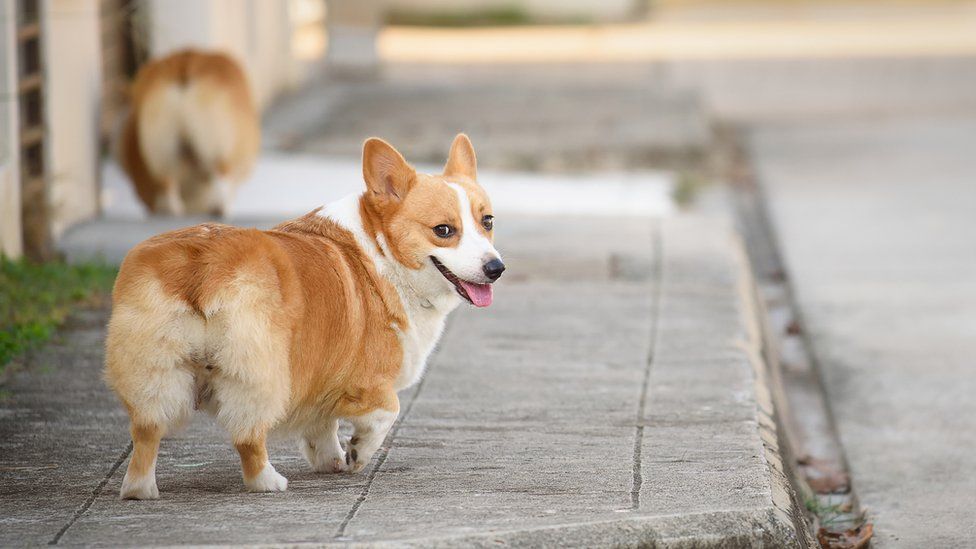
Corgis: How the Queen fell in love and started a phenomenon
1959: Queen Elizabeth II, aged 32 and a mother of two, sits designing a gravestone for her dog.
Susan showed up on her 18th birthday, and would gatecrash her honeymoon a few years later, smuggled beneath a rug in the royal carriage after her wedding to Prince Philip.
"I had always dreaded losing her," the Queen wrote in her grief, "but I am ever so thankful that her suffering was so mercifully short."
That Susan bit the royal clock winder and a young palace sentry is a matter of record, though her epitaph leaves out such indiscretions. She was buried in the pet cemetery at Sandringham, started by famously committed mourner Queen Victoria.
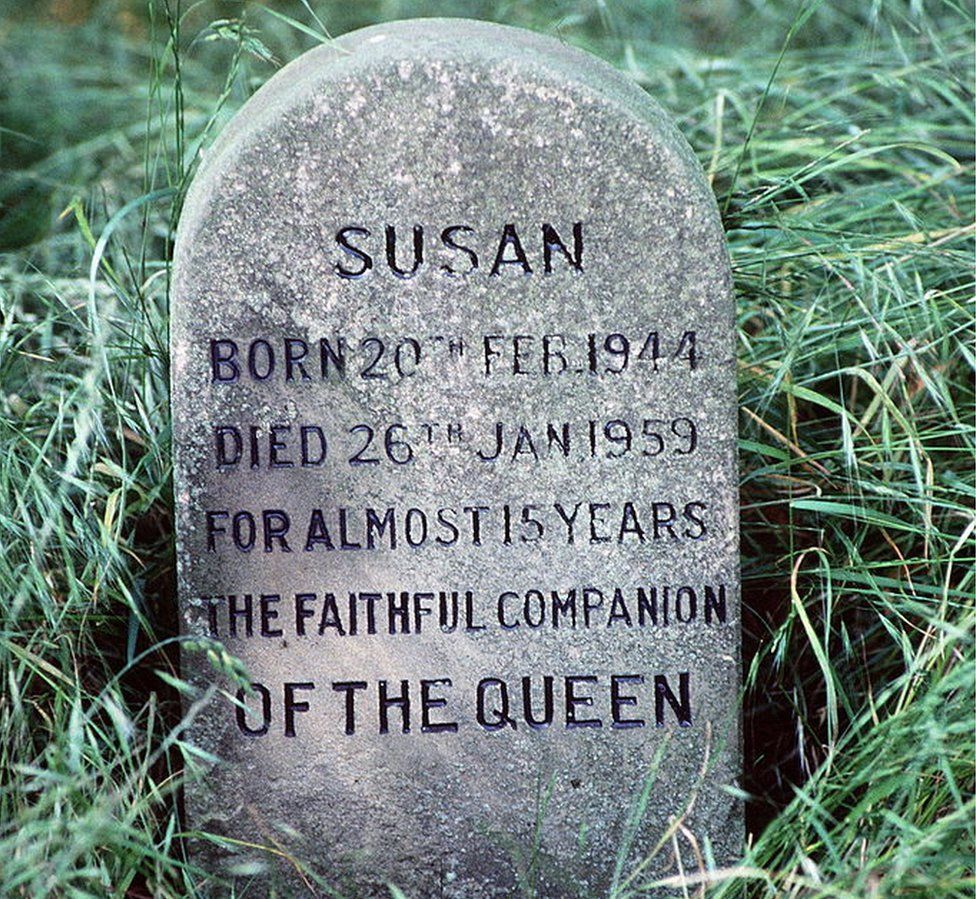 Susan's gravestone stands in the pet cemetery at Sandringham, the Queen's Norfolk estate
An ending for one Pembroke Welsh corgi - but certainly not for Her Majesty, who was only just getting started.
Over the next six decades, she would own more than 30 of Susan's descendants, single-handedly create a mass market for this stunted Welsh cattle dog, and accidentally invent the dorgi with the help of Princess Margaret's amorous dachshund, Pipkin.
Why corgis? The answer, which may resonate with parents, is that some friends had one in 1933 when Princess Elizabeth was seven years old, and she wanted one too.
Pembroke corgis were a familiar sight in Wales, but fairly new to England. The Duke of York, Elizabeth's father, approached a respected breeder named Thelma Gray who brought the family three puppies from her Rozavel kennels in Surrey to choose from.
They settled on a little corgi officially named Rozavel Golden Eagle, because he was the only one with a small stump of tail to wag - and they wanted to know when he was pleased. But the pup became known as Dookie, reportedly after the kennel staff heard the Duke of York was going to be his owner, and the nickname stuck.
Dookie was horribly behaved, biting courtiers and visitors with abandon - but that didn't stop a press photo of Elizabeth and the tiny tyrant charming the public and raising the Pembroke corgi's profile.
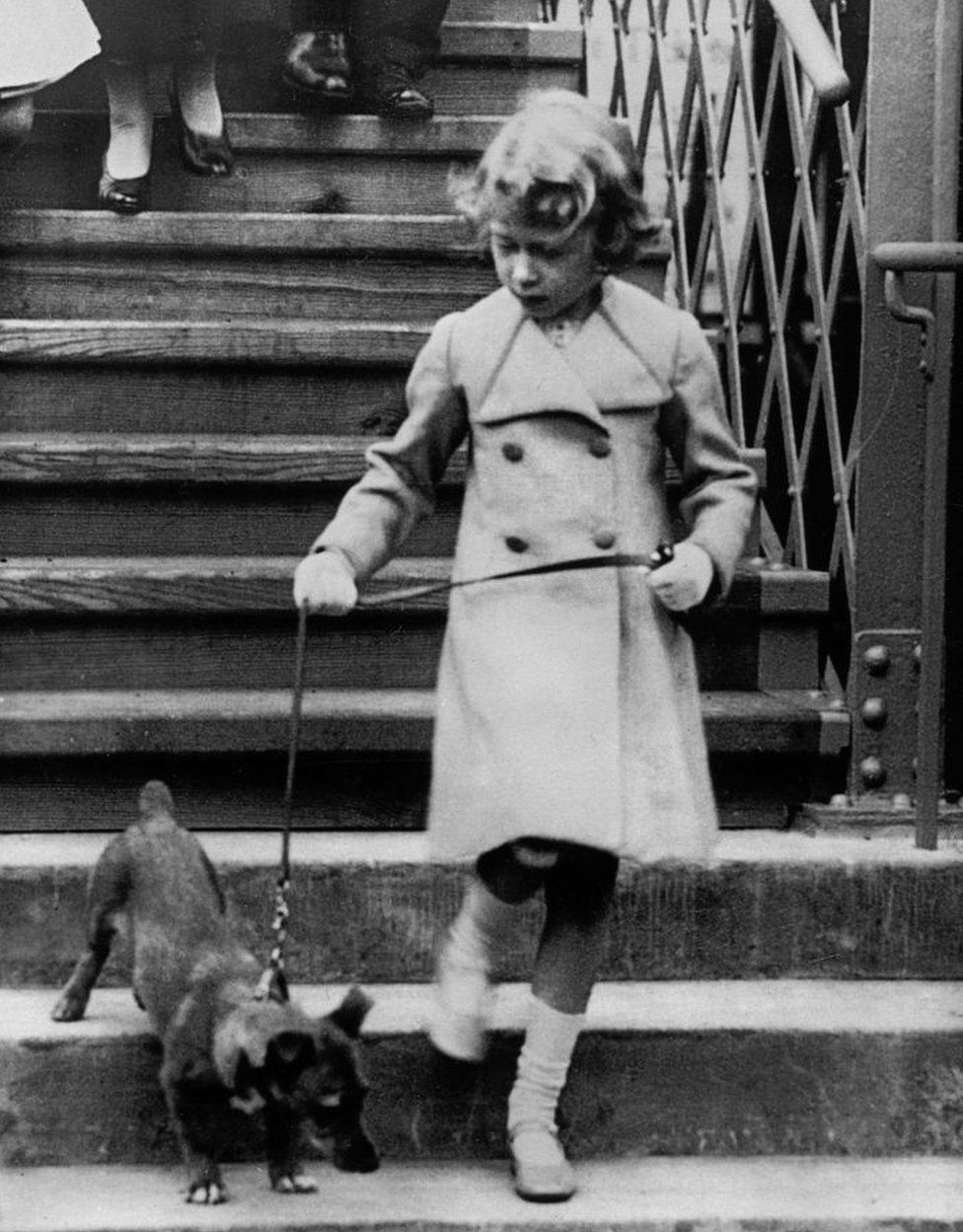 Princess Elizabeth pictured at Glamis Station with Dookie just after he joined the family
Another puppy, Lady Jane, arrived from the same breeder a few years later. Christmas 1936 then saw a royal PR coup in the form of a saccharine children's book - Our Princesses and Their
Dogs - which styled the Yorks and their pets as "one very human family". The book, brimming with dog pictures and family values, went on sale just days before the Duke's elder brother abdicated, making him the new king.
Buckingham Palace is extremely tight-lipped about anything to do with the Queen's dogs because they're seen as a "private matter". But it's clear the royals cottoned on early to the softening effect of a well-timed corgi.
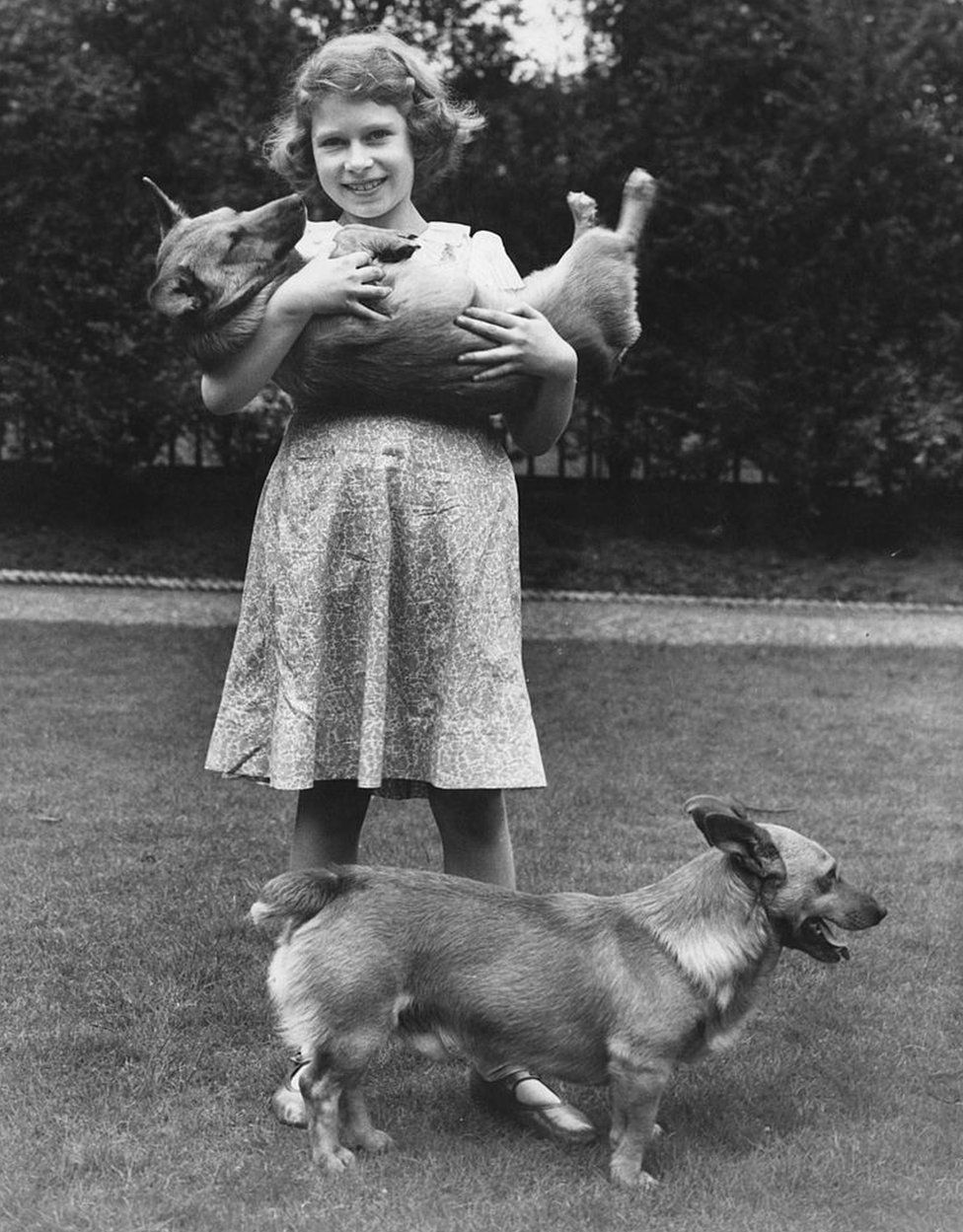 Princess Elizabeth with her first corgis - Dookie and Jane - at her childhood home in Piccadilly, London, July 1936
Kennel Club figures show a clear spike in Pembroke corgi registrations in 1936, and another in 1944, the year Princess Elizabeth got Susan. She had made corgis cool, while they made her look warm.
"People - breeders - were servicing the market for a dog that has suddenly become very popular. It's the 101 Dalmatians effect," notes Ciara Farrell, the Kennel Club's Library and Collections Manager.
"You see it with advertising as well - the old English sheepdog on the Dulux advert in the 70s and 80s." Likewise, the Andrex puppy, a marketing masterstroke that's run for half a century.
Away from the cameras, Princess Elizabeth and Susan were inseparable. Add to that a royal's awareness of lineage, and it's no surprise she turned to Thelma, provider of her childhood puppies, to find Susan a mate. Rozavel Lucky Strike was the dog for the job, and founded a line of Windsor Pembroke corgis which continued for 14 generations.
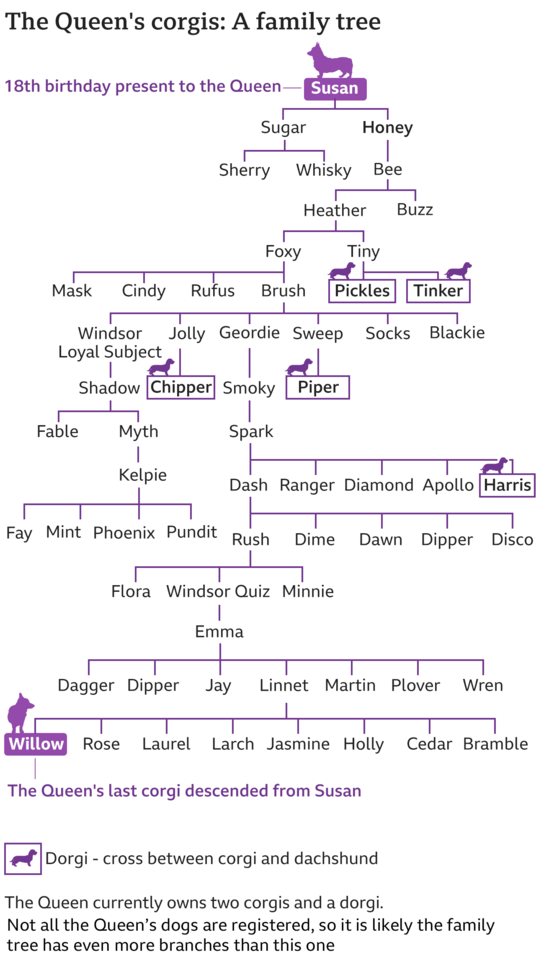
As well as being the Queen's much-loved pets, the corgis are a connection to her father, and a more carefree time. Every puppy after Susan was a way of keeping part of that with her, and a reminder that life and dynasties go on.
While her husband Prince Philip spent a lifetime walking a little behind his wife, the corgis scamper ahead - revelling in a freedom denied to the Queen herself. Princess Diana is said to have coined the phrase "a moving carpet" to describe the jumble of dogs that preceded her. But the Queen herself calls them "the girls" and "the boys". In all her years of breeding, she has never sold any of her puppies. All stayed with her, or were given to breeders, relatives or friends.
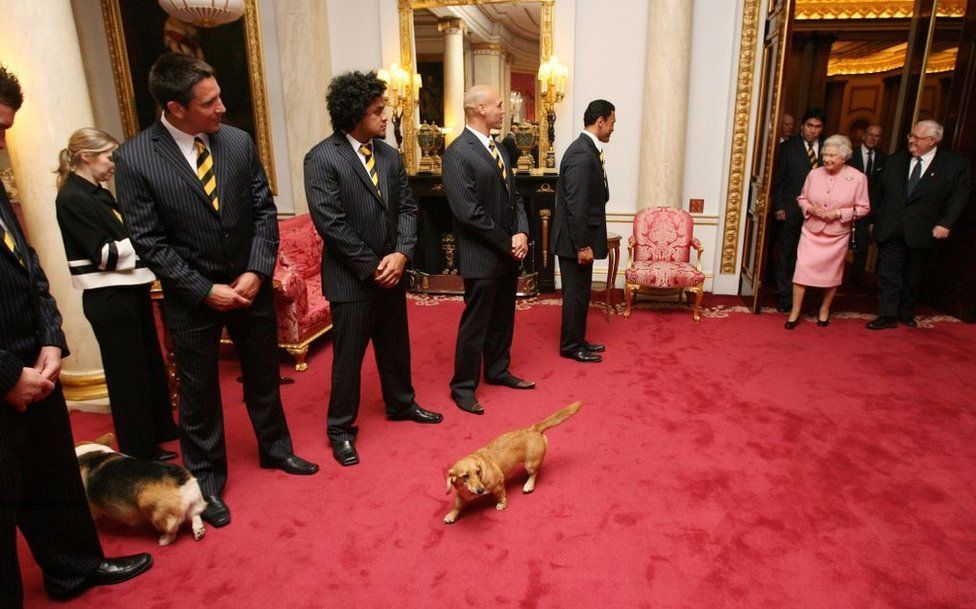 Two of the Queen's dogs escort her through the door, as she greets a
visiting New Zealand rugby team at Buckingham Palace in 2007
Two of the Queen's dogs escort her through the door, as she greets a
visiting New Zealand rugby team at Buckingham Palace in 2007
The corgis must go where the Queen goes - from palace to palace. This includes on helicopters, trains, and in limousines. At Christmas at Sandringham they each have their own stocking, filled by the Queen herself.
Buckingham Palace has 775 rooms, but the corgis sleep inside the Queen's private apartment. As royal author Penny Junor writes in her book All The Queen's Corgis: "There is a special corgi room where they have raised wicker baskets lined with cushions to keep draughts away."
Walking them every day was a part of her routine before the mobility issues which have affected her in recent months. And in bygone years, she liked nothing more than piling the pack into an elderly Vauxhall estate, donning a headscarf, and setting off for a drive.
A typical dog's life doesn't feature thousands of acres to roam, or lavish meals - prepared in the royal kitchens - of steak, chicken breast, vegetables and rice. But Junor believes that in some ways, corgis have given the Queen a precious point of contact with everyone else.
She writes: "Dogs and horses are her passion and it is with them, and the people who share that passion, that she truly relaxes. Horses are a rich man's game but dogs are not. They are a great leveller, they attract people from all walks of life and, over the years, the Queen has had strong and genuine friendships with many of her fellow dog enthusiasts."
In some cases, when loved ones died she has even adopted their dogs. This included the Queen Mother's three corgis in 2002, and another - Whisper - who belonged to her former head gamekeeper at Windsor, Bill Fenwick, and his wife Nancy. The latter was a dear friend who helped with the Queen's corgi breeding for five decades, and one of the very few people whose calls were always put through to her no matter what.
Junor also observes that the Queen, "essentially a very shy woman" who's required to talk confidently to strangers, uses the dogs to reduce her discomfort.
"Her family refers to it as 'the dog mechanism' […] If the situation becomes too difficult she will sometimes literally walk away from it and take the dogs out. Prince Andrew is said to have taken three weeks to fight his way past the dogs to tell his mother that his marriage to Sarah Ferguson was in trouble," she writes.
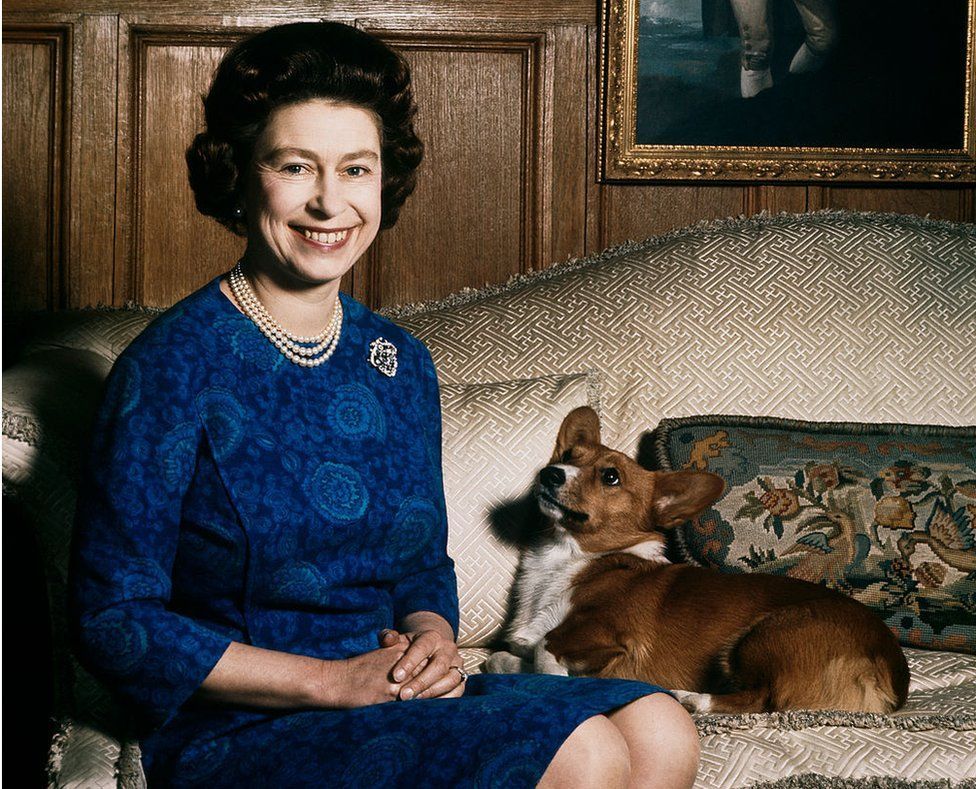 Which dog lover hasn't - at some point - declared them easier to deal with than people? (Pictured in 1970)
The Queen also deploys the dogs to put others at ease. War surgeon Dr David Nott described how the monarch got him through a lunch at Buckingham Palace when he had just returned from Aleppo, in war-torn Syria, and found himself unable to speak to her due to Post-Traumatic Stress Disorder (PTSD).
The Queen sensed something was wrong and said, "Well, shall I help you?" before calling for her corgis, Dr Nott said.
"All of a sudden the courtiers brought the corgis and the corgis went underneath the table." The Queen opened a tin of biscuits. "And so for 20 minutes during this lunch the Queen and I fed the dogs. She did it because she knew that I was so seriously traumatised."
Between 1933 and 2018, the Queen always owned at least one corgi - but mostly it was many more than that. Prince Philip, who never shared his wife's fondness for the breed, was apparently heard to complain: "Bloody dogs! Why do you have to have so many?"
And then there were the dorgis - initially the result of an illicit liaison between Princess Margaret's dachshund, Pipkin, and a corgi named Tiny in the 1970s. The Queen and Princess Margaret were so charmed by the outcome that they mated the dogs again, and about 10 dorgi pups were born over the years.
They've varied in appearance, with some ears pointing up, corgi-like, and others hanging down. But all of them had long tails and were smaller than pedigree corgis.
When a royal photographer asked how the mechanics worked given the height difference between corgis and dachshunds, the Queen replied: "It's very simple. We have a little brick."
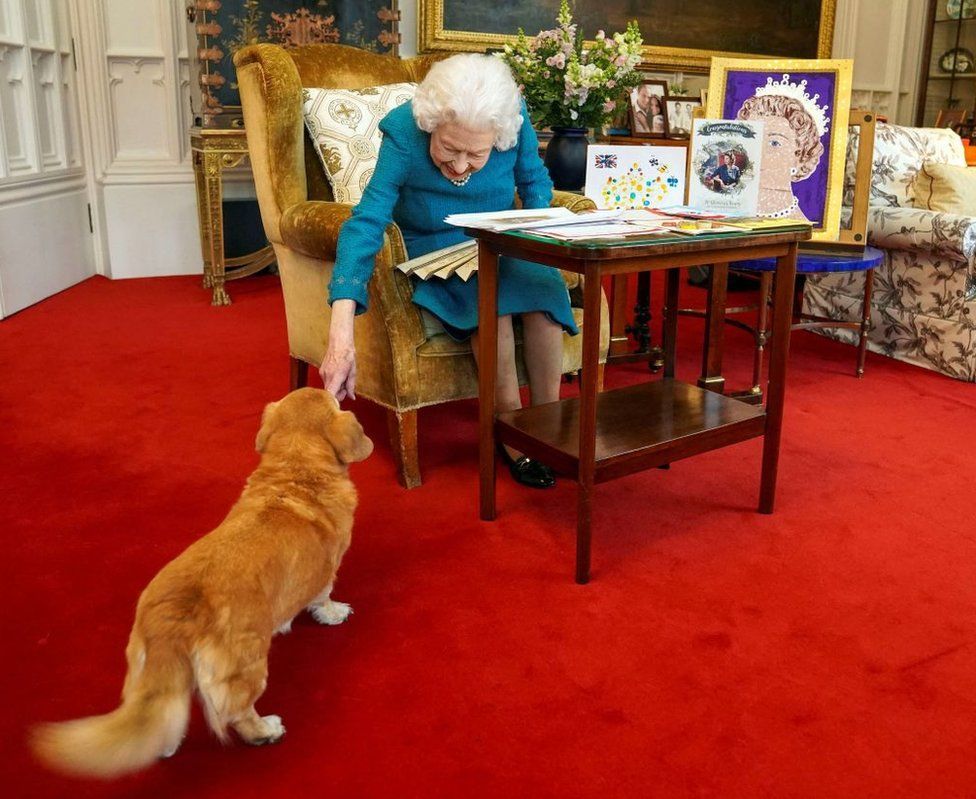 The Queen strokes her dorgi Candy, as she looks at memorabilia from her Golden and Platinum Jubilees in January 2022
The Queen has received puppies as gifts in recent years, and based on an interview with Angela Kelly, the Queen's dresser and personal assistant, it appears she now has two young corgis named Muick and Sandy to keep her company. She was also pictured with her dorgi, named Candy, back in February.
The royal household's breeding programme is no longer running, however. The Queen is said to be unwilling to leave young dogs behind when she dies. If monarchy knows anything, it's that time comes for us all.
Her Majesty is now 96 years old, meaning there are millions of people old enough to own dogs who have only ever seen her as a grey-haired grandmother and great-grandmother.
As a result, corgis came to be viewed as an old person's breed for a time.
Their ascendency peaked in the 1960s with almost 9,000 puppy registrations, as the public cooed over pictures of the Queen with her young family and dogs. But from the late 1990s in particular the decline is marked, and 2014 was their annus horribilis. With just 274 new registrations, Pembrokes trotted into the Vulnerable Native Breed category in the UK.
But then came Netflix, and salvation in the form of The Crown, whose first season in 2016 turned the clock back to the start of the Queen's reign. Sympathetically played by Claire Foy, whose nuanced performance included a litany of expressive ways to say the word "oh…", the youthful royal was frequently surrounded by a pack of corgis, as was Olivia Colman, her successor in the role.
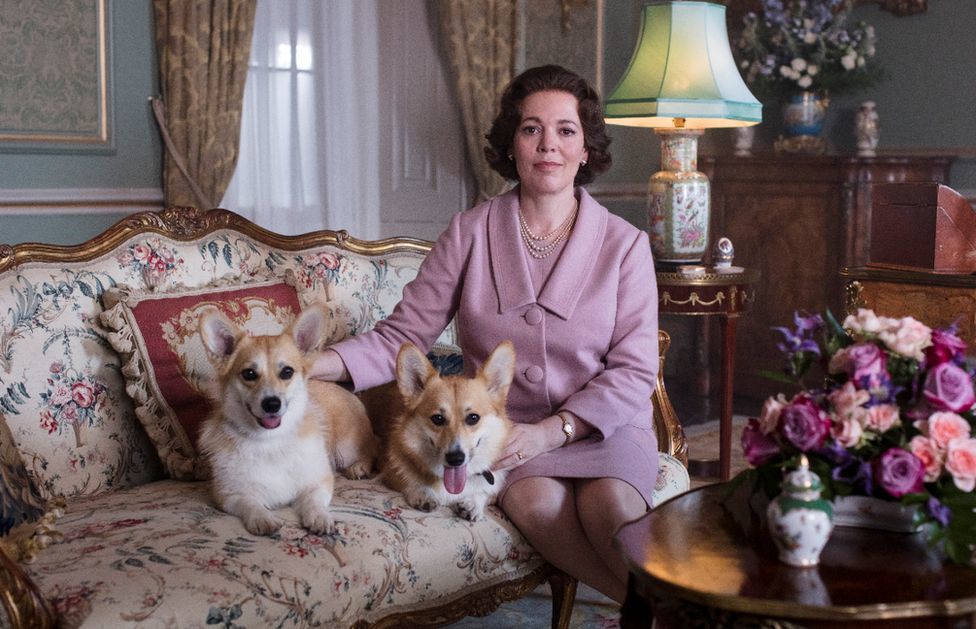 Olivia Colman in character as the Queen, with her co-stars
Foy told Vanity Fair how the on-set dogs were bribed with treats and especially loved cheese, mulling: "You sort of worry that they're going to have a heart attack when you're giving it to them. These Corgis are cheesed up to the max - they're eating like a whole block of cheddar every day. It's scary."
Numbers rebounded, with corgi puppy registrations up by 16% in 2017 after the first season aired, and 47% in 2018 after the second. It wasn't just about The Crown. The James Bond skit starring the Queen and three royal corgis at the 2012 Olympics opening ceremony also saw them tummy-roll back into the public consciousness.
Even Bridgerton - Netflix's wildly popular Regency romp - inserted a historically improbable corgi into series 2. Co-star reviews included "doesn't move if he doesn't have a treat", but audiences loved him.
Social media has also been vital to the corgi renaissance, as Chris Equale, owner of TikTok stars Hammy and Olivia, knows well.
Chris, 34, launched a viral sensation pretty much accidentally in April 2020, with a video of his corgi Olivia barking at the vacuum cleaner. "It got 250,000 views in just under 20 minutes," he remembers.
Two years and seven million followers later, he's made more than 700 talking corgi skits. They include a running joke about the dogs' war with "the dragon" (their dust-blitzing nemesis), and the vacuum company has piled in to sponsor content.
Asked what it is about corgis that charms people, he replies: "There's something very unique about a corgi - it's just a dog you really want to root for. They're the greatest herders you'll ever see! But if you look at them at first glance it's like, is it a dog, is it a loaf of bread? There's something so lovable about them."
The Kennel Club's Ciara Farrell agrees corgi anatomy is central to their kitsch appeal.
"One of the things is that people love a big ear - something you can lean into if you're making a soft toy. They're a spitz breed, so pointy in the face, brings that foxiness in. They look sort of tough but cute."
Mr Equale sees the Queen as "the pioneer of the breed" which he describes as looking like an oversized potato, enthusing: "I've only had these two [Hammy and Olivia] for like… seven years? So to do that 10 times over is just fascinating. We're big fans of the Queen. If you're a fan of the corgi, you have some direct or indirect fandom.
"At a dog park it's always the first thing that comes out of a passer-by's mouth: 'Oh you know those are the Queen's dogs!'"
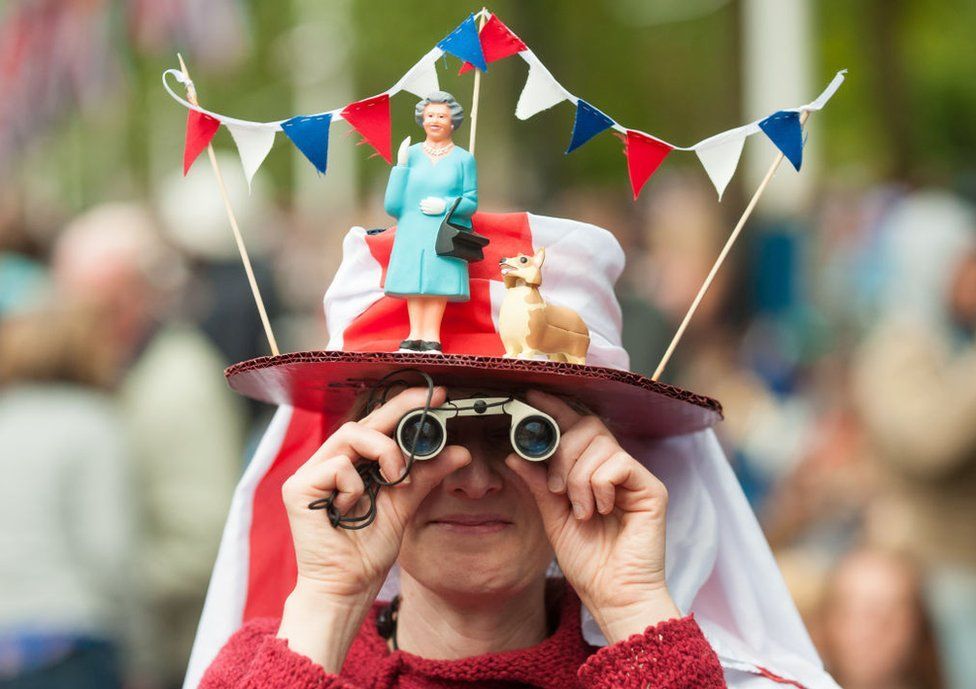 Corgis and the Queen: A branding partnership known the world over
But if the breed is inextricably tied to the monarchy in the public imagination, it seems the royals don't all see it that way.
Prince Charles - the Queen's heir - once quipped that he prefers labradors, and is a long-time owner of jack russell terriers. The Duke and the Duchess of Cambridge, William and Catherine, have a cocker spaniel.
Can the breed expect another dip in popularity?
"I would hope not," says Ms Farrell. "I think corgis have made great progress in recent years. They're always going to be the Queen's iconic dog. Even when she is no longer with us, people are going to see them and think of her."
But she believes that the more potential owners see corgis online, the less vital a royal association will be.
"There's going to be a generation of people who use social media who will find them characterful and fun. I think they're here to stay, definitely."