London Daily

Focus on the big picture.
Wednesday, Jun 24, 2026

CO2 pollution from fossil fuels to hit all-time high this year

CO2 pollution from fossil fuels to hit all-time high this year

Aviation industry identified as a leading contributor to the rise in emissions as it recovers from the COVID-19 pandemic.

Carbon dioxide emissions from fossil fuels, the main driver of climate change, are on track to rise one percent in 2022 to reach an all-time high, according to scientists.

The Global Carbon Budget report, released on Friday during the United Nations COP27 climate summit, laid bare the gap between the promises governments, companies and investors have made to cut planet-warming emissions in future years, and their actions.

Emissions from oil, fuelled by the rebound in aviation after the COVID-19 pandemic, will probably rise more than two percent compared with last year, while emissions from coal – thought by some to have peaked in 2014 – will hit a new record.

“Oil is more driven by the recovery from COVID, and coal and gas are more driven by events in Ukraine,” Glen Peters, research director at CICERO climate research institute in Norway, told the AFP news agency.

Global CO2 emissions from all sources, including deforestation, will reach 40.6 billion tonnes, just below the record level in 2019, the report by more than 100 scientists showed. About 90 percent of that is the result of burning fossil fuels.

The data suggests the rise is consistent with underlying trends and deeply worrying, said Peters, a co-author of the study.

“Emissions are now five percent above what they were when the Paris Agreement was signed” in 2015, he noted.

“You have to ask: When are they going to go down?”


Aviation has rebounded from the COVID-19 pandemic, with the industry association saying passenger traffic reached 74 percent of pre-pandemic levels in September

The new figures show just how dauntingly hard it will be to reduce emissions fast enough to meet the Paris goal of capping global warming at 1.5 degrees Celsius (34.7 degrees Fahrenheit) above preindustrial levels.

Heating beyond that threshold, scientists warn, risks triggering dangerous tipping points in the climate system.

Barely 1.2C (34.2F) of warming to date has already unleashed more extreme weather, with heat waves, drought, flooding and tropical storms made more destructive by rising seas.

The report showed emissions this year are set to rise by 1.5 percent in the United States and six percent in India, the world’s second and third-biggest emitters, respectively.

CO2 output from China, the world’s biggest polluter, is likely to fall by 0.9 percent as a result of Beijing’s zero-COVID strategy, which has limited economic growth. And while Russia’s invasion of Ukraine has prompted a scramble for alternate sources of energy, including carbon-intensive coal, European emissions also decreased slightly.


‘Deeply depressing’


To achieve the Paris target, global greenhouse emissions must drop 45 percent by 2030 and be cut to net zero by mid-century, with any residual emissions compensated by removing CO2 from the atmosphere.

To be on track for a net-zero world, emissions would have to fall by seven percent annually over the next eight years.

Even in 2020, when much of the world was locked down because of the pandemic, emissions fell by only six percent.
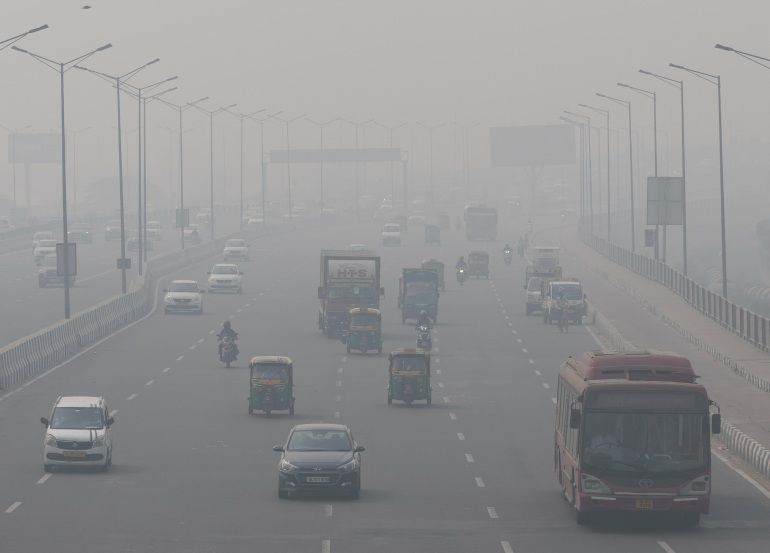
New Delhi is one of the world’s most polluted cities with dense smog covering the city earlier this month


The annual update also revealed that the ability of oceans, forests and soil to continue soaking up more than half of CO2 emissions has slowed.

“These ‘sinks’ are weaker than they would be if not for the impacts of a changing climate,” said co-author Corinne Le Quere, a professor at the University of East Anglia.

Scientists not involved in the findings said they were grim.

“Global Carbon Budget for 2022 is deeply depressing,” Mark Maslin, a professor of climatology at University College London, told AFP.

“To have any chance of staying below the international agreed 1.5C global warming target we need to have large annual cuts in emissions – which there is no sign of.”


Newsletter

Related Articles

0:00
0:00
Close
UK Biotechnology Sector Receives Increased Public Funding to Support Regional Growth
Police Chiefs Update National Protest Management Guidelines Amid Rising Demonstration Activity
UK Aviation Regulator Expands Support for Regional Airports to Strengthen Domestic Routes
CMA Launches Investigation Into Retail Pricing Across UK Grocery Sector
UK Energy Operator Warns of Winter Supply Pressures Despite Stable Overall Grid Outlook
UK Research Council Expands Funding for Regional Biotechnology and Life Sciences Clusters
UK Compensation Scheme for Post Office Horizon Scandal Reaches 80 Percent Completion
Police Chiefs Issue Updated National Guidance on Managing Large Public Demonstrations
UK Expands Regional Airport Funding Scheme to Boost Domestic Connectivity
UK Competition Watchdog Launches Inquiry Into Grocery Pricing Practices
National Grid Warns of Tight Energy Management Needs During Upcoming Winter Peak Demand
UK Education Department Introduces National Standards for AI Use in Secondary Schools
UK High Court Clears North Sea Carbon Capture Project After Final Legal Challenge Fails
Northern Ireland Leaders Hold Emergency Talks on Trade Disruption Under Windsor Framework
Welsh Government Moves to Expand Social Housing in Response to Severe Affordability Pressures
UK Economy Sees Unexpected Rise in Business Investment in Second Quarter, ONS Data Shows
Scottish Government Unveils Multi-Billion Pound Investment Plan for Renewable Energy and Grid Expansion
UK and EU Agree Enhanced Defence Cooperation Pact Covering Intelligence and North Sea Security
Prime Minister Orders Independent Review of NHS Performance After Record Waiting Lists
Bank of England Holds Interest Rates at 5 Percent as Services Inflation Remains Persistent
UK Heatwave Disrupts Transport, Healthcare and Public Services as Red Weather Alerts Expand Nationwide
Barclays Warns of Growing Cyber Risk Divide Between Large UK Firms and Micro Businesses
European Defence Plans Including Ukraine Integration Prompt UK Strategic Reassessment
UK Equity Markets React as US–Iran Peace Roadmap Eases Oil Price Pressures
United Kingdom Expands Global Clean Energy Partnerships With Brazil, Morocco and Tanzania
Lord David Frost Urges Incoming UK Leadership to Abandon EU Regulatory Reset Strategy
Housing Groups Support Amendment to Strengthen Fire and Gas Safety Access Powers in Social Housing
South London NHS Estates Staff Ballot on Industrial Action Over Pay Structures in Hospital Maintenance Services
United Kingdom Government Invests £60 Million in AI Research Labs at Oxford and University College London
Barclays Cyber Security Report Highlights Rising Threat Exposure Among UK Small Businesses in AI-Driven Attacks
UK Met Office Heatwave Triggers Transport Warnings as Rail Operators Urge Cancellations Amid Infrastructure Strain
South London NHS Estates Workers Ballot for Strike Action Over Pay Disputes Across Major London Hospitals
Barclays Warns of Severe Cyber Security Gap Between Large Corporations and Small Businesses in the United Kingdom
United Kingdom Government Allocates £60 Million for Artificial Intelligence Research Laboratories at Oxford and UCL
National Health Service Approves Teplizumab Treatment to Delay Onset of Type One Diabetes in First European Rollout
Met Office Issues Rare Red Extreme Heat Warning Across London, South East and West Midlands as Transport and Health Systems Face Disruption
Prime Minister Keir Starmer Resigns After Labour Party Revolt Following Economic Stagnation and Local Election Losses
United Kingdom Economy Contracts for Second Consecutive Month as Private Sector Weakens and Job Loss Fears Rise
Taxpayer Support Grows for Higher Digital Levies on Multinational Tech Companies
Bank of England Signals Caution Over Inflation Despite Easing Energy Prices
Lloyds Banking Group Expands Artificial Intelligence Hiring Amid Sector-Wide Automation Shift
Film Producer Corporate Collapse Leaves Creditors Facing Unrecoverable Losses
UK Ten-Year Brexit Anniversary Highlights Ongoing Political and Economic Uncertainty
Nottingham Maternity Scandal Inquiry Reveals Systemic Failings in NHS Care
Met Office Heatwave Prompts Public Health Warnings Across United Kingdom
Concerns Rise Over Fiscal Stability as Political Uncertainty Weighs on UK Borrowing Costs
UK Taxpayers Back Higher Digital Taxes on Global Technology Firms, Survey Shows
Bank of England Holds Interest Rates Steady Amid Persistent Services Inflation
Reform UK and Opposition Leaders Call for General Election Following Starmer’s Departure
Ten Years After Brexit Referendum, UK Faces Ongoing Political Fragmentation and Economic Debate
×