

Chinese ambassador to US dismisses concerns about Hong Kong democracy
China’s ambassador to the United States Cui Tiankai has said concerns over the erosion of Hong Kong’s democracy are “completely unnecessary”.
In an opinion piece for the South China Morning Post on Sunday, the ambassador defended an overhaul of the city’s electoral system that critics fear will freeze out dissenting voices.
A resolution rubber-stamped by the National People’s Congress last week will effectively shut out opposition members deemed “unpatriotic” and change the means by which the city’s chief executive and legislators are chosen in ways likely to benefit Beijing loyalists.
“The NPC’s decision will lead to a new electoral system that suits Hong Kong’s realities and reflects the overall interests of society,” Cui wrote.
“The principle of ‘patriots administering Hong Kong’ does not mean that we will drive out diversity. ‘Patriots’ covers a wide scope, and we have always been broad-minded towards those with different political opinions.”
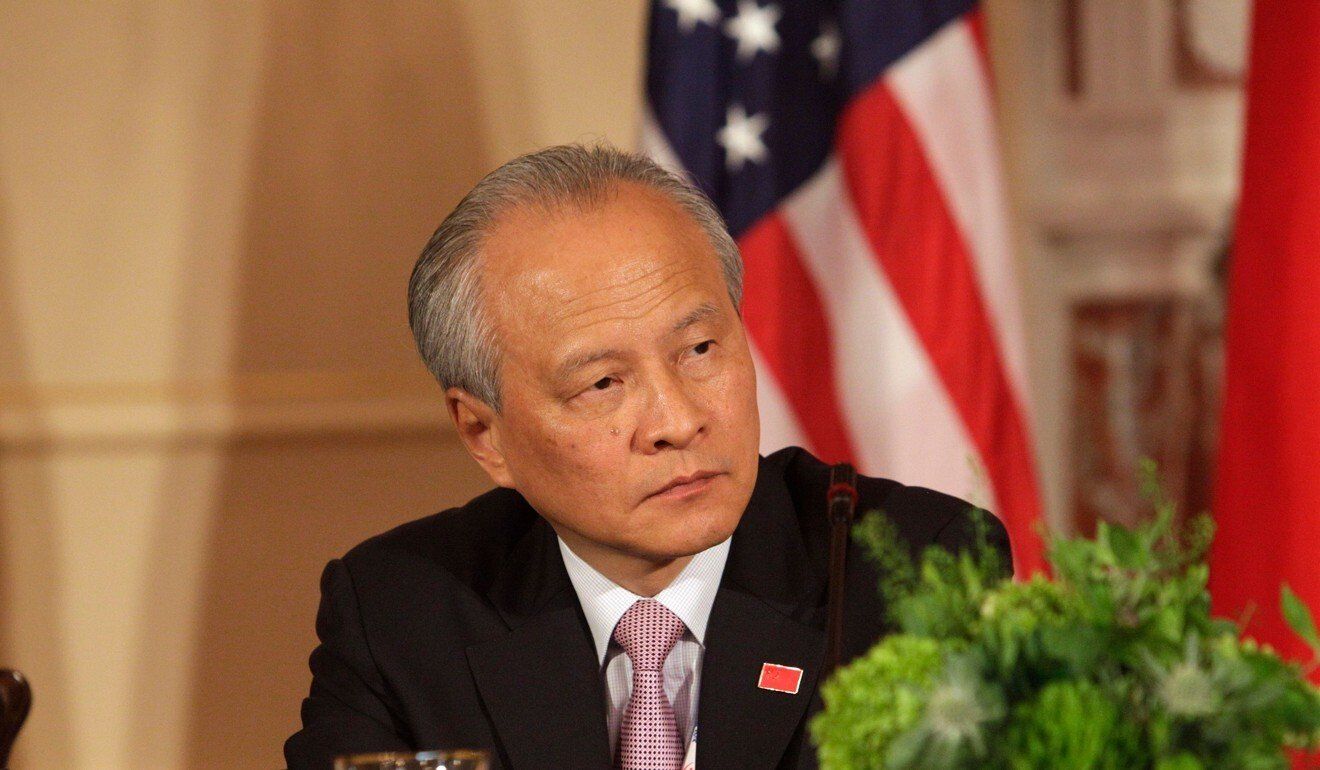 Cui Tiankai, China's ambassador to the US.
While Chinese officials and state media have repeatedly defended the changes, the US, Britain, the European Union, Australia, New Zealand and the Group of Seven have all expressed concerns or directly condemned the move.
US Secretary of State Antony Blinken described it as an “assault on democracy” and “direct attack on Hong Kong’s autonomy, its freedoms, its democratic processes”.
In his opinion piece, Cui said concerns about the changes were “hard to understand”.
Cui compared them with the US pledge of allegiance and cited the anti-government protests of 2019.
“In the case of Hong Kong, external forces keep on bolstering the rioters and those behind them. By improving the electoral system, we are able to eliminate such risks and close an institutional loophole to ensure the stability of Hong Kong,” he wrote.
He also argued: “There have also been concerns that Hong Kong’s democracy will be eroded, which is completely unnecessary. Democracy had simply been nonexistent in Hong Kong during its 150-plus years of colonial rule, and has only been established since its return to China, which has given Hong Kong people democratic rights that they had never enjoyed before.”
Beijing has accused “external forces” of meddling with Hong Kong affairs since the protests and has used it as a justification for the sweeping national security law imposed on the city last year.
Samuel Chu, the founding director of Washington-based lobbying group Hong Kong Democracy Council, said he did not believe the American people or government would believe Cui’s arguments and said they will instead bolster the belief that Beijing is not to be trusted.
“US politicians understand what free and open elections are. An accurate analogy for what the Chinese Communist Party is doing would be if only one party or one interest group was allowed to run in elections for Congress. To call that improving democracy is laughable,” Chu said.
Last year Chu, a Hong Kong-born American citizen, became the first non-Chinese national targeted by the city’s national security law after the police said he was wanted on charges of subversion and collusion with foreign powers.
Under the new law, a vetting committee will be established to review potential candidates for the election committee for the Chief Executive and Legislative Council, effectively barring opposition candidates not deemed sufficiently “patriotic”.
Chinese officials, including Cui, have said the change will not block opposition as there are also patriots among the opposition, but critics have warned it will roll back years of effort to liberalise the system.
Johnny Lau Yui-siu, a Hong Kong-based political commentator, said: “Isolating one element among the changes they are trying to push – in this case asking for patriots to be in power – is a common propaganda tactic adopted by Beijing. This addresses nationalistic emotions domestically and also has a strong legal basis, effectively meaning it seems that they are making a point that others can hardly argue against.
“But having said that, the apparent reversal of ‘gradual and orderly progress’ towards universal suffrage in the electoral system is causing an emotional backlash.”
Washington has said Blinken will include Hong Kong among issues of “deep disagreement” when he meets Yang Jiechi, China’s foreign policy chief, and Foreign Minister Wang Yi next week in Alaska.
Lau said he believes the US is ready to play the Hong Kong card to get more substantial benefits from China.
“Beijing is clearly not afraid of so-called foreign meddling in Hong Kong, because they know that foreign powers value their bilateral relations more than the things they will address about Hong Kong,” he added.
Meanwhile, the Chinese embassy in London criticised British Foreign Secretary Dominic Raab after he accused Beijing of breaching the Sino-British Joint Declaration signed by both sides ahead of the city’s return to Chinese sovereignty in 1997.
In a statement that also attacked criticisms by the G7 and EU, the embassy said: “The relevant politicians from the above-mentioned countries and groups, including the UK, have confused right and wrong, slung groundless slanders at China, and blatantly interfered in China’s internal affairs.”
“The relevant politicians from the above-mentioned countries and groups, including the UK, have confused right and wrong, slung groundless slanders at China, and blatantly interfered in China’s internal affairs. The Chinese side expresses its strong condemnation and firm opposition.”
The statement added: “The UK has no sovereignty, jurisdiction or right of ‘supervision’ over Hong Kong after the handover, and it has no so-called ‘obligations’ to Hong Kong citizens.”