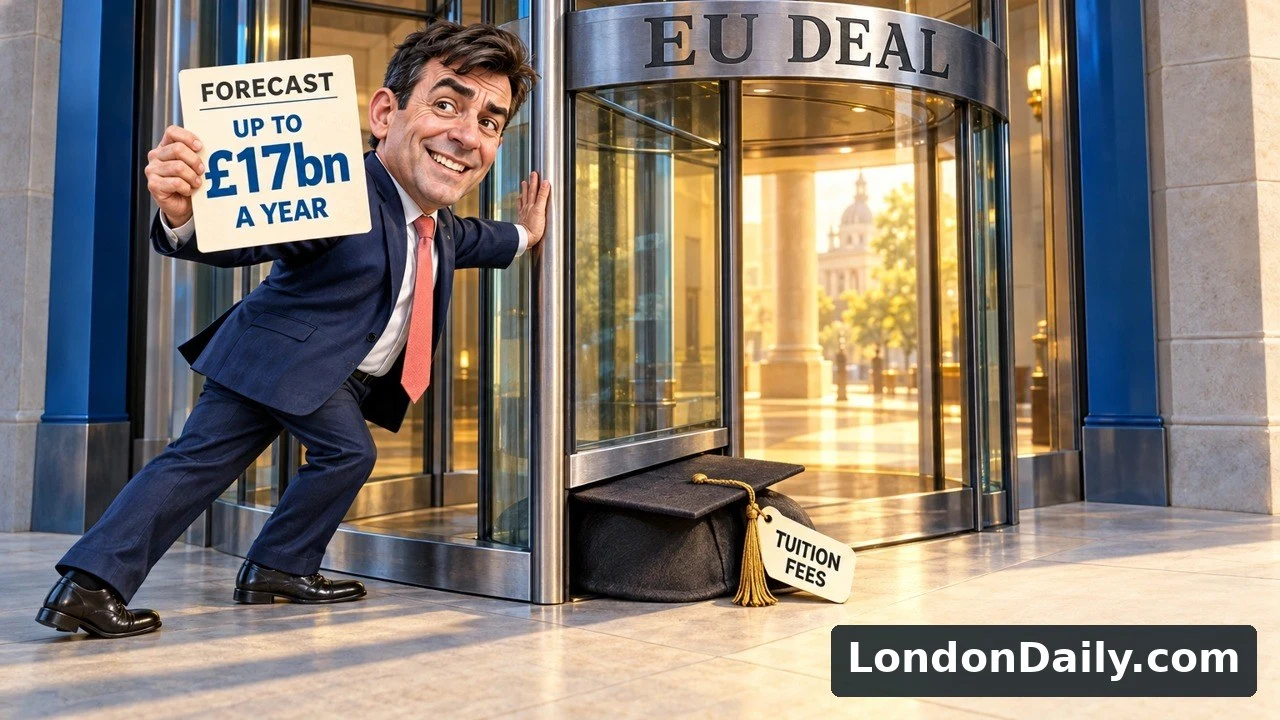
Prime Minister Andy Burnham says his new European Union agreement could add up to £17 billion a year to Britain’s economy, while opening discussions on a future relationship that could include seeking to rejoin the bloc.
Announcing the package in Brussels, he said Treasury analysis suggested it would raise gross domestic product by up to 0.5% by 2040. He argued that lower business costs would help household shopping bills and that young people would gain opportunities to work and travel.
The agreement would remove most post-Brexit checks and restrictions on food and agricultural products through a sanitary and phytosanitary deal. Linking emissions trading schemes would exempt £6.5 billion of British exports, including steel and aluminium, from EU carbon border taxes.
A reciprocal youth experience scheme would offer 100,000 visas, allowing UK and EU citizens aged 18 to 31 to live and work in each other’s jurisdictions for up to three years. A structured migration dialogue and closer co-operation on the Channel action plan are intended to tackle people-trafficking operations behind small-boat crossings. Work towards UK participation in the EU electricity market will continue.
Burnham described the package as “probably the limit” achievable this Parliament, given the implementation work required. He remains committed to Labour’s manifesto exclusions on joining the single market, customs union or restoring free movement. The next 12 months would involve informal discussions to inform options for the following Parliament.
European Council president Antonio Costa welcomed the closest possible relationship but stressed the single market’s rules, including freedom of movement. European Commission president Ursula von der Leyen called the summit a “turning point” and welcomed brainstorming.
The immediate obstacle is tuition fees. EU member states want their students charged the same as British students, reducing annual fees from up to £38,000 to £9,970. Britain has resisted because of the financial impact on universities. Negotiators have six months to agree.
An EU official suggested implementation could be in doubt without agreement. Burnham insisted there were firm implementation dates, with fees among matters requiring further discussion. The joint statement, however, describes an aim to apply the main elements from 2028, with youth opportunities targeted for January 2030.
Oliver Lewis, chairman of the anti-rejoining Stay Out campaign, accused Brussels of exploiting Burnham’s desire for agreement to make British taxpayers fund cheaper student fees. Best for Britain chief executive Naomi Smith urged him to pursue membership, claiming majority voter support. Liberal Democrat leader Sir Ed Davey demanded a broader deal, quickly.
The central distinction remains between the economic gains Burnham forecasts and the terms and timetable still to be settled.








Join the conversation