

British apples under threat: How Brexit, supermarkets and the cost of living pushed growers to the brink
The UK's apple-growing industry is under severe threat, with many growers unable to afford replanting this year.
The sector is struggling with a number of issues, including a shortage of workers - made worse since the UK's exit from the European Union - as well as high energy costs, and low returns from the supermarkets that buy their produce.
We could soon see the effect on the shelves as shoppers. Having the option to buy British may be a disappearing luxury.
Ali Capper, executive chair of British Apples & Pears Limited (BAPL), which represents UK growers, told Sky News: "I'm struggling to think of a single British apple grower who is making any money right now.
"That's not sustainable."
Ms Capper added that growers renew their orchards regularly, replacing old trees with new ones, but many "cannot afford to invest in replanting this year".
She said inflation is running at around 23% for growers but they are only receiving on average an 0.8% increase in their returns from selling apples to supermarkets.
"Growers urgently need fairer returns from UK supermarkets to ensure the future of the British apple industry," she said, adding that the loss of apple and pear orchards has implications for biodiversity in the short term and "in the longer term - the next five years or so - it means fewer British apples in the supermarkets for shoppers".
'We can't make any sensible profit'
One of those giving up is James Smith, who runs Loddington Farm, an orchard near Maidstone in Kent where his family has grown apples since 1882.
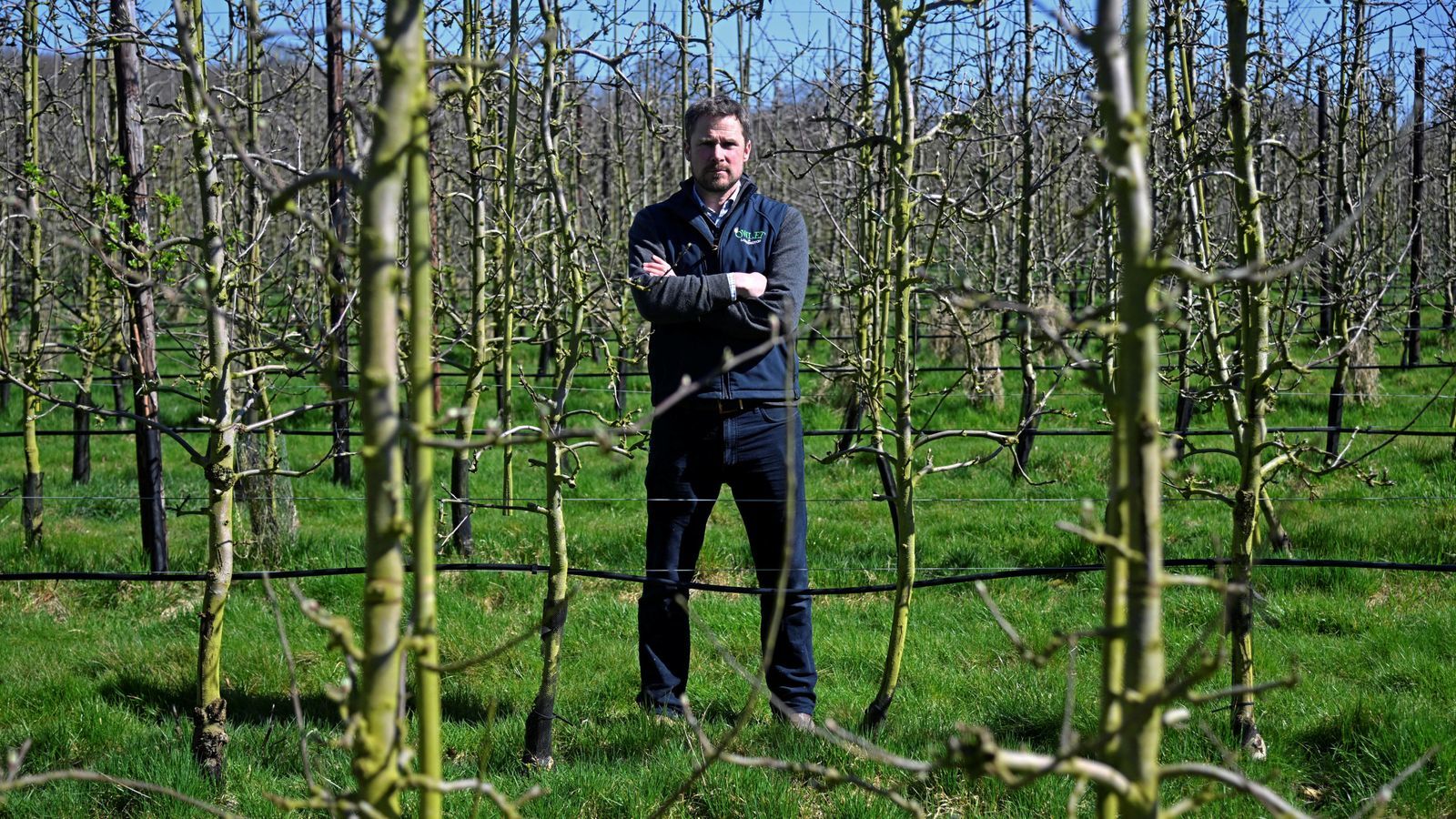 James Smith, managing director of Loddington Farm
Mr Smith said making a profit from selling to supermarkets has been a struggle for years but a more unpredictable climate, a shortage in labour, and surging inflation have made it too difficult.
For last year's crop to break even, he needs supermarkets to pay him 20% more than the previous year - supermarkets offered 0.8% more, he said.
"Retailers are completely committed to making sure we can't make any sensible profit, not even in the good years," he told the Reuters news agency.
So instead, Mr Smith is removing 80% of his orchard and turning to livestock, a vineyard and a shop, saying he "simply cannot see a way of overcoming all of the challenges".
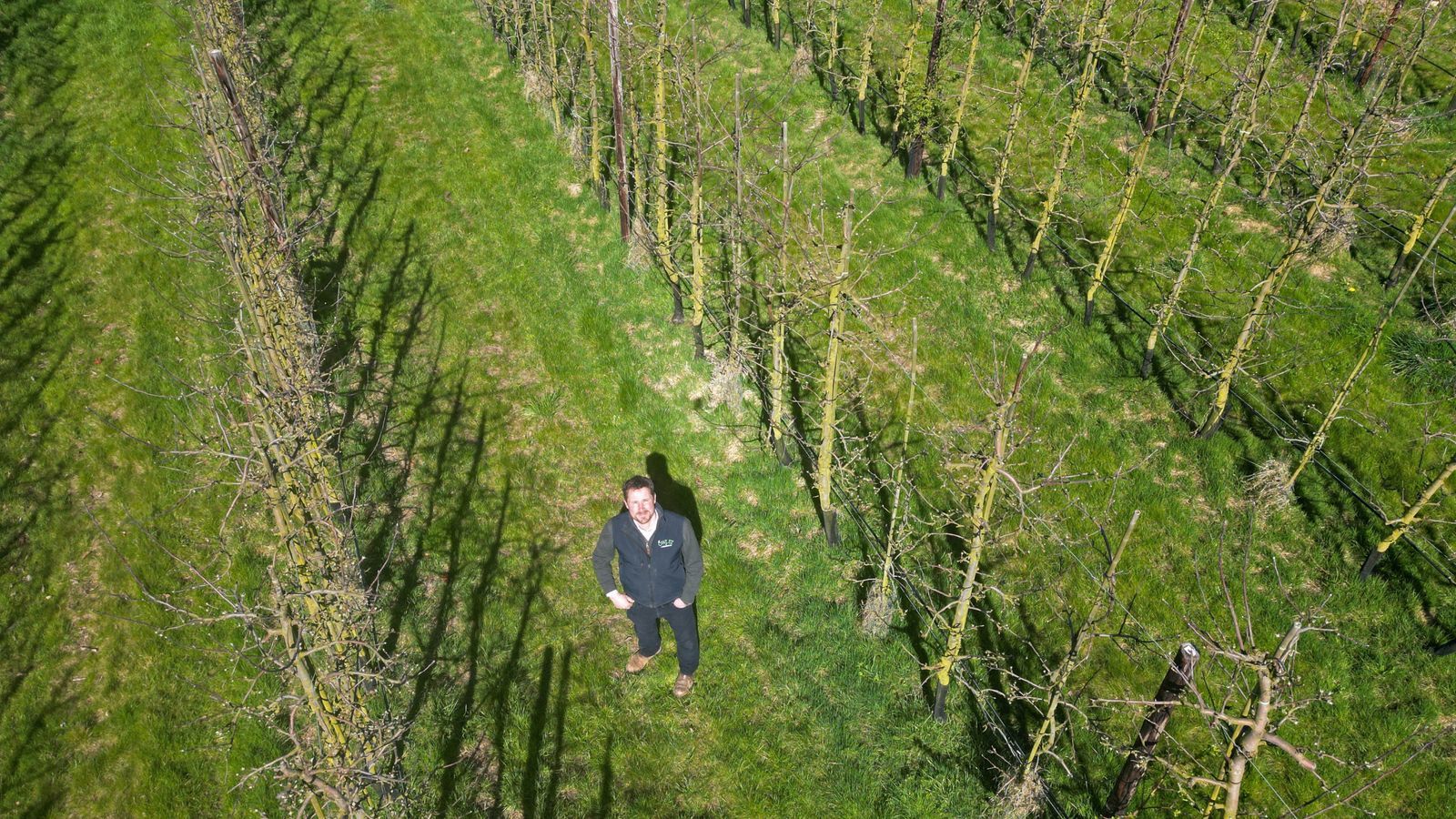 James Smith
A survey of the BAPL's members late last year found that many other growers are also having second thoughts - growers had intended to continue investing in their orchards with 480,000 new trees, but cancelled almost a third of these - 150,000 planned new apple and pear trees were not planted in the end.
According to EU figures, in 2020, the UK imported around 84% of its fruit supply and if more growers give up on their orchards, that amount is likely to increase.
Cost of living consequences
The British Retail Consortium represents supermarkets, and its director of food and sustainability, Andrew Opie, said: "Supermarkets source, and will continue to source, the vast majority of their food from the UK and know they need to pay a sustainable price to farmers.
"Given the pressure on British farmers at the moment, retailers are paying more for their produce.
"However, retailers are also facing additional costs and are working incredibly hard to limit price increases for consumers during a cost of living crisis where many people are struggling to afford the essentials."
Mr Smith said growing apples lost him £150,000 last year - labour costs were up 15%, while the price of wires and posts also rose 15%.
And the apples need to be kept at a certain temperature to maintain freshness, so last October his monthly energy cost per kilowatt hour was 450% higher than the previous year, he said.
Other industries might not be feeling the same pain, but they are still watching closely.
Cider-making, for example, uses different types of apples - theirs are traditionally harvested by machines rather than by hand, so they are not as reliant on seasonal workers.
Their orchards are also generally planted under long-term contracts to a specific cider-maker who commits to buy all cider apples for 20+ years, Fenella Tyler, chief executive of the National Association of Cider Makers, said.
She told Sky News: "This reduces the highs and lows of crops sold annually, providing long-term reassurance for both the farmer and cider maker."
However, she added: "In terms of climate change, we are not underestimating potential impacts in the long term and have been working with apple tree researchers to look at longitudinal studies into impacts of climate change and how best to manage our cider apple orchards for the future."