

Brexit: EU women fear losing jobs and housing over UK computer glitch
Women who applied for EU settled status in the UK under their married names may struggle to access jobs and housing because of a government computer anomaly, it has emerged.
Many have been left unable to prove their status to councils and employers because they have been wrongly registered to the EU settlement scheme (EUSS) in their birth names.
There are fears that this could leave them in legal limbo from 1 July, when EU nationals have to prove they have been granted settled status in order to rent property, access banking services or claim benefits.
A French woman who has lived in the UK since 1977 told the Guardian she fears she could lose her state pension after the Department for Work and Pensions (DWP) wrote to remind her to apply to the settlement scheme before the 30 June deadline.
She had been granted settled status in 2019 but despite applying in her married name, her digital record was issued in her birth name, which is listed first in her passport. “What worries me is whether the DWP will be able to find me when they check my status next month as they know me by my married name, as does my bank and my GP,” said the woman, who does not wish to be identified.
Although passports issued by a number of EU countries show the birth and married name of the holder, only the former shows up in the machine-readable zone of the page. As a result, it is this name that is being used to process EUSS applications.
Because settled status is a digital-only record, many women may not realise it has been granted in a name they no longer use until they have been denied their rights, according to Angela Crawley, the MP for Lanark and Hamilton East, who is lobbying the government to address the problem.
“When one of my French constituents requested a name change to her EUSS documentation, she was told this could not be carried out and that she should approach the French authorities to amend her passport,” Crawley says. “Due to the expense and hassle involved, this solution was unacceptable.”
The Home Office appears to have since adapted the systems to allow for a change, Crawley says. “However, as the onus is on applicants to request the change, many may be unaware their EUSS documentation does not match the name they use in day-to-day life.”
The Home Office told the Guardian that individuals must use one name for all official documents and can update their details by following the process on the “update your UK visas and immigration account details” service on gov.uk.
The DWP told the Guardian that the state pension is based on an individual’s national insurance record, not their nationality.
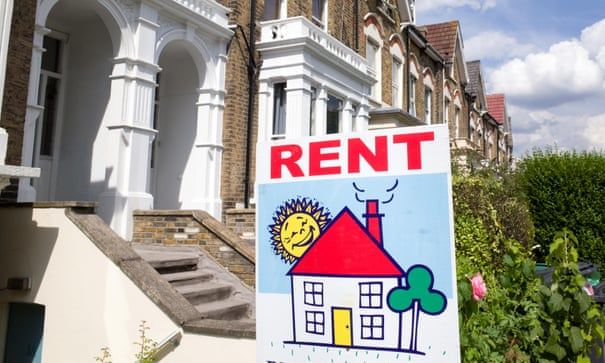 There are concerns that problems over accessing their new status will affect EU nationals when trying to rent a property.
In another case, a Polish national who contacted the Guardian has been unable to prove his status after amending his EUSS record when adopting his wife’s surname. He used the name-change procedure on the Home Office website to register his new surname and submitted his new passport in October 2020 but since January he has been unable to access his EUSS account.
“I’m unable to log in with my old passport number, indicating it has been updated, but when logging in with my new passport number, I receive an error message of ’status currently unavailable,’ this may be due to not having received a decision yet,” he said. “I’ve been told it’s a problem with the IT system, and multiple calls and an official complaint to the Home Office have not resolved it. As the deadline for proving my status approaches, I am getting concerned regarding my rights to work and how to prove them.”
Unlike other migrants living in the UK, EU nationals have to rely on digital share codes to prove their right to remain, and campaigners are urging the government to issue physical permits as backup.
“We are getting hundreds of reports that people are struggling to access their new status online, to register name changes or new ID, and to prove their right to work to employers,” said Maike Bohn, a co-founder of the support group the3million. “We are expecting to see a huge spike in reported problems next month when IT problems and a lack of awareness among employers, landlords, recruitment agencies and other organisations who will have to check a person’s immigration status will lead to discrimination and heartache.”
Nina Lorenzi (not her real name) was told that her Italian passport was insufficient right to rent ID when she applied to the lettings platform Goodlord.co last month. There was no provision on the application form for an EUSS share code, so she uploaded a screenshot of it and was eventually accepted. “My husband, who only has residency in the UK because I’m an EU citizen, has a biometric residency permit that details his rights and he had no issue, whereas I have nothing but a digital reference,” she said.
Goodlord told the Guardian that the lettings sector only received detailed guidance from the government on 7 June. “While we’ve been planning for what changes 1 July might bring for some time, this is the first clear guidance we’ve had on how the new system will work,” a spokesperson said. “Given how late in the day the details have been released, we predict teething problems for tenants and agents.”
A Home Office spokesperson said agents have had seven months to adjust and that technical problems affecting access to EUSS accounts are usually resolved swiftly.
“Prior to 1 July, landlords must not discriminate against EEA citizens who do not yet have status under the EU settlement scheme or who choose to use their passport or national identity card to prove their right to rent. There is a telephone helpline if employers and landlords need any guidance on this matter.”
The lowdown on the EUSS
EU nationals have a 30 June deadline to apply to the EU settlement scheme in order to remain legally in the UK. From 1 July, EU passports and residence cards will no longer be acceptable proof of residency. Instead, in order to work, rent, claim benefits or access free healthcare, EU-born residents must prove they have been granted settled status.
Anyone who fails to apply before the deadline or who does not qualify for the scheme will become an illegal immigrant from 1 July, while landlords and employers face large penalties if they do not confirm an applicant’s legal rights.
Applicants to the EUSS must have been living in the UK before 31 December 2020, when the EU free movement law ceased to apply in the UK. Those who have lived in the UK continuously for five years or more until the end of 2020 qualify for settled status. The rest will be given pre-settled status and can apply for settled status after five years of residency.
More than 5.6m applications have been made since the EUSS began in March 2019. The government has promised that the 300,000 applicants still awaiting a decision on their status can still live and work legally in the UK if they can provide proof that they have applied to the scheme.
To prove they have been granted settled status, EU-born residents must generate a share code via an online immigration portal, which they can give to landlords and employers.