

Bank of England official hints interest rates may not rise as much as market expects
Might interest rates not peak as high as the market is expecting?
That is certainly the conclusion that has been drawn today following a speech by Ben Broadbent, deputy governor for monetary policy of the Bank of England, in which he discussed the impact of the pandemic and Russia's invasion of Ukraine.
Speaking at Imperial College London, Mr Broadbent - in language rarely used by a member of the Bank's rate-setting Monetary Policy Committee (MPC) - more or less told financial market participants that they were pricing in too many future increases in Bank rate.
In his speech, Mr Broadbent discussed recent movements in the market's expectations for how high Bank rate might go, pointing out that, as recently as the Monetary Policy Report in August, prices in financial markets were consistent with Bank Rate rising to a peak of 3% next spring and then falling back a little over the following year.
But he pointed out that, despite a decline in recent days, that expected peak was now around 5.25%. He said that this was "by some distance" the largest rise in market interest rates between MPC forecasts since the committee was founded in 1997.
Mr Broadbent said that, were that to come to pass, the cumulative impact of interest rate rises over the "entire hiking cycle" would be sufficient to reduce the UK's GDP by just under 5%.
He added: "It would imply a pretty material hit to demand over the next couple of years."
In his crucial concluding remarks, Mr Broadbent said: "Whether official interest rates have to rise by quite as much as currently priced in financial markets remains to be seen."
His comments immediately had an impact on market expectations. Last night, the market was pricing in a peak for Bank Rate of 4.785% but that has slipped today to 4.68%. A week ago, prior to the new chancellor Jeremy Hunt tearing up most of his predecessor Kwasi Kwarteng's mini-Budget, market expectations for peak Bank rate were at 5.099%.
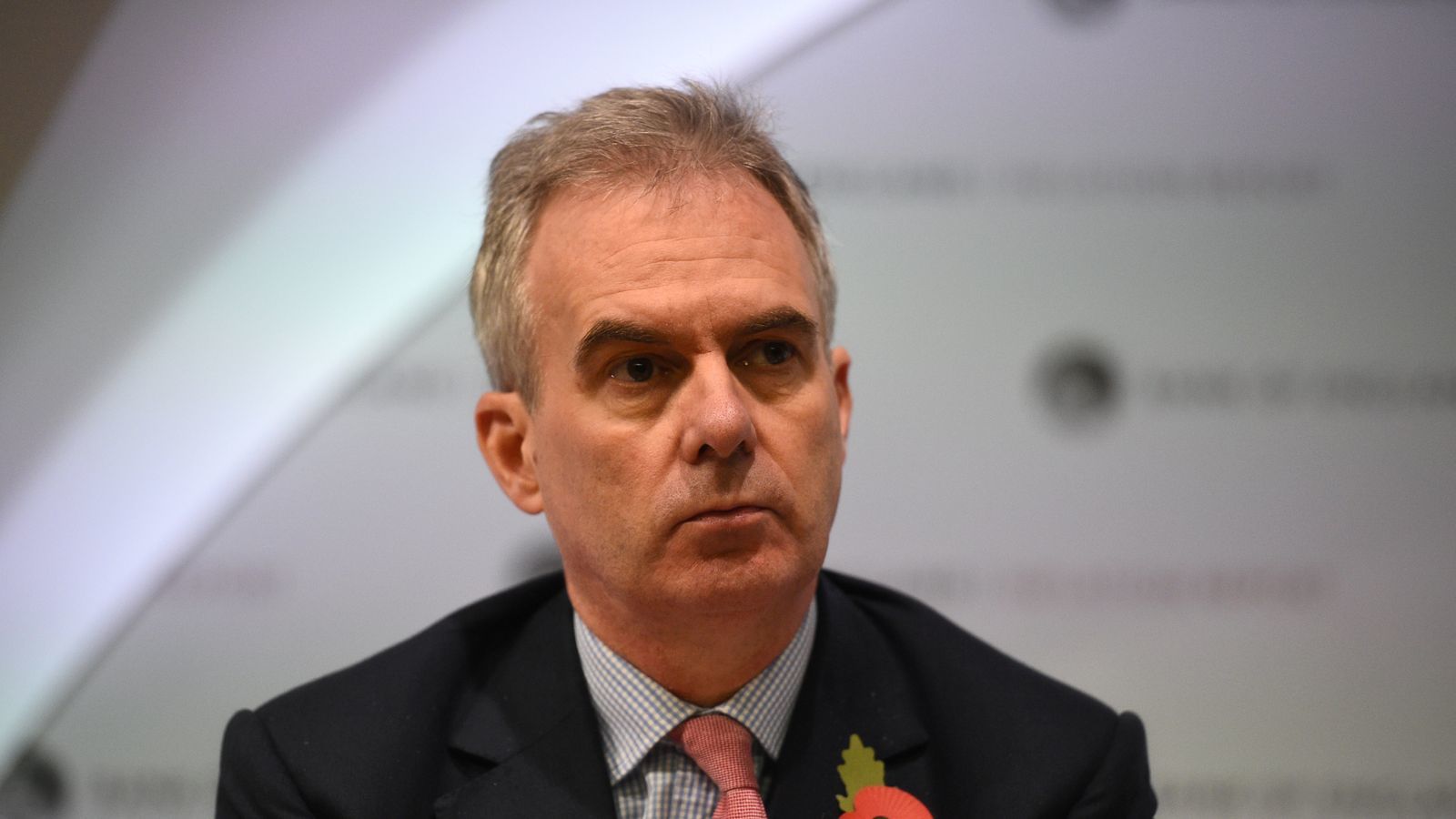 Ben Broadbent, deputy governor for monetary policy of the Bank of England
Impact of the energy price guarantee
Central to the MPC's deliberations, Mr Broadbent made clear, would be the government's energy price guarantee aimed at protecting households and businesses from soaring energy bills this winter.
He noted that, for as long as it was in place, the guarantee would have the effect of limiting headline inflation and, with it, any related so-called 'second-round' effects - the term used to describe how a high level of inflation can feed into further inflation by, for example, prompting workers to demand inflation-busting pay increases.
But he pointed out that the guarantee would also reduce "the severity of the hit to household incomes" by soaring energy prices and, as a result, would support demand - something that would, in normal circumstances, add to inflation. He reminded his audience that the MPC had already judged that the second effect was likely to outweigh the first.
Mr Broadbent pointed out that on Monday, Mr Hunt had said the energy price guarantee would be maintained only for six months, rather than the two-year period originally planned.
He added: "He suggested support was likely to continue, beyond six months, albeit in a more targeted fashion. But we are unlikely to know for a while precisely the form that will take."
Mr Broadbent said that, if government support for households and businesses on energy prices were to mitigate the impact of higher inflation, there would be "more at the margin for monetary policy to do".
And he went on: "The MPC is likely to respond relatively promptly to news about fiscal policy."
That was a clear hint that were Mr Hunt to continue with the energy price guarantee beyond March next year, having said on Monday this week that it would come to an end then, the MPC might have to respond by setting a higher level of Bank rate than might otherwise be the case.
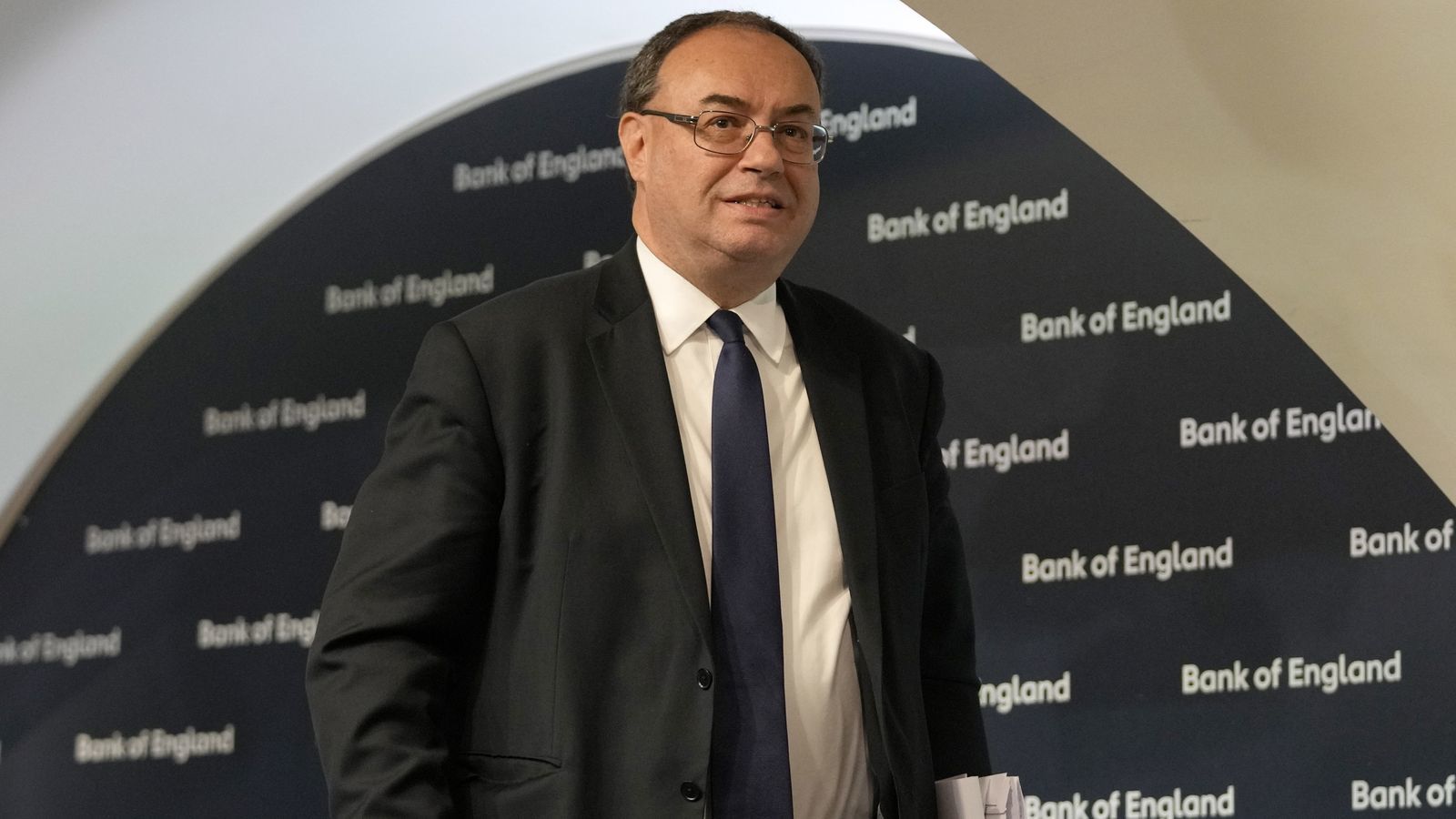 Governor of the Bank of England, Andrew Bailey
A change in policy outlook
Mr Broadbent's remarks today are all the more significant because they underline just how much the policy outlook for the UK has changed during the last week.
It was only as recently as last Saturday that Andrew Bailey, the Bank's governor, delivered a speech at the International Banking Seminar in Washington in which he said: "We will not hesitate to raise interest rates to meet the inflation target. And, as things stand today, my best guess is that inflationary pressures will require a stronger response than we perhaps thought in August."
Since then, in a bid to pacify the bond market, Jeremy Hunt has unwound most of Mr Kwarteng's unfunded giveaways and set a date, 31 October, on which he is expected to come up with further tax increases and public spending cuts to plug the government's fiscal hole.
Gilt yields - implied government borrowing costs - have fallen sharply from where they were immediately after the mini-budget.
Mr Broadbent's comments today suggest that, so too, should market expectations of where Bank rate will peak.