London Daily

Focus on the big picture.
Saturday, May 30, 2026

Bank of England doubles down on inflation gamble to prevent greater damage ahead

Bank of England doubles down on inflation gamble to prevent greater damage ahead

Sky's Paul Kelso speaks to a business owner facing a massive, damaging increase to their gas bills as the governor of the Bank of England explains why it is inflicting more pain on millions of borrowers to help control a price problem mostly outside its control.

How does it feel running an energy intensive business in the age of soaring prices?

"It's like a train coming down the tracks and you know you can't avoid it," says Matthew Greene.

He's the managing director of Ercon Powder Coating, a second-generation family firm in Bilston in the West Midlands, one of hundreds of manufacturers that form the backbone of British industry.

Matthew took over the business from his father in 2016, since when he has had to steer it through Brexit, the pandemic and now an energy crisis that may be the hardest of all. His two sons work with him.
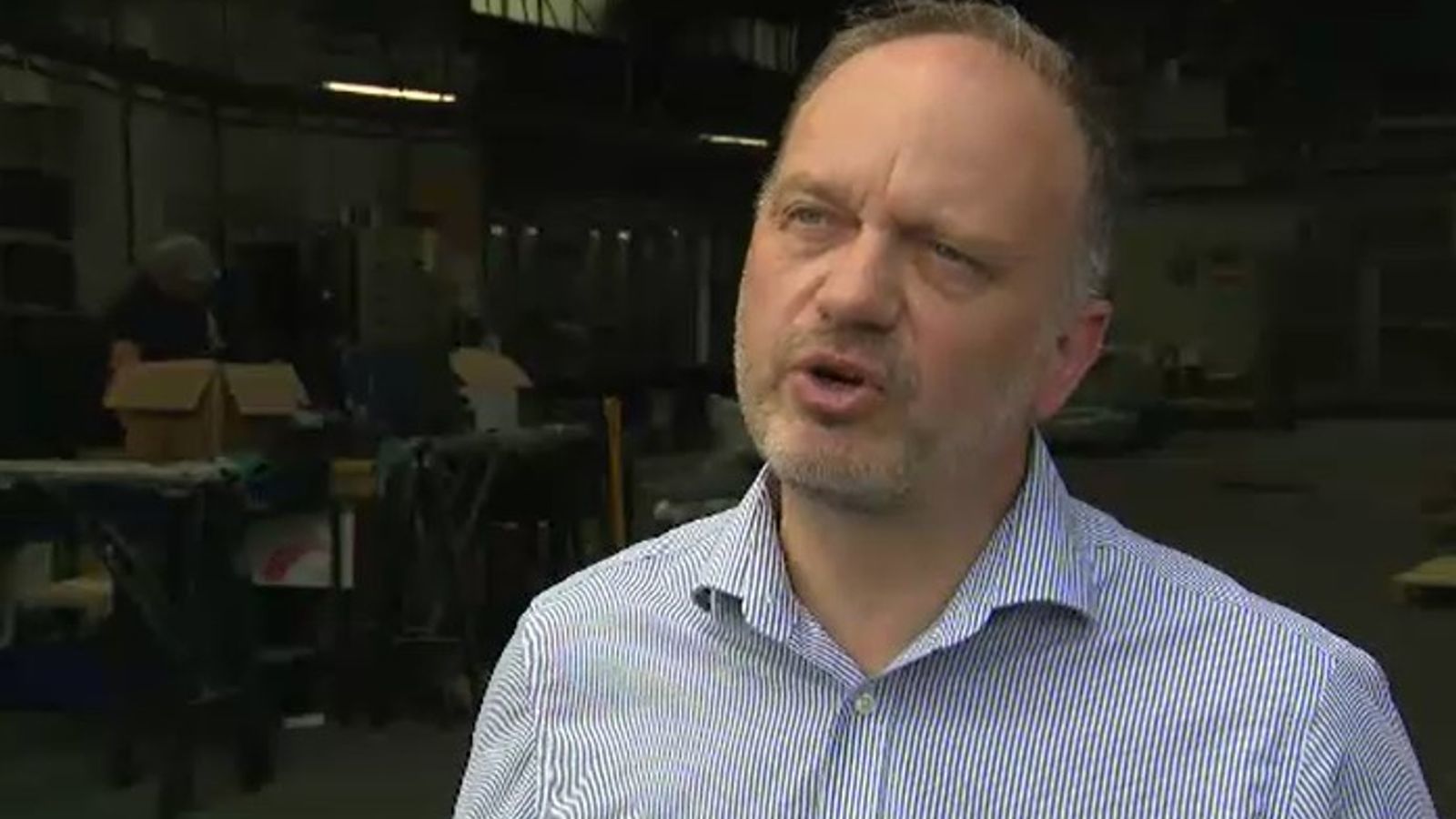
Matthew Greene, the boss of Ercon Powder Coating, fears its gas bills will rise six-fold


Powder-coating is the process of applying a smooth, dry finish to metal surfaces, used for everything from park railings and shelving units to hi-fi appliances and designer chair legs.

It's cleaner, quicker and smoother than paint but it is an energy intensive business, requiring large gas-fired convection ovens to bake on the powder at temperatures north of 200C, and the locomotive Matthew can see in the distance is his gas bill.

"You're talking about going from £50,000 or £60,000 to up to £300,000, so where does that come from? We can make small improvements here and there, save a thousand pounds a month here and there, but such a huge rise does threaten the viability of the business.

"We have 25 people employed in the powder coating division, we have been doing this since 1983 and we have had highs and lows with various recessions, but this is something different, we've never experienced anything like this when such a catastrophic cost is going to hit the company.

"The gas is going to cost more than employing people, more than renting the building, more than employing, it's going to have a huge impact."

The wholesale gas price increase Matthew faces isn't just fuelling his ovens.

The Bank of England says it's driving inflation to a peak of 13.3% in October, a date linked to the increase in the domestic price cap to an estimated £3,500, and will keep inflation above 10% until this time next year, prompting the largest fall in living standards since the 1960s.
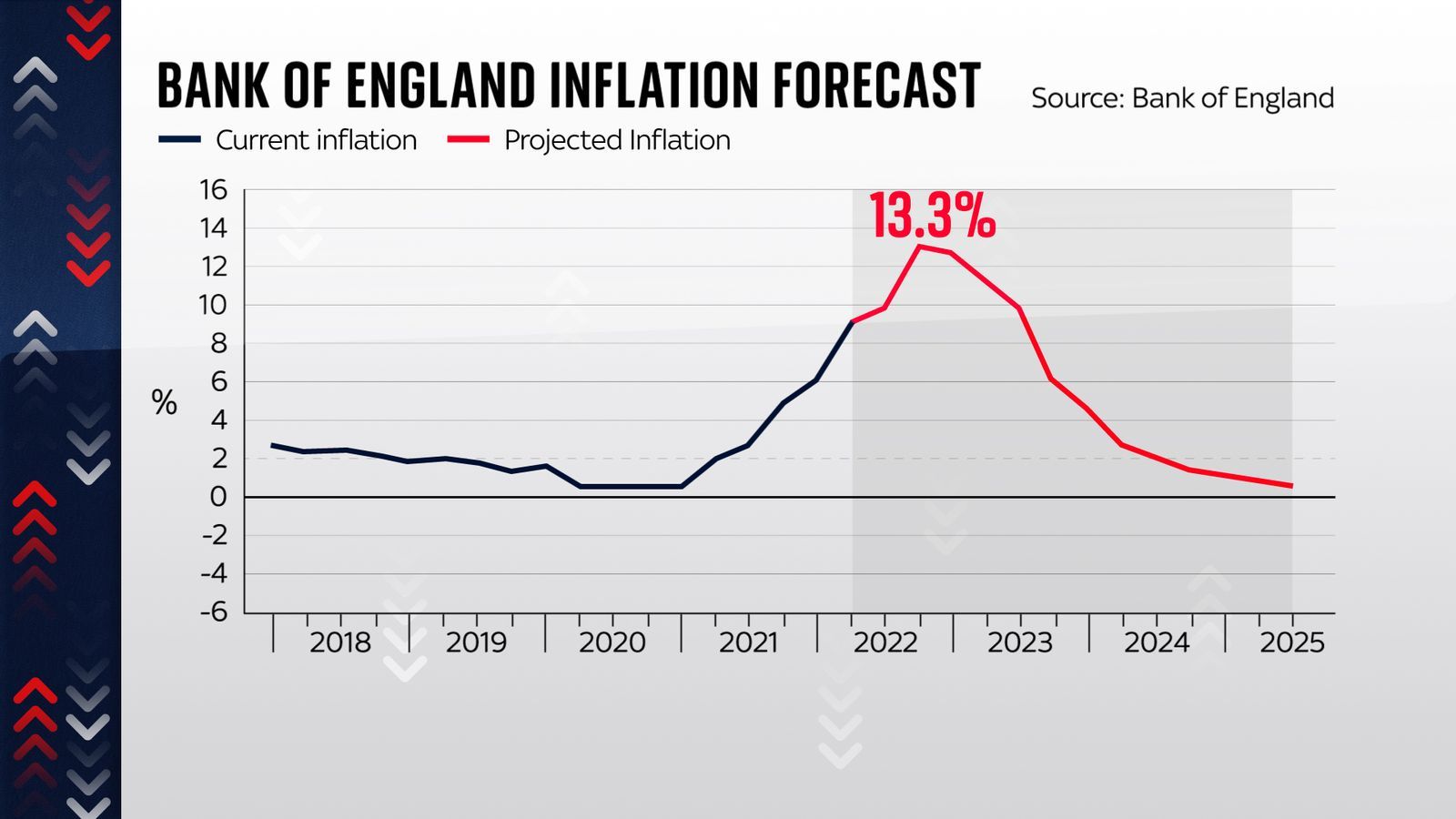

Given a 15-month recession looms and this is largely imported inflation, driven by global demand and the war in Ukraine and beyond the control of the Bank, why has it decided to increase interest rates by the largest amount since 1995, a move that could add £650 to average tracker mortgage repayments?

Governor Andrew Bailey told me they're acting now to prevent the impact of energy inflation being baked into domestic prices when prices fall.

"The reason we're doing it is because if we don't get inflation under control, if we don't bring it down from where I'm afraid it's got to go because of this huge energy shock that we're having, then the damage and the distress will be even greater," he said.

"I recognise how difficult this will be and how significant this will be for the cost of living, but if we don't address this now the consequences will be worse and the result will be even higher interest rates in future."

Mr Bailey says there is already evidence of domestic inflation taking root in Britain's tight labour market, where there are more vacancies than job-seekers, forcing wages up by a predicted 6% this year.

He repeated his warning that inflation-chasing pay settlements risks embedding inflation, a message unlikely to find supporters among public and private sector workers facing below-inflation settlements.

Speaking in the midst of the Conservative leadership race, he resisted all invitations to comment on the candidates' extravagant tax-cutting promises, or suggestions from Liz Truss that the Bank's mandate should be changed.

He did however defend its judgement today, and its role in future.

"We think this is undoubtedly the right thing to do, but we will be back in six weeks' time, for the next monetary policy meeting, and we'll go through all the evidence again.

"What I would emphasise is that independence is an absolutely key part of the economic system of this country, and in other countries. It's an important part and never more than now, this is the biggest test of our system in the quarter of a century this has existed for."

The next few months will test that faith. Matthew Green, thousands of business owners like him, and the rest of us, will hope Mr Bailey and his colleagues have got it right.

Newsletter

Related Articles

0:00
0:00
Close
Japanese Technology Firm Fujitsu Launches Advanced Artificial Intelligence Tool for Corporate Disclosures
South Africa Officially Launches Nationwide Campaign for Highly Contested Local Government Elections
United Kingdom Commits Additional Funding for Unexploded Ordnance Clearance in Laos
Singapore Announces Stringent New Greenhouse Gas Regulations for Commercial Cooling Systems
Cambodia and Thailand Hold High-Level Border Security Talks at United Nations Headquarters
Myanmar Military Government and China Sign Major Agreement to Upgrade Media and Cultural Cooperation
Knife Attack at Swiss Train Station Leaves Three Injured in Suspected Act of Domestic Terrorism
Transnational Extortion Gang Threatens Canadian Police With Army of One Thousand Armed Operatives
Australia Imposes Forty-Two-Day Quarantine on Cruise Ship Passengers Following Deadly Hantavirus Outbreak
International Monetary Fund Unlocks Seven Hundred Million United States Dollars for Sri Lanka Following Economic Reforms
Australia Launches Record One Point Four Billion Dollar Lawsuit Against Chemical Giant 3M Over Contamination
China and Canada Foreign Ministers Meet in Ottawa in Effort to Stabilize Strained Diplomatic Ties
Indonesia Demands Urgent United Nations Security Council Reform Amid Escalating Global Conflicts
Extreme Weather Patterns Trigger Severe Drought in Madagascar and Destructive Flooding in East Africa
Indian State of Karnataka Faces Political Upheaval as Chief Minister Siddaramaiah Abruptly Resigns
Philippines and Japan Reaffirm Defense Ties as Crucial for Indo-Pacific Regional Stability
Norway Joins French Nuclear Deterrence Initiative in Major Shift for European Security Architecture
Global Critical Mineral Alliances Expand as Western Nations Move to Counter Chinese Supply Dominance
United States Imposes Fifty Percent Tariffs on Mexican Steel and Aluminum Ahead of Trade Pact Review
European Union and China Head Toward Major Trade Conflict Over Clean Technology Exports
United States Economic Growth Severely Downgraded to One Point Six Percent as Stagflation Fears Mount
World Health Organization Warns Central African Ebola Epidemic is Outpacing Containment Efforts
United States Treasury Department Conditions Sanctions Relief on Reopening of the Strait of Hormuz
Iranian Air Defenses Intercept and Destroy United States Military Drone Over Bushehr Province
Iranian Armed Forces Launch Ballistic Missiles Toward Unspecified Targets Prompting Regional Condemnation
United Nations Secretary-General Warns Global Order Facing Highest Level of Conflict Since 1945
Israel Issues Sweeping Evacuation Orders in Southern Lebanon Amid Intensified Hezbollah Conflict
Russia Announces Systemic Military Strikes Targeting Ukrainian Defense and Energy Infrastructure
United States and Iranian Negotiators Reach Draft Agreement to Extend Ceasefire and Resume Nuclear Talks
United Nations Security Council Deeply Divided Over United States Capture of Venezuelan President
US and Iran Exchange Direct Military Strikes Amid Fragile Gulf Ceasefire
World Health Organization Warns of Catastrophic Ebola Outbreak in DR Congo
Russia Threatens New Wave of Strikes on Ukrainian Infrastructure and Embassies
Scientists Warn Atlantic Ocean Currents Could Collapse Faster Than Projected
Anthropic Reaches $900 Billion Valuation in Historic AI Funding Round
Washington Imposes Crippling Sanctions on Iranian Maritime Authority
Japan and the Philippines Initiate Strategic Intelligence-Sharing Pact
Microsoft Deploys Autonomous Computer-Using AI Agents to Global Markets
Anthropic Secures $45 Billion Compute Infrastructure Agreement With SpaceX
U.S. Director of National Intelligence Resigns Amid Administration Shakeup
Micron Technology Crosses Trillion-Dollar Valuation Amid Unprecedented Hardware Demand
Canada and Germany Finalize Historic Long-Term LNG Export Agreement
China Expands International Travel Restrictions on Domestic AI Researchers
Japan Approves Sweeping Overhaul of National Intelligence Apparatus
Global Airlines Scramble Logistics as Middle East Airspace Remains Fractured
Japan's Naphtha Imports Plunge 47 Percent Amid Strait of Hormuz Closure
Global Crude Prices Retreat Below $96 as Gulf Tensions Momentarily Ease
Generative AI Outperforms Human Baselines in Landmark Global Creativity Study
NASA Partners With Private Aerospace to Unveil Permanent Lunar Base Architecture
South Korean Equity Markets Surge on Next-Generation Memory Chip Frenzy
×