

Argentina, caught in economic depression, gets something to cheer in World Cup win
An incredibly tense World Cup final, if not the best of all time. An extraordinary victory for Argentina that crowns the career of superstar Lionel Messi. A new hope for a country in deep crisis.
Argentina beat France in a penalty shoot-out after the match ended tied 3-3, causing hundreds of thousands of citizens to pour into the streets of Buenos Aires to celebrate, chant and dance. The obelisk, the landmark monument of the South American capital that houses over 17 million people in its broader agglomeration, was quickly covered in a sea of people.
Some 15 blocks north of the obelisk, in front of the bar Locos por el fútbol (Mad for football) in the Recoleta neighborhood, some fans spent the penalty shoot-out praying, on their knees with their heads and hands down on the ground, only to then burst into frenetic cheers and tears.
"It's incredible. I'm out of words. This means so much to us," said Henrique Ferenz, who had followed Argentina's quest for a third World Cup victory with his son Ignacio in front of the bar.
"It reminds me a lot of 1986," he said, referring to Argentina's last World Cup victory under football legend Diego Maradona, and then added: "It's also such a huge relief, given the situation we are in."
Ferenz's words summed up a general feeling that has been growing in a notoriously football-enthusiastic but also crisis-torn country over the past weeks: As La Albiceleste advanced through the Qatar World Cup, reaching quarter and semi finals and ultimately the final against former world champion France, people increasingly grasped new hope and a sense of euphoria — a state that many in the country, which is marked by seemingly permanent economic crises and galloping currency devaluation, had not known for a long time.
Once, around 100 years ago, one of the richest countries in the world, Argentina has faced various economic crashes in past decades, but the recent years have been particularly bitter. Inflation reached nearly 100 percent this year, rapidly wiping out savings and many dreams, especially among the middle class. Those who can invest their assets in euros or dollars, which can be exchanged for Argentine pesos on the semi-legal black market at much better conditions than the official exchange rate.
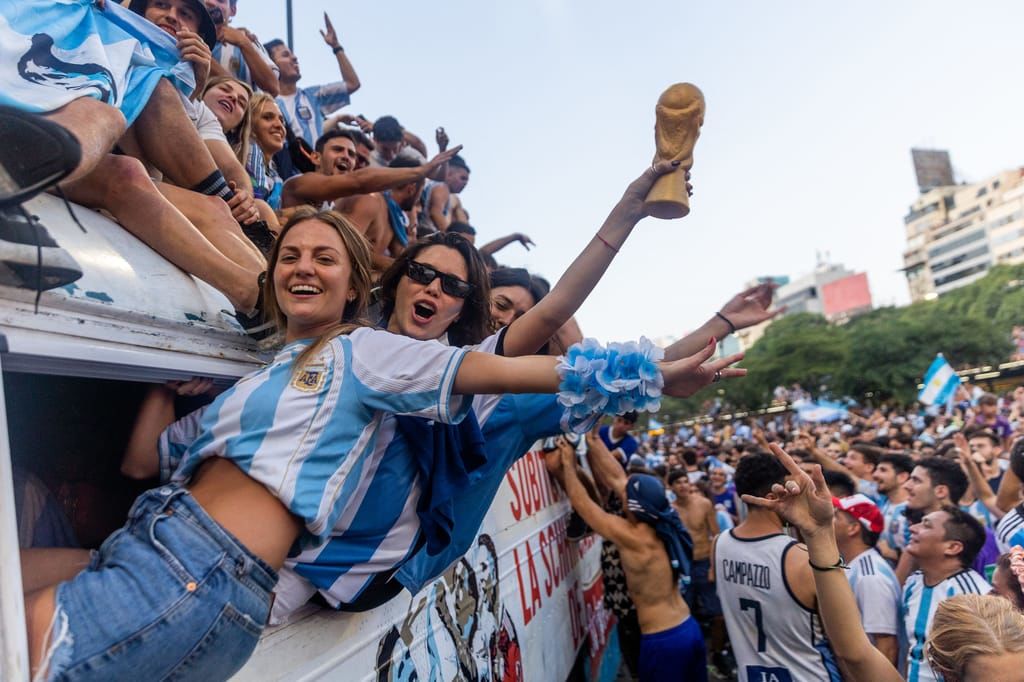 In chants, people sang their national pride and cheered Messi
 Enter the World Cup victory, which seems to have, at least for a moment, eradicated the general feeling of frustration and failure that has long gripped the country.
"We are champions! The whole world is looking at us today! I cannot describe to you the emotion that I'm feeling," shouted Angelica López from Buenos Aires, as she was asked by POLITICO what the victory meant for Argentina, only to disappear seconds later in a crowd dancing wildly to drum rolls.
In chants, people sang their national pride and cheered Messi, the 35-year-old superstar of the Argentine team, who on Sunday achieved his long unfulfilled goal of crowning his career by winning the world championship — after many Argentinians, and presumably he himself, had no longer believed in it. In a high tension finale marked by dramatic twists and turns, Messi scored two goals and was once more a central playmaker.
"We are used to being beaten, that's why we know how to cope with good and bad times," Argentinian trainer Lionel Scaloni told national TV. "Being at the top is something unique, an incredible enjoyment."
Although it's unlikely that the victory as such will make a tangible impact on the economic situation of the country and its people, of which nearly 40 percent live below the poverty line, the rediscovered hope and pride come at a moment where a new political and economic perspective for Argentina could be growing.
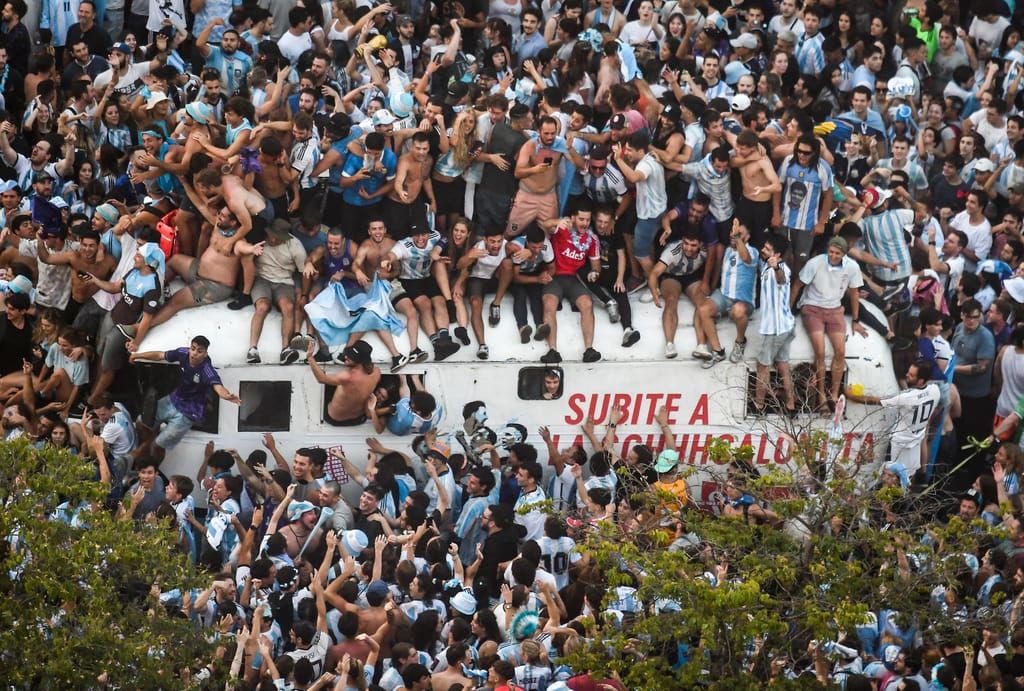 Argentina will hold general elections in October next year
Despite many years of economic depression, political mishandling and rampant corruption cases, the South American country retains a lot of potential thanks to fossil resources like gas — with the "dead cow" field in Patagonia being the world's second-largest shale gas reserve — and lithium, which is a key component for batteries in electric vehicles and electronics. Western leaders like German Chancellor Olaf Scholz have already expressed interest in supporting Argentina in exploiting those resources.
Moreover, next year could also see the ratification of the long-delayed trade deal between the EU and the Mercosur bloc — comprising Argentina, Brazil, Uruguay and Paraguay — which now looks more likely as Brazil's new President Lula da Silva has vowed better protection of the Amazon rainforest. Optimism for the deal has also grown as Russia's war against Ukraine and growing tensions with China have led to a change of mind among many European politicians who have long opposed the deal but now see the need to forge closer ties with democracies in South America.
Advocates of the deal say that it would tear down protectionist barriers in Argentina and its
neighboring countries and open new opportunities for investment and growth.
Change could also come at the national political level, as Argentina will hold general elections in October next year in which the left-wing government is set to be challenged by more market-friendly candidates from both a center-right bloc and a new liberal party.
Some in Buenos Aires recalled on Sunday that the last time that Argentina won the World Cup, in 1986, was just three years after the fall of the military dictatorship — and it was a defining moment for the young democracy. The hope is that this year's victory will provide a similar lift for a country in dire need of one.
"Perhaps, with a bit of luck, today's victory could be a precursor for a political and economic renovation that our country needs so badly," said Guillermo Alberto, a football fan partying on the streets of Recoleta, Buenos Aires.