

Apples and pears could be next UK food shortage, farmers warn
Apples and pears could be the next food shortage in the UK, after it emerged that British growers are planting just a third of the number of trees needed to maintain orchards, saying their returns from selling to supermarkets are unsustainable.
Ali Capper, head of the British Apples & Pears trade association which represents about 80% of the industry in the UK, said 1m new trees would have to be planted each year to maintain the UK’s 5,500 hectares (13,590 acres) of production.
This year farmers had planned to order just 480,000 apple and pear trees but that has been slashed to 330,000. Capper said the key reason for the lack of investment was “supermarket returns that are unsustainable”.
She said fruit growers’ costs had increased by about 23% as the cost of picking, energy, haulage and packaging had risen but that was being met by a less than 1% increase in returns. “The majority of growers are losing money.”
Some are planning to quit the industry and others have effectively mothballed their orchards or are grubbing them up as the returns dwindle. “This is a very serious situation,” said Capper. “The future of apple and pear growing in the UK is seriously in doubt.”
Britain is already facing shortages of multiple fresh food items, prompting Tesco, Asda, Aldi and Morrisons this week to limit purchases of certain lines including tomatoes, cucumbers and peppers.
The shortages have been triggered by cold weather in Spain and North Africa hitting crops there and by big cutbacks by British and Dutch growers, who plant salads under glass at this time of year, as growers say supermarkets were not prepared to cover the increased cost of heating.
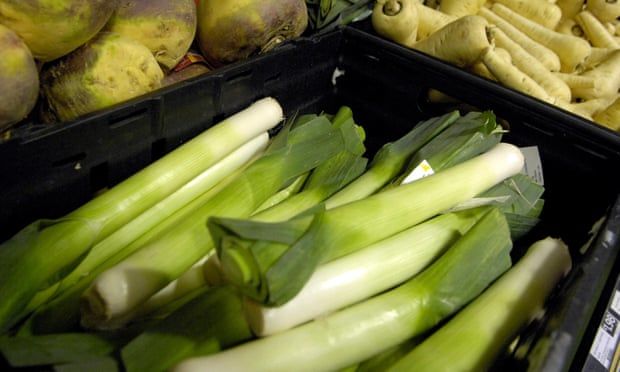 Leeks, parsnips and swedes. Growers are warning of a leek shortage by March.
Some importers say Brexit has also meant the UK is at the back of the queue behind the EU when competing to buy scarce fresh produce, because of the increased costs and bureaucracy associated with shipments over the channel.
It comes as nearly a fifth (18%) of UK adults said they had experienced shortages of essential food items in the past two weeks, according to the Office for National Statistics, up from 13% a year ago, as food importers say Britain’s exit from the EU continues to mean higher costs and potential holdups because of extra bureaucracy.
Thérèse Coffey, the environment minister, said on Thursday she expected the shortages of some fresh food items to last for up to a month, but some British growers say the shortages could last until May.
Coffey suggested in the same session in parliament that British households might “cherish” British turnips instead of unseasonal crops from abroad. By Friday morning, however, Tesco’s website had sold out of turnips, offering shoppers the option of a swede instead.
British field crops including leeks, carrots and kale have also been affected by frosts before Christmas that reduced harvests this year as farmers struggle with rising costs and volatile weather partly caused by climate change.
Tim Casey, the chairman of the Leek Growers’ Association, said that British leeks might be difficult to find for St David’s Day this year. “Leek farmers are facing their most difficult season ever due to the challenging weather conditions,” he said.
“Our members are seeing yields down by between 15% and 30%. We are predicting that the supply of homegrown leeks will be exhausted by April, with no British leeks available in the shops during May and June, with consumers having to rely on imported crops.”
Clive Baxter, whose family has been growing apples for 80 years in Kent, said he planned to hand back 24 hectares (60 acres) of apples, pears, cherries and plums on leasehold land to his landlord next year – meaning the trees were likely to be grubbed up – and was leaving another 3.6 hectares (nine acres) of his own orchards to go fallow.
“We haven’t seen quite such dramatic change to the fruit industry in this country since the 1987 hurricane when a huge amount of fruit came out of the ground because of the damage from the storm,” he said.
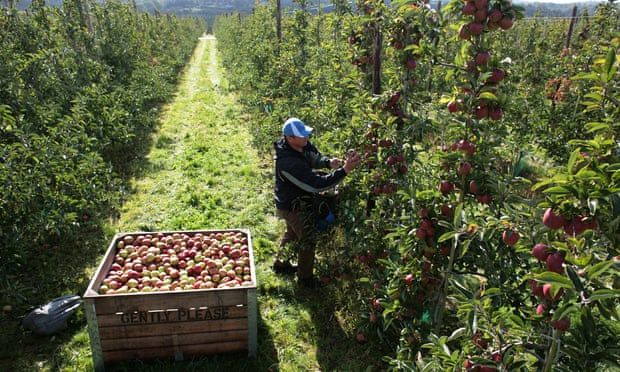 An apple farm in Kent. Growers say they plan
to plant just 330,000 new trees this year rather than the 1m needed to
maintain production.
An apple farm in Kent. Growers say they plan
to plant just 330,000 new trees this year rather than the 1m needed to
maintain production.
Baxter has diversified into vineyards as the price is more protected as supermarkets are offering him less money for his apples and pears while costs have risen, largely thanks to soaring fertiliser, energy and labour costs after. Brexit which slowed the flow of workers from Europe. “We are already losing money,” he said.
Nearby farmer Richard Budd at Stevens Farm in Hawkhurst told the BBC’s South East news programme that he is taking out 20 hectares (50 acres) of orchards.
Another farmer told the British Growers Association survey of British Apples & Pears growers: “We have decided to quit apple growing in two years’ time after 40 years of growing fruit.”
Capper said if fruit trees disappeared it would not only put food security at risk but affect biodiversity which had been fostered in many orchards.