

6 Ways Art Can Help You Work More Effectively From Home
Look around, you've probably given careful thought to your home's decor. Have you brought that same thoughtfulness to your work-from-home space? While many of us thought our make-do home office would be temporary, nearly 40% of employees were working entirely from home as of September 2020 (compared to just 4% prior to COVID-19). Flexible remote schedules are predicted to continue after the pandemic-and for some, the transition will be permanent.
Whether you're remoting in from a corner of your bedroom, a trendy cloffice, or a dedicated home office, adding art to your workspace can help you feel better and work more effectively in this new normal. Here's how.
1. Art Can Inspire You
As a business coach and lifestyle blogger, Kate Hammer is a pro (literally) at helping people find inspiration and motivation to achieve their goals. In her own career, her art-filled home office helps her stay positive and feel inspired about her work. "This is kind of my vision board in art form," says Hammer referring to a nautical print hung near her monitor. The upstate New Yorker sees herself in the art, imagining her friends and family on the boat behind her. This carefree woman is a nod to the people and things that motivate Hammer outside of her 9-5. Art with strong ties to feel-good memories is also inspiring, such as a photograph or a piece of art from someplace special to you.
To avoid the downfall of meme-worthy inspirational quote posters, Hammer advises picking a piece that's not lonely, random, or outside your self-identity. In her office, a large graphic felt flag by McGee & Co. framed above the monitor reads: Creativity Takes Courage. "I do know that to continue on this [career] path and to continue to find success and joy in it, you have to take risks-and a big risk is creativity," she says. "I need that reminder, and I love that reminder."
2. Emphasize the Meaningfulness of Your Work
According to studies by the Harvard Business Review, one of the key qualities of a positive workplace is emphasizing the meaningfulness of the work being done. In addition to personal inspiration, Hammer's decor choices also reflect professional goals and successes. "This aesthetically works in my office but it also reminds me of all the good and beauty in my work-and all that can come of it that is unanticipated," says Hammer, referencing a print of two women hanging near her computer. The piece represents her friendship with a client who became a dear friend. To her, it is a reminder that work is sometimes more than the goal-oriented steps taken to complete a job.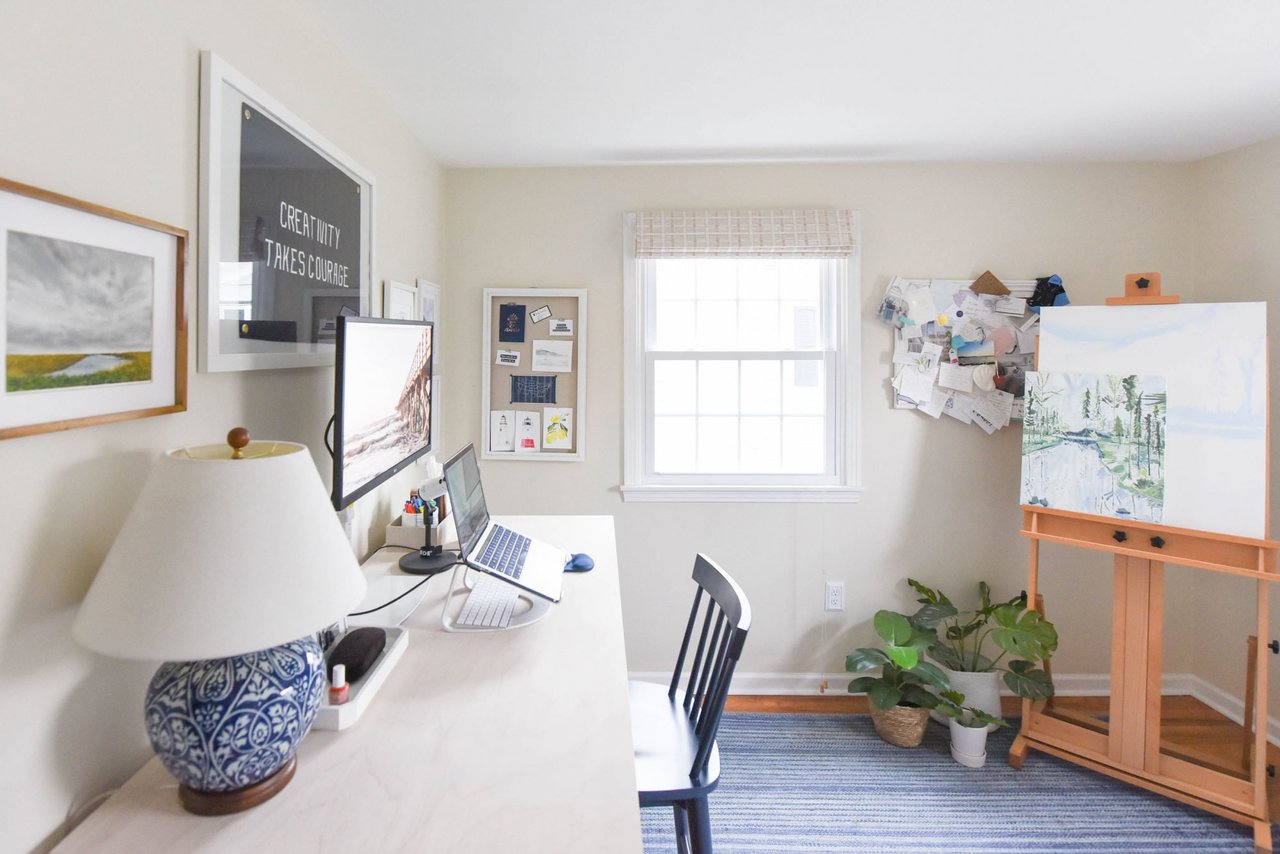
3. Help Prevent Eye Strain
Looking at a screen all day can cause major eye fatigue (and brain fatigue, too, if we're being honest). "When we're in an office seeing, we're moving around a lot more, but, when we're at home, we're sticking to our desks more," says Sue Wadden, Director of Color Marketing at Sherwin-Williams. "Repetitive tasks like working at your computer all day can lead to eye fatigue." By adding art to your space, you're encouraging your eyes to take a break from the screen. Focusing on different surfaces and distances helps ease the strain, too, so you should not only add art adjacent to your screen but other areas as well.
It doesn't matter if it's photos, paintings, or decorative objects, or if you prop them on your desktop, hang them on the wall, or place them on shelving. Wadden says the important thing is to "Make it visually interesting." You want your eyes to linger (more time off the screen!) and your mind to engage, prompting more of the psychological benefits.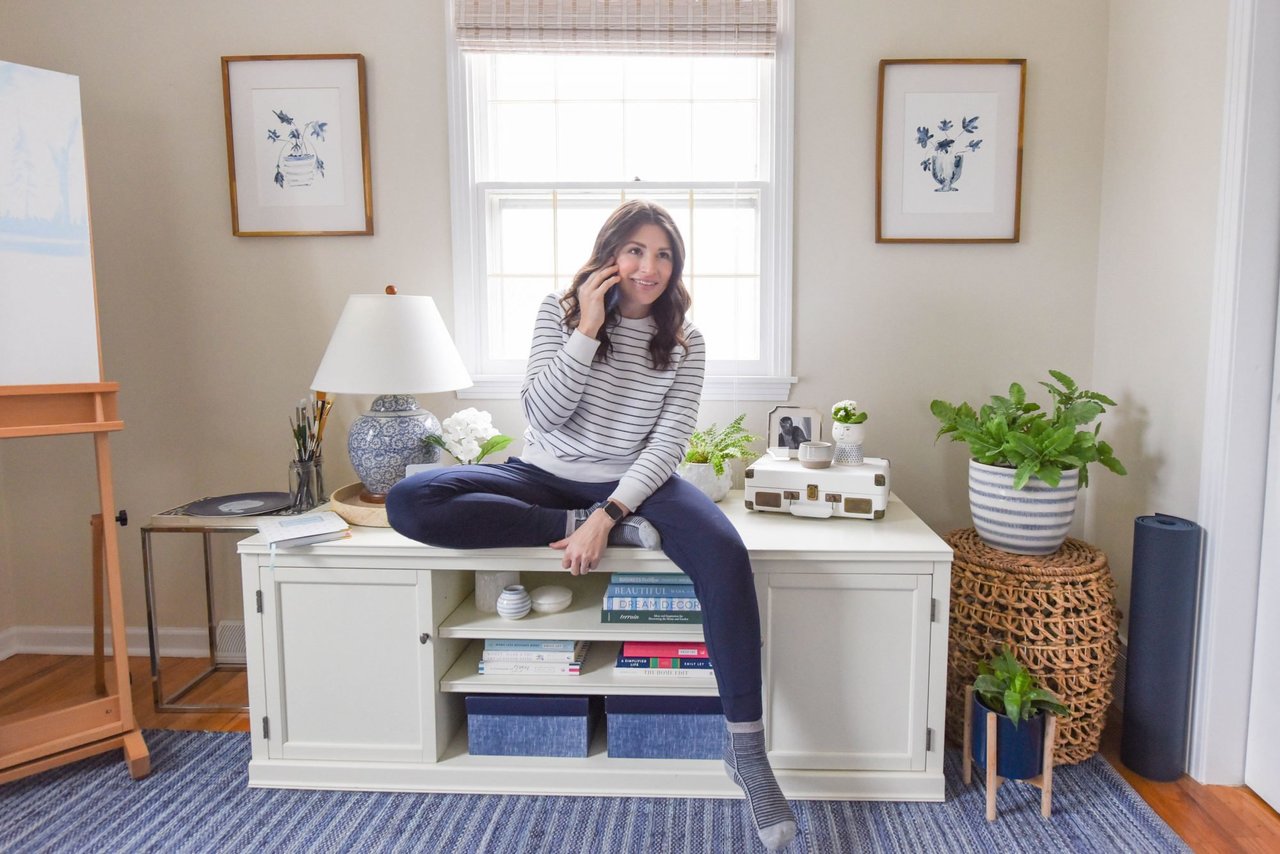
4. Decrease Stress and Improve Your Mood
Looking at art triggers multiple areas of the brain, including our pleasure and reward centers, as well as where we process emotions. A December 2020 Gallup report highlighted that many employees working from home have worse emotional states than on-site workers. Without downplaying the effects of a global pandemic, adding artwork to your space may have much-needed mood-boosting benefits. Studies show that art definitely has an impact. Patients at a medical clinic reported improved moods and reduced stress due to viewing art in waiting areas, corridors, and exam rooms. Another study found nature images, in particular, are linked to lower levels of anger in the workplace, and respondents in a 2019 study said office artwork noticeably reduced stress and made people feel happier.
5. Help You Be More Productive
Adding art can take advantage of color psychology, especially in largely neutral spaces. For example, the coastal palette in Hammer's office is great for a productive workspace. According to Wadden, "Blues, teals, and some greens encourage the brain to focus in on the task at hand." When it comes to calm concentration, "Lighter, brighter mid-tones generally work well," she says. Colors like coral and orange have more energy-something you might be seeking if you have high-energy aspects to your work. Wadden advises using colors like these in small doses, so they don't add to your eye fatigue. Even something small, like a piece of art on a nearby bookshelf, can have the desired effect.
Benefiting from color psychology isn't the only way art makes you more productive. One study found that employees who personalized their workspaces were up to 32% more productive, and the Harvard Business Review reported that inspired employees are more engaged and productive.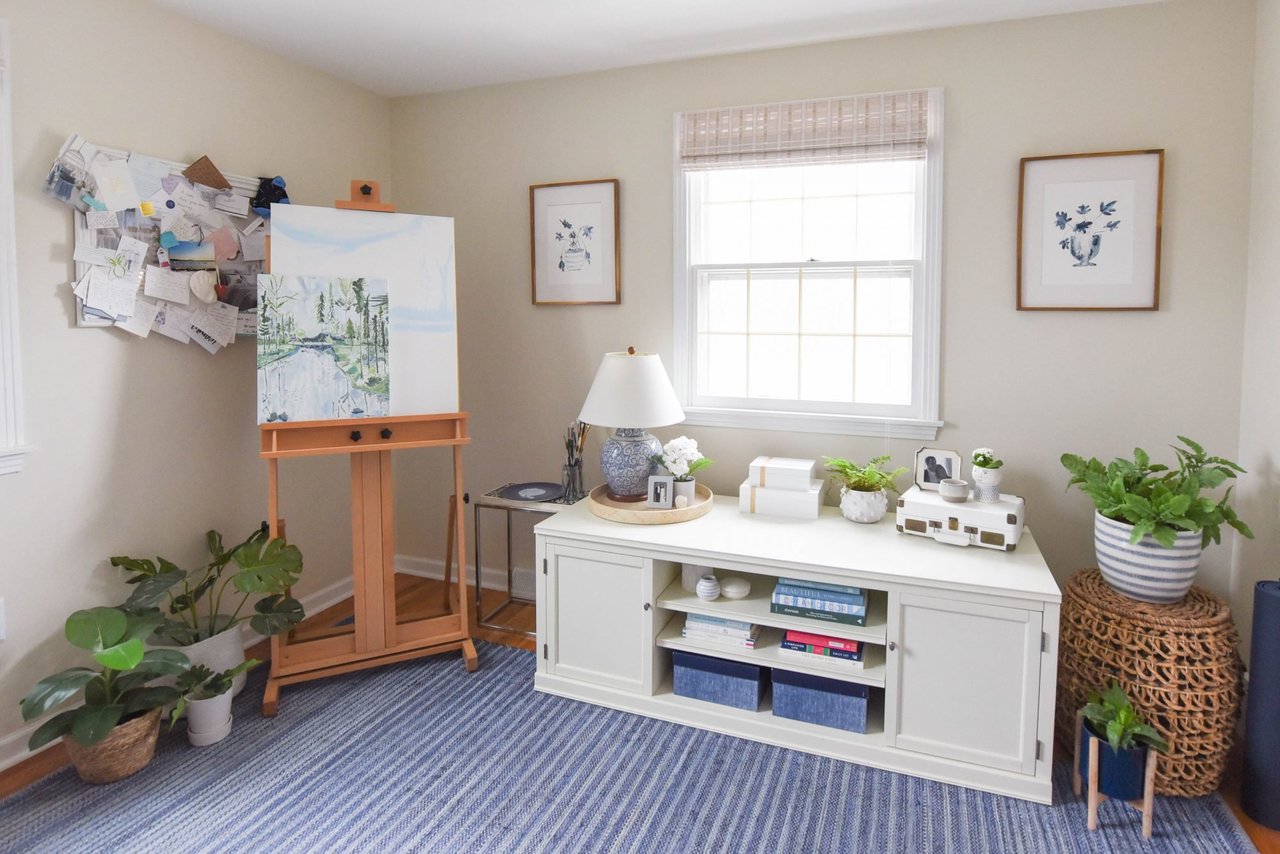
6. Facilitate More Effective Communication and Connection
A Harvard study found art in the workplace can facilitate more open communication and, ultimately, personal connections. Anyone who has done a video call with Hammer can attest to the cozy view: lots of plants, art on the walls, and an easel that sometimes holds a work-in-progress. There was a time she would have been embarrassed for someone she worked with to know she paints. "My little story of personal growth over the past few years is registering that people actually connect with a whole person, not with just this one skill that you have," she says. "We really do recognize authenticity and truth in other people."