

When will women feel safe on UK streets?
Tanya was only 12 years old when it first happened. It was a sunny afternoon in Birmingham and she was just getting off the bus she took from school every day. The bus was busy and she was keen to get off – that’s when she noticed the two men standing just behind her. “As I was passing by the stairs, I felt one of them pushing me to the side, then before I knew what was happening the other one quickly started taking pictures and videos underneath my skirt. I was wearing my school uniform and everyone could see but nobody said anything.”
Tearful and shocked, Tanya got off the bus and called her cousin. “She said, ‘You know what, these things happen. It’s a shame that we live in a world like this but that is the way things are’.” She went to her school but this was their response: “They told me ‘you should start wearing longer skirts’.”
Eleven years and a number of other incidents of sexual harassment later, Tanya has had enough. She doesn’t want to be told that it’s just the way life is. She wants something to change. And she’s not the only one.
What has been described as an “epidemic” of sexual harassment, primarily against girls and women, has slowly been revealing itself in the last few months in this country – and millions of people like Tanya are angry. A sense of the scale of this abuse became evident when the website Everyone’s Invited, which encourages survivors to share their stories, revealed thousands of testimonies, many from school-aged girls, cataloguing abuse ranging from unwanted sexual comments, cyberflashing (the sending of unsolicited explicit images) and harassment, to sexual assault and rape.
But it’s not just harassment and assault that have been pushed into the spotlight like never before, it’s serious violence against women and girls, and, in the worst cases, murder. Conspicuous and horrific cases like the deaths of Bibaa Henry and Nicole Smallman, sisters who were repeatedly stabbed in a park in north-west London last year, and,Julia James, the PCSO killed while walking her dog in woods near her home this summer.
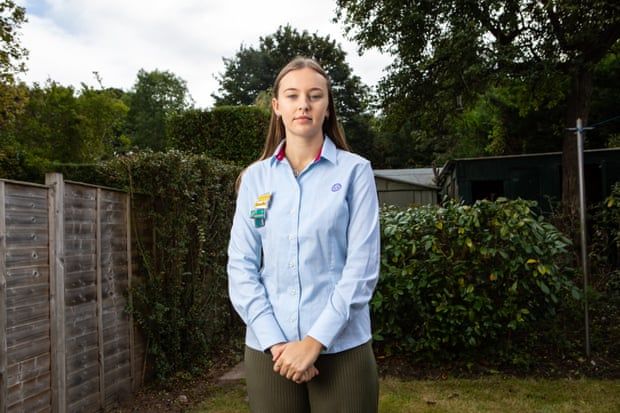 Phoebe, a Girlguiding advocate, believes that boys should be educated from a young age to respect women and girls.
Yet, arguably, none were as high profile as the murder on 3 March 2021 of 33-year-old Sarah Everard.
Some argued that the focus on her death was because she was white. Others said it was because of the perpetrator, a man who it transpired was one of the very people whose job it is to protect women. Met police officer Wayne Couzens pleaded guilty and will be sentenced on 29 September.
Whatever the reason, her death became a watershed moment. Women recognised the vulnerability of Everard’s situation as she walked home alone, they felt the fear she may have felt even before being accosted, and too many recognised the pain of the subsequent violence.
Grief turned to anger. There was a vigil in her name on Clapham Common in London, which only increased the backlash against the police when they were accused of being heavy handed with female protestors. Enough is enough, women seemed to collectively say, and politicians found themselves forced to respond.
Things will change, they promised. But six months on, what, if anything, has actually changed? We are now faced with another act of femicide, with the murder of primary school teacher Sabina Nessa last week, and the outpouring of anger and frustration is audible once more.
For Caroline Nokes, Conservative MP and chair of the cross-party women and equalities select committee, the events in March heralded a significant moment in her own life, both personally and professionally.
It opened up important conversations with people that she may never have otherwise had. This was with both her male colleagues, her 23-year-old daughter and even her mother, who wanted to know if women really did feel scared every time they walked home alone at night.
“Yes, I told her, yes we do,” she says. “I was heartened by the number of male colleagues who then approached me privately, saying, ‘what can I do to make women around me feel safer? If I’m walking home late at night, and there is a woman in front of me, how can I let her know I’m not a threat?’”
So what is the answer, what can be done to make women and girls feel safer? One thing that has repeatedly been called for by campaigning groups and individuals is a change in emphasis in the way police deal with gender-based crimes against women and girls. Earlier this month a root-and-branch examination by Her Majesty’s Inspectorate of Constabulary and Fire & Rescue Services (HMICFRS), commissioned by Priti Patel following Everard’s murder, found huge inconsistencies across police forces in dealing with the epidemic of violence against female victims in the UK.
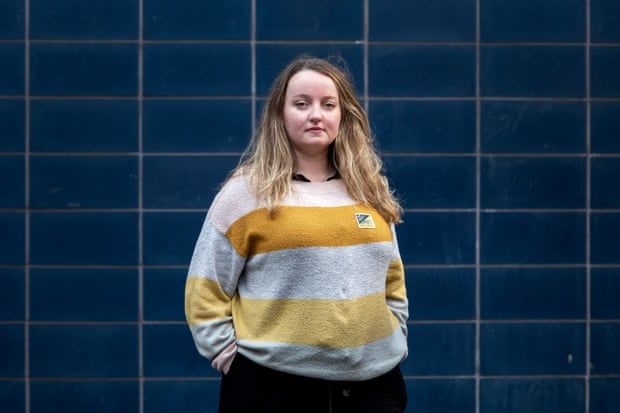 Jennifer Llewelyn was the victim of a sexual offence by a perpetrator who was known to the police.
Many were neither working closely enough with colleagues from other agencies nor giving the threat of violence the resources it deserved. That response sharply contrasted to how police dealt with terrorism and, more recently, county lines drugs gangs. The report recommended “cross-system changes” with councils, courts, teachers and the NHS, among others, required to work together with the police to prevent violence against women and girls.
That is something 26-year-old Jennifer Llewellyn can relate to after she became a victim of a sexual offence last summer. One evening during lockdown, she was going for a run in her home city of Sheffield. The streets were quiet as all bars and pubs were shut, which was why she found it odd when a car pulled up alongside her. “I remember looking into the car and seeing a man smiling and jerking something. I [felt] really shocked and embarrassed and I ran away.”
The next day she reported the incident to the police and, to her surprise, learned that the man had done this a number of times before. With the collective testimonies and his guilty plea, the police were eventually able to secure a conviction.
The outcome, however, left Llewellyn, who works with grassroots group Our Bodies Our Streets, conflicted. “I was glad there had been some sort of consequence but, at the same time, I thought, if he’d already been known to the police, then how did this happen to me?”
One of the other major pieces of work that came out following Everard’s death was the government’s strategy on tackling violence against women and girls (VAWG). Following her murder, its publication was brought forward to July this year and received 180,000 responses, a figure unheard of from a government call for evidence. The strategy concluded with a number of actions that the government promised to press ahead with, including reviewing existing legislation and launching a public awareness campaign.
Nokes believes that while the VAWG strategy is a significant step in the right direction, there were some serious omissions. “There is still an enormous piece of work to do around public sexual harassment, and making that a specific crime,” she says.
Plan International UK, one of the largest global children’s charities, agrees and has been working on a campaign, in conjunction with grassroots campaigners Our Streets Now, designed to put pressure on the government to fix legislation in this area.
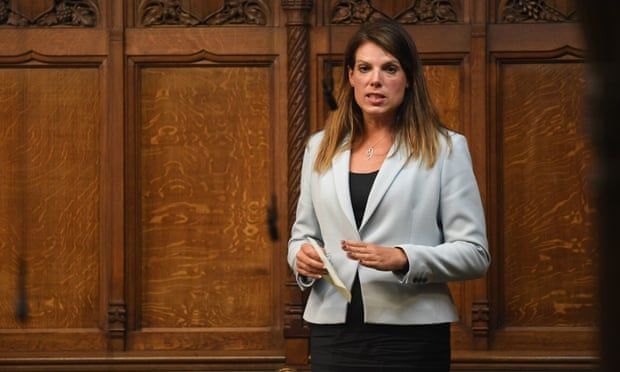 MP Caroline Nokes says public sexual harassment should be a crime.
“We have this piecemeal set of laws stretching back hundreds of years and they are the only thing that legislates in any way on this,” says Georgie Laming, campaigns manager at the charity. “There’s one law from the 1600s called outraging public decency, which was used to prosecute a man for urinating off the balcony in Covent Garden. And that is still the law that is being used to cover this area.”The organisation has been working with two leading human rights lawyers to draft a bill that they hope will go before parliament. It includes the crucial elements of public space, “sexual” conduct, a mental element (that is, “intention” to cause harassment or “recklessness” about the effect it would have) and a proportionate penalty, from a fine up to one year’s imprisonment.
“The government acknowledged the premise of our argument when they published their strategy in July,” says Laming. “But they still haven’t yet gone as far as saying ‘we’ll make these things a crime’. What they have committed to is a review of the current law, which we urge them to do as soon as possible.”
Nokes thinks waiting for a review could “take for ever” and that a much easier fix would be for the government to add public sexual harassment to the police, crime, sentencing and courts bill, which is currently with the House of Lords. “Not including it was a missed opportunity to put this on the statute book as a standalone crime,” she says. “And I think government could even, at this stage, add that to the bill.”
Labour MP Harriet Harman tried and failed to add public sexual harassment to the bill when it was before parliament, she says, but she agrees with Nokes that there is still a chance, though she believes a better opportunity may now present itself in the victims bill, which is currently at a relatively early stage in the Commons. It is this bill that she also wants to use to see an end to the routine use of a victim’s sexual history in rape cases, as well as an end to the defence of “it was rough sex gone wrong” in murder cases.
What she does think could be a game-changer is the fact of having a woman home secretary in Patel and a woman attorney general, Suella Braverman, in power at the same time. “This has come just as there is this real mood among women and girls in the country that there needs to be change,” she says. “So they have got this huge movement behind them if they are actually prepared to go forward. And if they don’t, people will say, what was the point of getting women into senior positions if they didn’t deliver for other women?”
The government says it is looking into gaps in existing law and how a specific offence for public sexual harassment could address those but is mindful that any potential legislation is proportionate. “Certain crimes disproportionately affect women and girls, manifest themselves in different ways, and demand targeted solutions,” said Rachel Maclean, the minister for safeguarding.
“The first ever national police lead on VAWG starts her role next month, we will soon be rolling out a behaviour change campaign and an online repository of all domestic homicide reviews will soon be live, so we can better understand, analyse and ultimately prevent these horrific crimes.”
One of the other key messages that came out of all the sharing of stories on Everyone’s Invited following Everard’s death was the role that schools play. The schools inspection body Ofsted was so concerned by the volume and detail in the testimonies that came out on the website, largely from school-age children, that it carried out an emergency investigation at the end of the last school term. It concluded that sexual harassment of girls had become a way of life and that schools were seriously lacking when it came to helping identify and prevent it.
For 21-year-old Phoebe, the first signs of harassment began with boys twanging the girls’ bra straps at the ages of nine or 10. Then, when she moved into sixth form and she could wear what she wanted, she was horrified by comments some of the boys would make about her body. “Things that would make you kind of retreat into your shell and think, ‘I don’t want to wear [this] any more’.”
Recent research carried out by Girlguiding, which wants to see better education in school around consent and acceptable behaviours, found that almost 70% of girls have experienced sexual harassment at school from another student.
“Education, for me, is key from a young age, and this needs to start from within schools,” says Phoebe, who is an advocate for the organisation. “It’s not just ‘oh, boys will be boys’. It needs to be ‘No, you shouldn’t be doing this’. We need to be constantly reminded, firstly through school and then in the workplace.”
The NSPCC, which opened a helpline for schools following the fallout on Everyone’s Invited, has listened to some harrowing testimony in the last few months. It was given funding until the end of October by the government for a helpline dealing specifically with cases of peer-on-peer abuse in schools. It has received more than 650 calls in the last five months.
Sandra Robinson, a manager at the helpline, says she and her colleagues have taken calls on everything from sexual name calling and inappropriate touching, to sexual abuse and rape. “With many of the calls, the caller has told somebody but it either hasn’t been taken seriously or hasn’t been escalated appropriately within the school,” she says. “This leaves the child feeling very confused about what’s appropriate or not.”
The NSPCC believes one of the key things to take out from what happened on Everyone’s Invited is that the government needs to help provide schools with better training for teachers on the subject of sexual abuse and harassment so that they can teach this effectively as part of the new mandatory relationships, sex and health education (RSHE).
Darren Gelder is head of Grace Academy, a state secondary school in Solihull. He is also the father of three daughters – and Everard’s death reignited fears he had about safety on the streets. “One of my daughters lives in London and will tell me that she’s walking in Queen’s Park [West London] at 11 o’clock at night. As a parent and as a father that really worries me.”
He believes that schools need to make sure there are measures that extend beyond the curriculum to deal with issues such as sexual harassment. At Grace Academy there are QR codes around the school that students can use to anonymously report their concerns, for example, and twice a year parents are invited to attend “building healthy relationships” meetings off the school premises.
When Ofsted comes knocking this year, Gelder says it’s these sorts of things schools will need to get right.
But while he is pleased this issue is being given priority by the schools inspectorate, Gelder is not convinced school leaders should bear the brunt of responsibility for tackling the issues that led to so called “rape culture” (a phrase coined by the founder of Everyone’0s Invited and then reused extensively). The Ofsted report was clear that the majority of abuse that it came across took place at parties and in parks and not actually on school premises.
“What now must fall under our remit includes knife crime, county lines, exploitation, healthy diets, taking exercise, being safe online and sexting to name a few,” says Gelder. “Surely we have to ask: is there a parental, a societal, a wider issue that sits with this? Or is this really a school’s problem to solve? We have a role to play and no one shying away from that, but I don’t think it’s just a school’s role.”
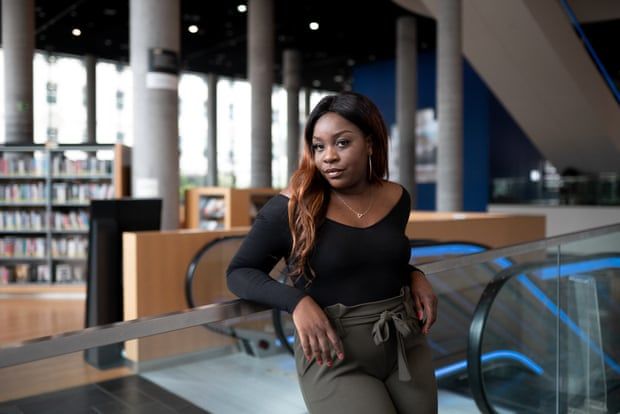 Tanya was 12 when she was upskirted on a bus by two men.
One hundred and twenty miles further south from Gelder’s school in a completely different type of setting is Jane Lunnon. She is head of Alleyns, a fee-paying mixed school. She is dismissive of the initial focus on private schools that the fallout on Everyone’s Invited provoked.
“I never thought about the issue as being sector specific but I was very glad when the Ofsted review happened because that was a national review that looked at the whole education sector and found it lacking,” she says.
Before Everard’s death the school had things in place such as lessons about what is and isn’t appropriate online. “But what clearly came up as a result of Sarah Everard’s death and the aftermath was that these measures were not not landing sufficiently,” she says.
Like Gelder, she believes that what is needed in many schools is a complete culture change. After Everard’s murder, the school “went back to root and branch,” says Lunnon and wrote a complete development plan around the issue of sexual harassment. All the staff were given training by UK Feminista, which provides schools with an online course in how to tackle sexism and sexual harassment. The school has also set up “gender equality champions”, pupils who, in conjunction with teachers, have written a gender charter that all students must follow.
Eighteen-year-old Max is a year 13 student at Alleyns and one of the new gender equality champions for the school. He says he’s pleased boys are involved in the conversation about solutions. “There have always been times when you hear stories about what goes on at parties and so on but I heard a lot more of those after the fallout on Everyone’s Invited. Now that I’m more aware of it, I’m also more open to talking about it both with boys and with my friends who are girls.”
Whatever resources the government chooses to put into action on sexual harassment and violence towards women and girls, it needs to be done fast, says Nokes.
“The government would be very, very foolish not to grab the opportunity right now to spell out what they are going to do to make things better. And if they don’t, there’s a real danger that we will lose the momentum that came from Sarah Everard’s death and, tragically, people will begin to forget,” she says.
“The real takeaway from these tragic events is that, actually, we have run out of patience.