

What can you still do in tier 4 lockdown?
Matt Hancock announced sweeping changes to the tier system on Wednesday amid alarm about a new strain of Covid-19 spreading rapidly across the country.
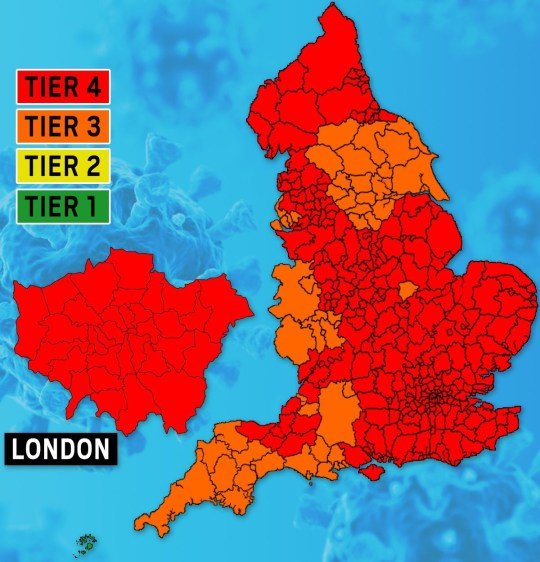
The Health Secretary said the Midlands, the North East, parts of the North West and parts of the South West are moving into the toughest tier on December 31st, joining millions of people in London and the South East.
Almost all remaining areas will be moved into tier three, except for the Isles of Scilly, which will remain in tier one, the lowest level of restrictions.
What does tier four mean?
Tier four is broadly the same as the second national lockdown that was imposed in November.
Under the rules, non-essential shops, hairdressers, gyms, leisure and entertainment venues must close, with a new ‘stay at home’ message introduced.
This means you can’t leave your home without a ‘reasonable excuse’, which includes travelling to work if you can’t work from home, or going to the shops to buy food or medicine.
What can I leave home for?
As well as the reasons mentioned above, other exemptions to leaving home include travelling for education and childcare purposes and visiting your support bubble.
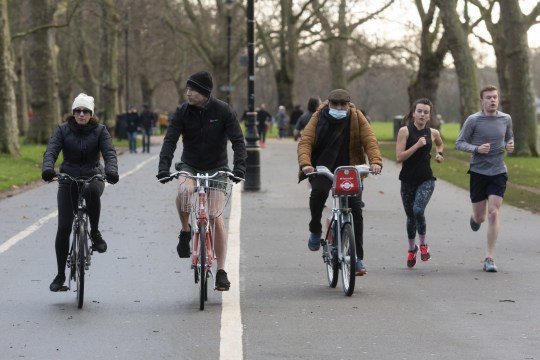
You can also leave home to do an unlimited amount of outdoor exercise alone, with your household or with one other person.
Visits to care homes are allowed if arrangements are in place to protect residents, such as screens, visiting pods or behind windows.
You can also leave home to visit someone who is dying, provide care, to be with someone who is giving birth or to escape injury or harm.
Will schools stay open?
Primary schools will close in 49 Covid hotspots in tier four. The list was published on Wednesday after Education Secretary Gavin Williamson said the Government had to change its plan due to rising infections.
He said a ‘small number’ of primary schools would not open for face-to-face teaching on January 4.
The areas affected are 22 boroughs of London, 11 boroughs in Essex, 9 boroughs in Kent, two in East Sussex, four in Hertfordshire and Milton Keynes in Buckinghamshire.
Schools in these areas will stay closed until at least January 18, when the latest coronavirus data will be reviewed.
Primary schools which will remain closed until further notice
There are 49 areas where primary schools will need to switch to remote learning for all but vulnerable children and those of key workers until at least January 18.
The local authorities where this guidance applies is:
London
* Barking and Dagenham
* Barnet
* Bexley
* Brent
* Bromley
* Croydon
* Ealing
* Enfield
* Hammersmith and Fulham
* Havering
* Hillingdon
* Hounslow
* Kensington and Chelsea
* Merton
* Newham
* Richmond-Upon-Thames
* Southwark
* Sutton
* Tower Hamlets
* Waltham Forest
* Wandsworth
* Westminster
Essex
* Brentwood
* Epping Forest
* Castle Point
* Basildon
* Rochford
* Harlow
* Chelmsford
* Braintree
* Maldon
* Southend on Sea
* Thurrock
Kent
* Dartford
* Gravesham
* Sevenoaks
* Medway
* Ashford
* Maidstone
* Tonbridge and Malling
* Tunbridge Wells
* Swale
East Sussex
* Hastings
* Rother
Buckinghamshire
* Milton Keynes
Hertfordshire
* Watford
* Broxbourne
* Hertsmere
* Three Rivers
The list does not affect vulnerable children and children of key workers, who will return to primary school in all areas of England.
Nurseries, alternative provision and special schools will also remain open, while the reeopening of secondary schools is being delayed.
Those in Years 11 and 13 who are preparing for exams will still be first to go back, but on January 11 rather than on January 4.
Other year groups at secondary level will return on January 18, rather than January 11 as had been intended under plans for a staggered start.
Can I meet people in tier four?
The rules are strict: you cannot meet other people indoors unless you live with them or they are part of your existing support bubble.
However, outdoors you can meet one person from another household in a public place.
This is stricter than in tiers two and three, where up to six people from different households can meet outdoors.
Can I travel out of a tier four area ?
If you live in tier four you are not allowed to travel to another area except for a few legally permitted reasons.
These are:
* travel to work where you cannot work from home
* travel to education and for caring responsibilities
* to visit (including staying overnight with) those in your support bubble – or your childcare bubble for childcare
* to attend hospital, GP and other medical appointments or visits where you have had an accident or are concerned about your health
* to provide emergency assistance, and to avoid injury or illness, or to escape a risk of harm (such as domestic abuse)
Government guidance says you must not leave your home unless you have a reasonable excuse and that if you do need to travel you should stay local – meaning avoiding travelling outside of your village, town or the part of a city where you live.
Overnight stays in tier four
You aren’t allowed leave your home or the place where you are living for holidays or overnight stays unless you have a reasonable excuse for doing so.
This means that holidays in the UK and abroad are not allowed.
Can I get food from pubs and restaurants?
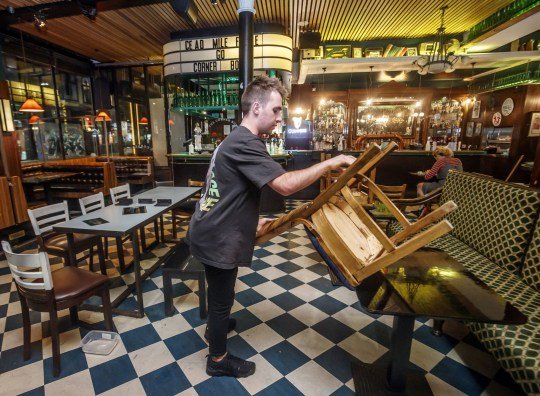
Cafes, restaurants, pubs, bars and social clubs have to stay closed under tier four.
They can, however, provide food and drink through takeaways until 11pm, click-and-collect, drive-through or delivery.
Can I play sports?
Indoor leisure and sports facilities, including gyms, must close in tier four areas.
However outdoor facilities such as outdoor sports courts, gyms, golf courses and swimming pools can remain open for individual exercise and for people to use with members of their household / support bubble.
You are allowed to take unlimited exercise alone, or in a public outdoor place with your household, support bubble, or one other person.
Organised outdoor sport is only explicitly referenced when the restrictions say: ‘Organised outdoor sport for under 18s and disabled people will be allowed’, implying other sport may be banned.

Weddings, civil partnerships and funerals
Funerals up to a maximum of 30 people can go ahead.
Weddings and civil partnership ceremonies should only take place in exceptional circumstances – such as a ‘deathbed wedding’ – with these limited to six people.
Religious worship
You can attend places of worship for a service. However, you must not mingle with anyone outside of your household or support bubble. You should maintain strict social distancing at all times.