
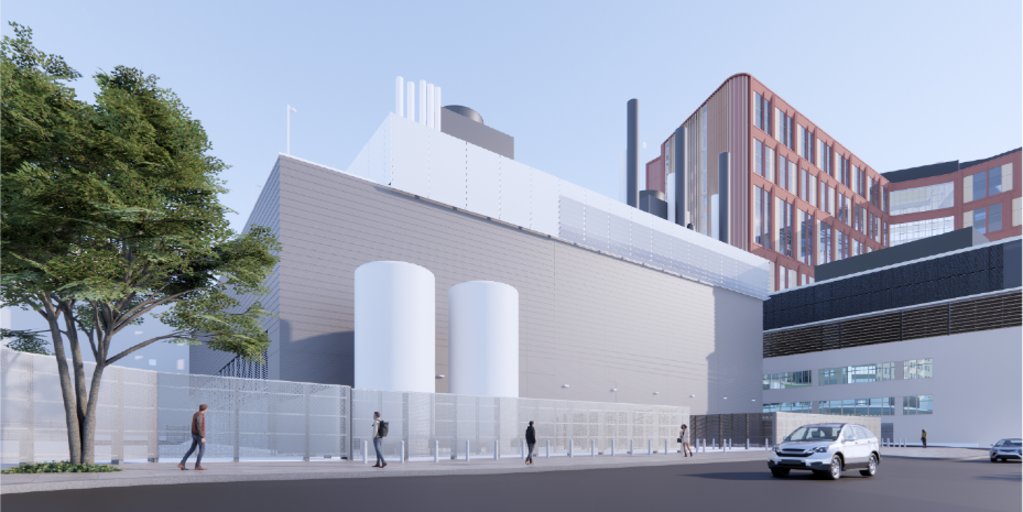
University of Kentucky Advances Critical Utilities Upgrades to Power Chandler Hospital Expansion
A large-scale infrastructure buildout is reshaping the University of Kentucky’s medical campus, ensuring power, water, and systems capacity for a multi-billion-dollar hospital expansion centered on Chandler Hospital.
System-driven infrastructure expansion at the University of Kentucky’s Albert B. Chandler Hospital campus is progressing as the institution prepares utilities, power systems, and supporting services for one of the largest healthcare construction projects in the state’s history.
The upgrades are not cosmetic or auxiliary works; they form the backbone required to operate a massively expanded hospital complex that will ultimately include new inpatient towers, operating rooms, and diagnostic facilities.
What is confirmed is that the Chandler Hospital expansion is a multi-phase redevelopment of the University of Kentucky’s flagship medical campus in Lexington.
The project is designed to dramatically increase clinical capacity, including new inpatient beds, surgical suites, intensive care units, and advanced diagnostic services.
Once complete, total hospital capacity is expected to reach roughly 1,400 beds, reflecting a major increase in regional treatment capability and high-acuity care access.
To support that scale, the university is undertaking extensive utilities modernization.
This includes expanded electrical infrastructure, upgraded substations, new or reinforced central utility plants, and expanded campus distribution systems for steam, chilled water, and backup power.
These systems are essential because modern hospital towers rely on uninterrupted power for life-support systems, imaging equipment, surgical environments, and digital health infrastructure.
Without redundancy in these utilities, the expanded hospital could not operate safely at its intended capacity.
The infrastructure work also includes broader campus engineering changes that extend beyond the hospital walls.
Roadway realignments, site utility rerouting, and large-scale integration of mechanical systems are required to connect new buildings with existing structures built across different eras.
This is a defining feature of the project: it is not a single building expansion but a reconstruction of how the entire medical campus functions as an interconnected system.
The scale of the broader expansion has been described in planning documents as exceeding three billion dollars in total investment, with more than two million square feet of new and renovated space.
The development includes a new patient care tower and associated clinical facilities, with phased occupancy projected in the early 2030s.
The utilities buildout is therefore being executed years in advance of full clinical activation, reflecting the sequencing required for complex healthcare infrastructure.
The key issue driving the utilities program is capacity constraint.
The existing campus infrastructure was designed for a smaller hospital footprint and cannot support the electrical loads, cooling demands, and redundancy requirements of a significantly larger, technology-intensive medical center.
The expansion addresses these constraints by constructing new backbone systems that can scale with future phases of clinical construction.
The implications extend beyond engineering.
Once completed, the upgraded utilities network will enable continuous operation of high-density surgical floors, expanded intensive care units, and advanced imaging centers that depend on stable, high-capacity power and climate control systems.
It will also allow the hospital to maintain operations during maintenance or emergency conditions by isolating failures without disrupting patient care.
In practical terms, the utilities work is what makes the hospital expansion operationally possible.
The new clinical buildings represent visible growth, but the unseen infrastructure being installed now determines whether those buildings can function as a continuous, high-reliability healthcare system when patient volume increases and new services come online in the next decade.
The upgrades are not cosmetic or auxiliary works; they form the backbone required to operate a massively expanded hospital complex that will ultimately include new inpatient towers, operating rooms, and diagnostic facilities.
What is confirmed is that the Chandler Hospital expansion is a multi-phase redevelopment of the University of Kentucky’s flagship medical campus in Lexington.
The project is designed to dramatically increase clinical capacity, including new inpatient beds, surgical suites, intensive care units, and advanced diagnostic services.
Once complete, total hospital capacity is expected to reach roughly 1,400 beds, reflecting a major increase in regional treatment capability and high-acuity care access.
To support that scale, the university is undertaking extensive utilities modernization.
This includes expanded electrical infrastructure, upgraded substations, new or reinforced central utility plants, and expanded campus distribution systems for steam, chilled water, and backup power.
These systems are essential because modern hospital towers rely on uninterrupted power for life-support systems, imaging equipment, surgical environments, and digital health infrastructure.
Without redundancy in these utilities, the expanded hospital could not operate safely at its intended capacity.
The infrastructure work also includes broader campus engineering changes that extend beyond the hospital walls.
Roadway realignments, site utility rerouting, and large-scale integration of mechanical systems are required to connect new buildings with existing structures built across different eras.
This is a defining feature of the project: it is not a single building expansion but a reconstruction of how the entire medical campus functions as an interconnected system.
The scale of the broader expansion has been described in planning documents as exceeding three billion dollars in total investment, with more than two million square feet of new and renovated space.
The development includes a new patient care tower and associated clinical facilities, with phased occupancy projected in the early 2030s.
The utilities buildout is therefore being executed years in advance of full clinical activation, reflecting the sequencing required for complex healthcare infrastructure.
The key issue driving the utilities program is capacity constraint.
The existing campus infrastructure was designed for a smaller hospital footprint and cannot support the electrical loads, cooling demands, and redundancy requirements of a significantly larger, technology-intensive medical center.
The expansion addresses these constraints by constructing new backbone systems that can scale with future phases of clinical construction.
The implications extend beyond engineering.
Once completed, the upgraded utilities network will enable continuous operation of high-density surgical floors, expanded intensive care units, and advanced imaging centers that depend on stable, high-capacity power and climate control systems.
It will also allow the hospital to maintain operations during maintenance or emergency conditions by isolating failures without disrupting patient care.
In practical terms, the utilities work is what makes the hospital expansion operationally possible.
The new clinical buildings represent visible growth, but the unseen infrastructure being installed now determines whether those buildings can function as a continuous, high-reliability healthcare system when patient volume increases and new services come online in the next decade.