UK Weighs Response After Arrest of Alleged Iranian Proxy Commander Behind Attacks
Keir Starmer faces pressure to harden policy on Iran-linked proxy networks after US charges a militia figure accused of coordinating attacks tied to violence in Britain and Europe
The UK government is confronting renewed pressure to recalibrate its security and diplomatic posture toward Iran after the arrest and charging of an Iraqi militia commander accused of orchestrating a wave of attacks across Britain and other Western countries through a proxy network.
The case centres on Mohammad Baqer Saad Dawood al-Saadi, described in US legal filings as a senior figure in the Iran-aligned militia Kataib Hezbollah.
He has been accused of coordinating or directing multiple violent incidents through a front organisation operating under the name Harakat Ashab al-Yamin al-Islamia, which investigators say functioned as a cover for proxy operations rather than a genuinely independent group.
According to the allegations, the network was linked to attacks and attempted attacks across several European countries, including incidents in London targeting Jewish and Israeli-linked sites.
What is confirmed is that US authorities have brought terrorism-related charges, alleging a coordinated campaign involving recruitment of local operatives, online radicalisation, and the use of encrypted communications to direct activity across borders.
The suspect has appeared in court in the United States following his arrest abroad.
The political significance in Britain stems from the alleged geographic reach of the operations, with at least some activity reportedly connected to UK soil.
That has triggered questions over whether existing British counter-terrorism and counter-espionage frameworks are sufficient to deal with hybrid proxy networks that operate outside traditional state boundaries but are allegedly linked to state-aligned actors.
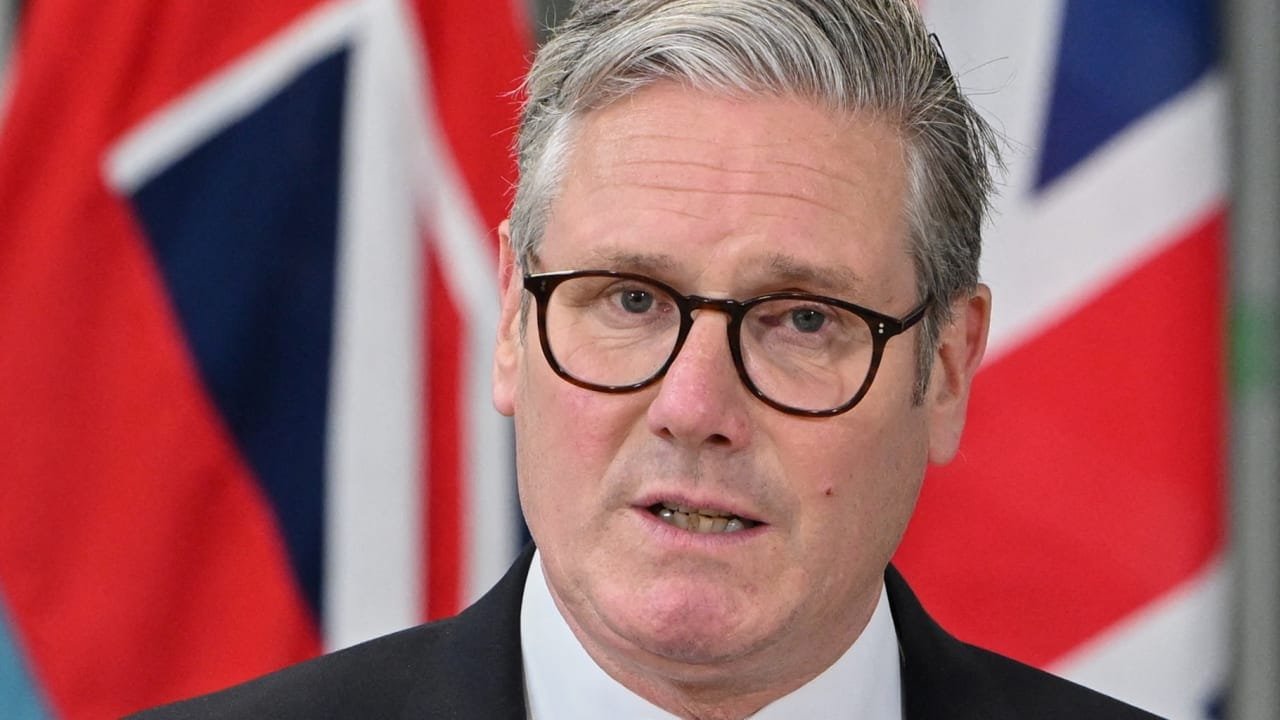
Prime Minister Keir Starmer has already warned in recent weeks that foreign actors attempting to incite violence or destabilise communities in the UK would face consequences.
His government has been examining a broader legislative response aimed at hostile state activity, including new powers to target organisations operating on behalf of foreign governments.
That policy direction has been shaped in part by a rise in investigations into suspected Iran-linked activity in Britain.
The mechanism of concern for security officials is not a conventional state-to-state attack but a distributed model in which a central actor allegedly coordinates violence through loosely connected cells, criminal intermediaries, and online platforms.
This structure complicates attribution, slows enforcement, and allows organisers to deny direct involvement while still directing outcomes.
The arrest intensifies pressure on Downing Street to determine whether Iran-linked proxy groups should be treated as direct extensions of a hostile state, which would carry implications for sanctions, intelligence operations, and potential proscription decisions.
It also raises questions about whether existing legal frameworks, which distinguish between state and non-state actors, can adequately capture hybrid organisations alleged to operate across that divide.
Diplomatically, the UK must balance deterrence with escalation risk.
London has previously coordinated with allies on sanctions and intelligence sharing related to Iran’s regional and covert activities, while avoiding steps that could trigger direct diplomatic rupture.
However, the scale of the allegations now being tested in US courts is likely to increase pressure for a more explicit designation of proxy networks as state-directed threats.
Operationally, UK counter-terrorism agencies are expected to continue assessing whether any domestic cells were activated or inspired by the alleged network.
The immediate focus is disruption of follow-on activity and mapping of financial and communication channels that could still be active.
The trajectory of UK policy will now be shaped by two forces: the legal outcomes of foreign prosecutions that detail the structure of the alleged network, and domestic political decisions on whether to expand the definition of state-backed hostile activity in law.
That combination is likely to determine how far Britain moves toward treating proxy militias as direct extensions of state power rather than independent extremist actors.
The case centres on Mohammad Baqer Saad Dawood al-Saadi, described in US legal filings as a senior figure in the Iran-aligned militia Kataib Hezbollah.
He has been accused of coordinating or directing multiple violent incidents through a front organisation operating under the name Harakat Ashab al-Yamin al-Islamia, which investigators say functioned as a cover for proxy operations rather than a genuinely independent group.
According to the allegations, the network was linked to attacks and attempted attacks across several European countries, including incidents in London targeting Jewish and Israeli-linked sites.
What is confirmed is that US authorities have brought terrorism-related charges, alleging a coordinated campaign involving recruitment of local operatives, online radicalisation, and the use of encrypted communications to direct activity across borders.
The suspect has appeared in court in the United States following his arrest abroad.
The political significance in Britain stems from the alleged geographic reach of the operations, with at least some activity reportedly connected to UK soil.
That has triggered questions over whether existing British counter-terrorism and counter-espionage frameworks are sufficient to deal with hybrid proxy networks that operate outside traditional state boundaries but are allegedly linked to state-aligned actors.
Prime Minister Keir Starmer has already warned in recent weeks that foreign actors attempting to incite violence or destabilise communities in the UK would face consequences.
His government has been examining a broader legislative response aimed at hostile state activity, including new powers to target organisations operating on behalf of foreign governments.
That policy direction has been shaped in part by a rise in investigations into suspected Iran-linked activity in Britain.
The mechanism of concern for security officials is not a conventional state-to-state attack but a distributed model in which a central actor allegedly coordinates violence through loosely connected cells, criminal intermediaries, and online platforms.
This structure complicates attribution, slows enforcement, and allows organisers to deny direct involvement while still directing outcomes.
The arrest intensifies pressure on Downing Street to determine whether Iran-linked proxy groups should be treated as direct extensions of a hostile state, which would carry implications for sanctions, intelligence operations, and potential proscription decisions.
It also raises questions about whether existing legal frameworks, which distinguish between state and non-state actors, can adequately capture hybrid organisations alleged to operate across that divide.
Diplomatically, the UK must balance deterrence with escalation risk.
London has previously coordinated with allies on sanctions and intelligence sharing related to Iran’s regional and covert activities, while avoiding steps that could trigger direct diplomatic rupture.
However, the scale of the allegations now being tested in US courts is likely to increase pressure for a more explicit designation of proxy networks as state-directed threats.
Operationally, UK counter-terrorism agencies are expected to continue assessing whether any domestic cells were activated or inspired by the alleged network.
The immediate focus is disruption of follow-on activity and mapping of financial and communication channels that could still be active.
The trajectory of UK policy will now be shaped by two forces: the legal outcomes of foreign prosecutions that detail the structure of the alleged network, and domestic political decisions on whether to expand the definition of state-backed hostile activity in law.
That combination is likely to determine how far Britain moves toward treating proxy militias as direct extensions of state power rather than independent extremist actors.