
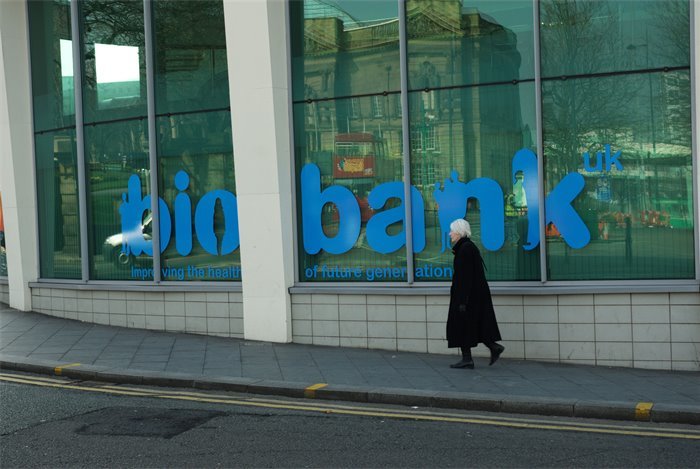
UK investigates after UK Biobank health data appears for sale online in China
Government confirms anonymised data from 500,000 volunteers was listed on Alibaba, prompting investigation and suspension of access while security is reviewed
A UK government-backed biomedical data system that holds health and genetic information from hundreds of thousands of volunteers is under investigation after parts of its dataset were found advertised for sale on a Chinese e-commerce platform, prompting questions about research data governance and cross-border access controls.
The story is system-driven: it centres on the governance framework governing UK Biobank, a large-scale medical research resource that provides anonymised health data to approved researchers worldwide, and the safeguards intended to prevent misuse of that data once it is shared.
Officials have confirmed that data linked to approximately 500,000 UK Biobank participants was discovered listed for sale on Alibaba’s platforms in China.
The listings were identified earlier this week and reported to UK authorities by UK Biobank itself.
Government ministers told parliament that the data was removed after intervention involving UK and Chinese authorities, and that no purchases are believed to have taken place before removal.
What is confirmed is that the dataset did not include direct personal identifiers such as names, addresses, telephone numbers or NHS numbers.
However, it did contain sensitive health-related information including demographic details, lifestyle factors and biological measurements, according to government and institutional statements.
The source of the breach has been traced to three research institutions that had legitimate access to UK Biobank data under approved agreements.
Their access has now been revoked.
The incident is being treated as a breach of contractual and data-use conditions rather than a direct external hack of UK Biobank systems, though the precise chain of events leading to the appearance of the listings remains under investigation.
UK Biobank has suspended access to parts of its research platform while it implements additional security measures designed to limit bulk data extraction and improve monitoring of downloads.
It has also launched a formal internal review and referred itself to the UK Information Commissioner’s Office, which oversees data protection compliance.
Government ministers have described the incident as a serious breach of trust in a widely used scientific resource, while stressing that safeguards were in place to anonymise participant data.
At the same time, regulators and oversight officials have warned that even de-identified datasets can carry residual risks of re-identification if combined with other sources.
What remains unclear is how the data ultimately came to be listed for sale online and whether it was resold, aggregated, or improperly shared after initial lawful access.
Authorities have not confirmed whether any individuals or organisations will face enforcement action as the investigation continues.
The incident has intensified scrutiny of how large-scale biomedical datasets are shared internationally, particularly when accessed by multiple institutions across jurisdictions with differing data protection standards.
The story is system-driven: it centres on the governance framework governing UK Biobank, a large-scale medical research resource that provides anonymised health data to approved researchers worldwide, and the safeguards intended to prevent misuse of that data once it is shared.
Officials have confirmed that data linked to approximately 500,000 UK Biobank participants was discovered listed for sale on Alibaba’s platforms in China.
The listings were identified earlier this week and reported to UK authorities by UK Biobank itself.
Government ministers told parliament that the data was removed after intervention involving UK and Chinese authorities, and that no purchases are believed to have taken place before removal.
What is confirmed is that the dataset did not include direct personal identifiers such as names, addresses, telephone numbers or NHS numbers.
However, it did contain sensitive health-related information including demographic details, lifestyle factors and biological measurements, according to government and institutional statements.
The source of the breach has been traced to three research institutions that had legitimate access to UK Biobank data under approved agreements.
Their access has now been revoked.
The incident is being treated as a breach of contractual and data-use conditions rather than a direct external hack of UK Biobank systems, though the precise chain of events leading to the appearance of the listings remains under investigation.
UK Biobank has suspended access to parts of its research platform while it implements additional security measures designed to limit bulk data extraction and improve monitoring of downloads.
It has also launched a formal internal review and referred itself to the UK Information Commissioner’s Office, which oversees data protection compliance.
Government ministers have described the incident as a serious breach of trust in a widely used scientific resource, while stressing that safeguards were in place to anonymise participant data.
At the same time, regulators and oversight officials have warned that even de-identified datasets can carry residual risks of re-identification if combined with other sources.
What remains unclear is how the data ultimately came to be listed for sale online and whether it was resold, aggregated, or improperly shared after initial lawful access.
Authorities have not confirmed whether any individuals or organisations will face enforcement action as the investigation continues.
The incident has intensified scrutiny of how large-scale biomedical datasets are shared internationally, particularly when accessed by multiple institutions across jurisdictions with differing data protection standards.