

“There Was A Pandemic?” What Life Is Like In Countries Without COVID
In New Zealand, people are going to malls without masks and sharing popcorn with friends in movie theaters. In Australia, they are watching live theater and sports and seeing bands perform at packed concerts. Thai people in Bangkok are drinking inside busy bars and dancing, while in Taipei, the Taiwanese capital, more than 130,000 gathered for one of the only Pride parades to take place in person this year.
“Pride was huge. There was a ton of people out,” said Perry Truong, a 25-year-old English tutor who moved last year from the US, where there are currently almost 200,000 new COVID-19 cases each day, to Taiwan, where there hasn’t been a new locally transmitted case of the coronavirus in more than 200 days. “It’s really not in my mind at all,” Truong said. “I don’t feel anxious about catching the virus. I don’t feel scared about not wearing a mask to public places. For lack of a better word, it’s really normal.”
“It feels weird,” he added, “because I feel like when people talk about this in 10 years, they’ll be like, ‘Remember the pandemic?’ and I’ll be like, ‘There was a pandemic?’”
As the third surge of the pandemic devastates the US, where overwhelmed hospitals are currently treating more than 100,000 patients with COVID-19 and deaths are climbing to record levels, many Americans are once again heading back into lockdowns. While vaccinations are beginning for some, it will still be a long and dark winter for most. Nine months into the pandemic, our pre-COVID lives seem like a distant memory.
But in parts of the world, it’s the coronavirus that seems distant. Helped by geographic isolation or governmental response or both, infections are low to nonexistent in several countries, particularly in the Asia Pacific, where life looks practically normal. Some people even occasionally forget there’s a pandemic going on.
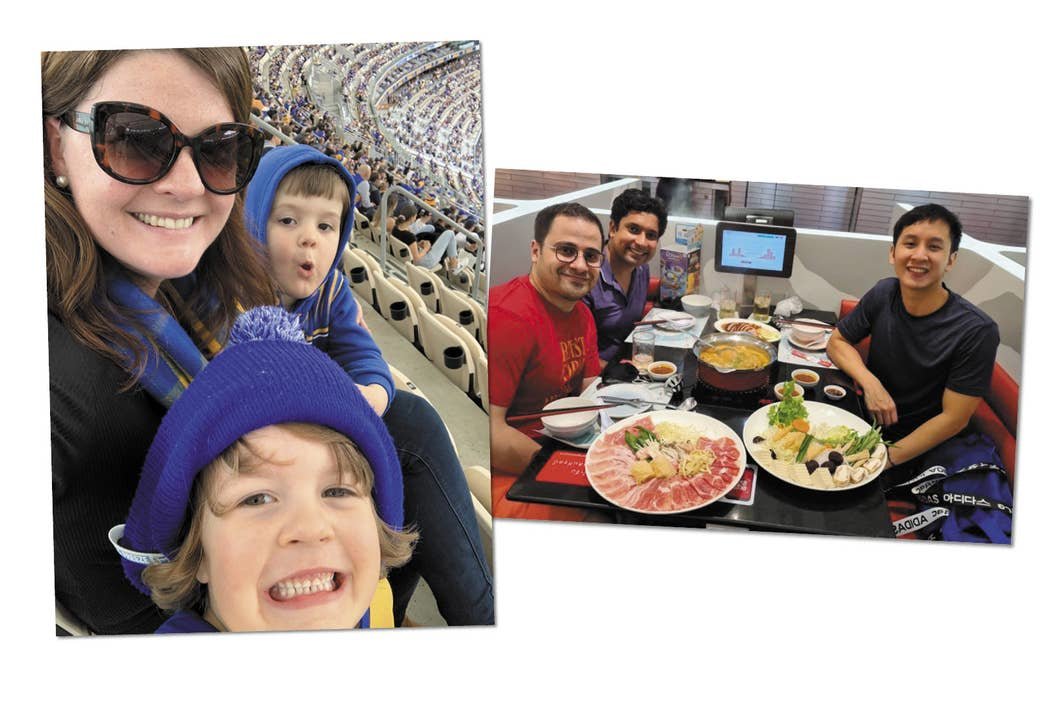
“I feel like there were days I forgot there was a pandemic, especially on days I wasn’t going out so much, just staying in my area,” said Jade Dhangwattanotai, a 25-year-old software developer in Bangkok.
“In my day-to-day life, yes, I do forget. The worry has gone away in a lot of ways,” said Annalise Hayman, a 35-year-old mother of two in Perth, the capital of Western Australia that is one of the most geographically isolated cities in the world. That state has marked eight months without any cases of community transmission, and now Hayman doesn’t think twice about taking her children to the playground or attending a crowded game of Aussie rules football. She has never been required to wear a face mask. She doesn’t even own one. “I remember feeling very panicked in the beginning,” she said, “but now I just feel anxious for other countries where the cases keep rising.”
In a normal world, anecdotes about carefree people visiting restaurants or planning crowded family Christmas lunches might not be noteworthy, but now they are enough to induce exquisite jealousy from those in countries where the pandemic is still raging. Tweets about moving to New Zealand are suddenly everywhere, as is the Squidward window meme from SpongeBob. In 2020, normalcy has become newsworthy.
“Everything is basically normal now,” said Lucy Withers, a 28-year-old grocery store worker in Christchurch on New Zealand’s South Island, where lockdowns ended in June. She hasn’t worn a face mask in months and now comfortably dines out at tables that aren’t spaced 6 feet apart. “I see my family; they come over; we go out for food. It’s just completely normal.”
The return to normalcy in these lucky countries — or as much as is possible in a global pandemic — was not miraculous, but hard-won. In New Zealand, the entire country endured one of the strictest and earlier lockdowns in March. In August, residents of Auckland, population 1.7 million, went back into lockdown for over a month after an outbreak there. The number of new cases that prompted the shutdown? Just 17. “Going hard and early is still the best course of action,” said Prime Minister Jacinda Ardern, who won reelection in a landslide in October thanks in part due to her handling of the crisis.
Australian officials, too, imposed a severe lockdown in the state of Victoria in June after a cluster emerged there, sparking hundreds of new cases a day. It lasted more than 100 days but the state has had zero new infections since the end of October.
“Lockdowns suck. You understand why it’s necessary, but it still takes an extended toll on people,” said Chase Madsen, a 26-year-old creative producer in Auckland, who attended a large family wedding last weekend after the virus was practically eliminated once again. “Still, I think you’d be hard-pressed to find anyone in New Zealand who thinks the lockdowns haven’t been worth it, unless they’re quite fringe politically or naive.”
Other countries like Taiwan, Singapore, and South Korea never went into lockdown to tame the virus, instead relying on a mix of technological measures, such as extensive contact tracing and testing, as well as cultural practices, such as commonly accepted mask-wearing. “Even before COVID, whenever people were ill, just as an extra precaution they would wear masks on buses and trains,” said Karmen Truong, a 26-year-old digital marketer in Taipei, “so when COVID happened, it wasn’t really an issue.”
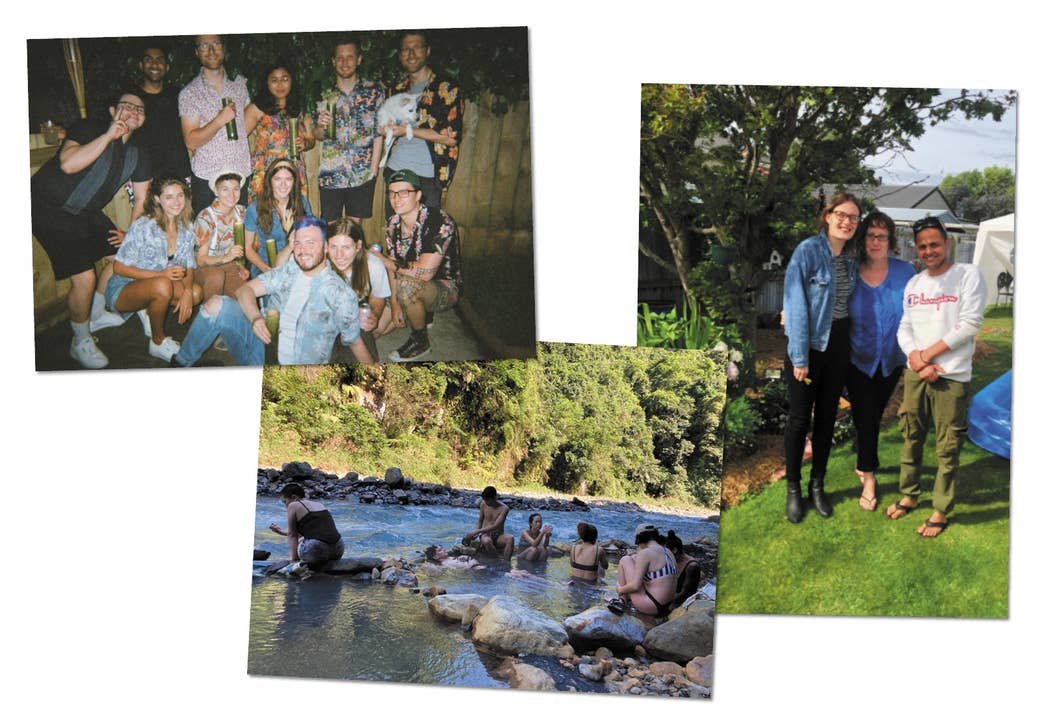
Geography also certainly plays a role. Island nations like New Zealand, Australia, Taiwan, and Singapore certainly have an easier time controlling incoming international arrivals. Hell, even South Korea’s only land border is the demilitarized zone with the North. Perhaps is this nowhere more clear than in American Samoa, one of the few places in the world — and the only US territory — not to have recorded a single COVID infection. This was due largely to the governor’s decision in late March to completely close off the island to outsiders. Even residents who were abroad at the time can’t get back home.
“We have public events just like normal,” said Kelley Anderson Tagarino, a marine science professor at the University of Hawaii who has been based in American Samoa for 12 years and who recently threw a first birthday party for her child. “All the little kids were hanging out together playing in the pool, chasing each other, and the adults were hanging out talking, swimming, drinking beers, just like usual. We hug. We can do all the things without a mask.”
Life is not completely normal, though. The college where she teaches is short on staff now (at least one coworker is stuck in California), and they still hold COVID drills, practicing wearing a mask for a virus that isn’t there. “It’s definitely a very surreal experience to see all the terrible impacts that are happening around the world, and just all the inequities that are getting worse and worse,” she added. “I think, for us here, we feel very lucky to so far be COVID-free.”
Those countries still allowing people in are stopping any possible infections through strict hotel quarantine programs. In Taiwan, a migrant worker from the Philippines was this week fined roughly $3,500 for stepping outside of his room in an eight-second breach of the rules. In Australia, only citizens are permitted to enter the country and must then spend 14 days locked in a room, unable to open a window, inside a hotel patrolled by guards — a privilege for which the inbound travelers are required to pay more than $2,200.
Travel between Australian states was also mostly curtailed for months, especially during the Victorian surge. Western Australia only opened its borders this week after a nine-month closure, prompting tearful reunions at airports. “We’ve kept COVID out, protecting people’s lives,” boasted the state’s leader, Mark McGowan. “And Western Australia's economy has roared back to life as a result, faster than we ever expected.”
The US, of course, has no such restrictions. Many states mandated that incoming travelers from areas with high infection rates self-isolate for 14 days, but the patchwork of regulations was little enforced in practice. (One major exception was Hawaii, where travelers were arrested if found violating a two-week quarantine, although this was later loosened). At the federal level, President Donald Trump restricted travel from China in February (after most airlines had already suspended flights) and Europe in March, but loopholes still allowed scores of people to return and filter back into their communities.
In comparing the US to Australia, the Washington Post this week concluded the positive situation Down Under was due partially to the virus being mostly depoliticized there, as well as Australians’ relative “willingness to conform” and place more trust in government, an attitude developed partly through a system of mandatory voting. But Natasha Matthews, a senior lecturer in psychology at the University of Queensland (UQ) currently planning a big family Christmas celebration in Brisbane, doesn’t believe it’s that simple.
“I would say Australians are pretty skeptical of government. Politicians are not considered amazing people. Everyone rolls their eyes talking about them,” she said. “It’s not that we were making the sacrifices for Australia; we’re doing it for each other. We weren’t doing it because we thought it would please the government. We were doing it because it would please each other.”
There are lingering signs of the pandemic. When Matthews visits the post office, people still wait in line 6 feet apart and she is somewhat cautious. Courses at the university are still being taught online where possible and people sit farther apart in parks, but city life in Brisbane has resumed. Queensland Theatre, Australia’s third-largest theater company, is staging plays once again, although directors are finding creative workarounds so actors don’t have to interact closely for long periods. “Unless you were really looking for it, you couldn’t tell it was being produced in COVID times,” said UQ drama lecturer Chris Hay, who has seen two plays since emerging from lockdown.
“In terms of the way the world is looking here, certainly in Queensland, I think you’d be hard-pressed to tell the difference between this year and last,” Hay added. “There’s slightly more awareness of boundaries, of peripheries, but they’re the kind of thing that Australians didn’t have anyway.”
While Americans may be looking to these countries with envy, they are looking back in horror. The spiraling situation here is huge news for people there, as they struggle to make sense of America’s unique culture and politics. “I feel less critical of the whole situation [in America] because I know there’s probably cultural differences in the US and people are more free-minded,” said Dhangwattanotai, the Bangkok software developer. “But I hear my friend in the US say that some people don’t believe it’s a thing or that it’s not that serious or they can get it and recover and it’s fine. I think that’s insane.”
“I think we just don’t get it,” said Hayman, the Perth mother. “Maybe because we don’t celebrate Thanksgiving, but just the idea of traveling across the country and meeting in these big groups when it’s just such a disastrous situation — the idea that it’s all about yourself: ‘I want to do that and I want to see my family!’ Well, we haven’t seen our friends or family from other states for almost a year. It’s a bit like, What are you doing? Why would you put other people at risk like that? It’s mind-blowing.”
Even though these countries have largely avoided a public health crisis, they are still suffering the same global effects of the virus. Australia has entered its first recession in 29 years, and the loss of international travelers has devastated economies in the region that rely on tourism. Dhangwattanotai’s company, an online travel agency, went through multiple rounds of layoffs, and friends of his lost their jobs. He wears a mask on the train, as is required, but not in the office, where desks are more spaced out now.
Karmen Truong, the digital marketer, has also been going into her Taipei office, where she has her temperature taken upon entry. Because they never went into lockdown there, her company never had to figure out new ways of working, which makes her almost jealous of her friends and family back in the UK. “Maybe all this working from home and using Zoom so much is part of the digital revolution that we’ve missed because we’ve never had to do it,” she said.
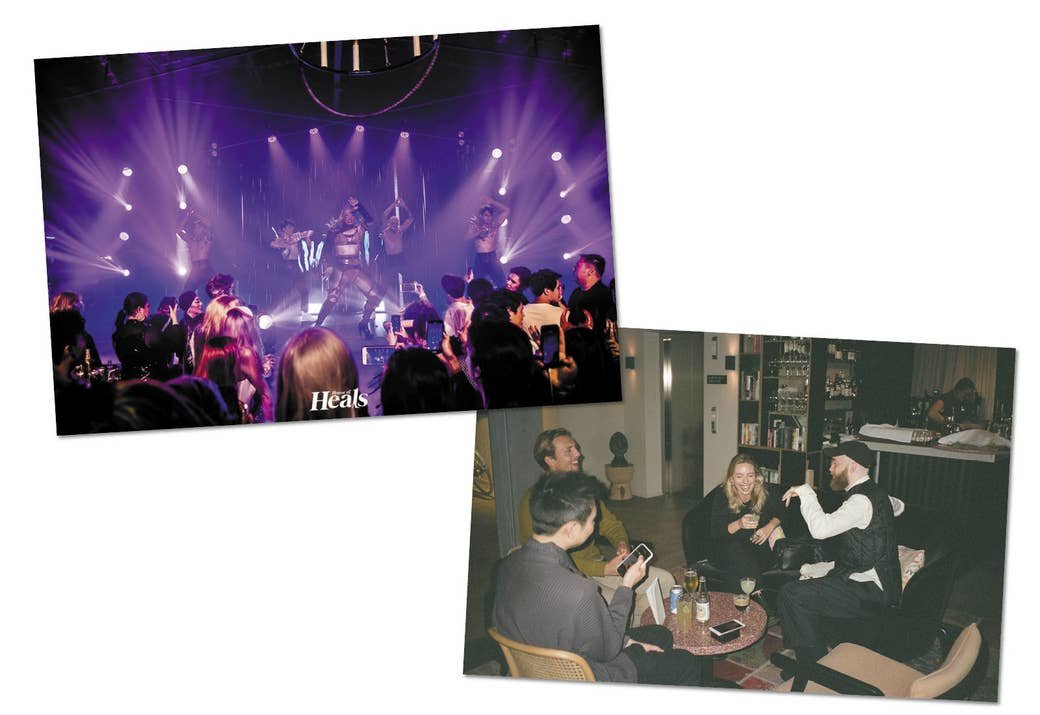
But new opportunities have also arisen. Pan Pan Narkprasert said people in Bangkok thought he was naive to open a new bar with drag queen performances during the pandemic. Bars catering to tourists have struggled, but he had faith the locals would come and now business is booming. “We were in lockdown for around three months, so once we came out of it everyone was in a postwar feeling, dancing and having the time of their lives,” he said. “People missed basic human interaction.”While closing borders is an effective way to keep the virus out, it can also feel difficult being cut off from the world, especially so for those with loved ones abroad.
In American Samoa, Anderson Tagarino worries for her family in Florida and for those with her on the island. Many can’t see their loved ones in nearby independent Samoa, which recorded its very first infection last month. “Despite being among the last few COVID-free places in the world, people were having to watch their loved ones die from a phone because they can’t go see them,” she said.
Courtney Rodriguez, a 33-year-old Canadian living in Perth with her husband, feels blessed she’s never had to wear a mask, but misses her family back in Ottawa. “It's a very strange way to be because your brain is in a few different places,” she said. “Even though Perth is home, obviously we have a huge chunk of our hearts and minds back with our family back home. It’s like being in two worlds.”
When she speaks with those back in Canada, currently grappling with a deadly second wave, she has to be careful about what she says — avoid mentioning the party you went to or the football game with friends or the trip to the movies to see Happiest Season. “You do this very strange survivor’s guilt,” she said, “especially when you’re talking to family and friends back in your hometown who are going back into lockdown and wearing masks.”
Friends ask Perry Truong, the English tutor in Taiwan, about his family back in the US, but even he can’t wrap his head around what life must be like there. “They’ve got millions of cases and we’ve had zero cases of locally transmitted diseases,” he said. “I’m so far removed I can’t even empathize with what that feels like in America right now.”
“I feel like I’m looking back in time with all these people,” he said. “I feel like I’m in the future, and I’m looking back at all the people still suffering.”