

'The world's best place to be a woman' is being sued for misogyny
According to court documents, the injuries were caused by Árnadóttir's boyfriend throwing her around the room while trying to wrestle her phone away from her after she threatened to call the police. For days after the attack, Árnadóttir struggled to breathe. Eventually, she ended up in the emergency room, the documents say.
Speaking quietly in her apartment in the suburbs of Reykjavik, she told CNN the man had attacked her before, but never as viciously as he did on that occasion in July 2016. "I really thought I was dying. He was pulling me and throwing me around. I thought 'I am going to die today,'" she said.
Months later, she says she worked up the courage to go to the police, submitting photos of her injuries, medical notes, a list of witnesses to the violence and psychological abuse she was subjected to, as well as text messages from her alleged attacker, by then her ex-boyfriend, in which Árnadóttir says he admitted to the assault and threatened to share nude photos of her if she spoke up. A court filing includes all of these documents.
According to the court documents, the man denied assaulting her, but admitted to sending the threat, although he said he never intended to follow up on it. CNN has reached out to the man's lawyer.
But for the police, that evidence was not enough.
A year and half after she had pressed charges, Árnadóttir says officers told her the case was being dropped because it would not lead to a conviction.
She later discovered that was not true. The case had not been dropped. Instead, the police failed to interview the accused and as a result, the statute of limitation expired in their hands, according to the judicial authorities who later reviewed the case.
Árnadóttir is one of several women collectively taking their government to the European Court of Human Rights over what they say is a misogynistic justice system that systematically violates the rights of victims of gender-based violence.
The strange twist in the tale? These women live in Iceland, long celebrated as the world's most gender equal country.
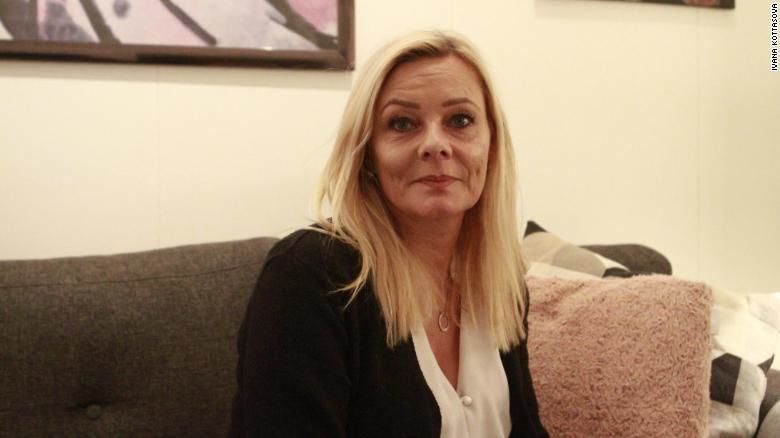 Maria Árnadóttir is one of the women suing Iceland for violating the rights of the victims of domestic violence.
On paper, Iceland is a great place to be a woman. For 12 years running, it has been crowned the world's top place for gender equality by the World Economic Forum.
It has world-leading equal pay and anti-discrimination laws. Women hold 47% of the seats in its Parliament and make up 46% of the boards of Icelandic companies.
Childcare is heavily subsidized and available to all. Maternity healthcare is free.
But for Árnadóttir and many other women struggling to see justice done, Iceland's portrayal as a feminist paradise is a far cry from reality -- far enough to take the country to court.
The lawsuit, launched in March, was coordinated by several Icelandic NGOs, including Stígamót, a non-profit that campaigns against domestic and sexual violence and provides counseling for survivors.
Steinunn Guðjónsdóttir, Stígamót's spokesperson and fundraising manager, told CNN the group reviewed a number of recent cases of alleged violence against women that had been dismissed by the police or prosecutors, and found that the victims' rights had allegedly been violated in several of them.
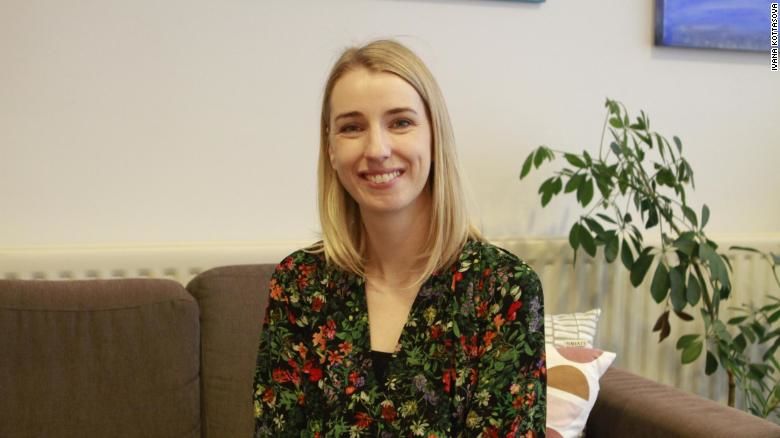 Steinunn Guðjónsdóttir is the spokesperson and fundraising manager at
Stigamot, an NGO that is fighting sexual violence, providing counseling
for survivors and running prevention workshops.
Steinunn Guðjónsdóttir is the spokesperson and fundraising manager at
Stigamot, an NGO that is fighting sexual violence, providing counseling
for survivors and running prevention workshops.
Guðjónsdóttir said these included examples where evidence had been ignored, statutes of limitation expiring because of lack of action by the police, victim shaming and a complete lack of transparency.
Guðjónsdóttir said there is still a significant gap between the law and the way it's being implemented.
"The justice system looks at rape as a very, very, very serious crime, in terms of the punishment, but it doesn't get any of the manpower and attention. When there is a murder -- which happens very rarely in Iceland -- the whole police force goes to investigate and it's just a huge priority. That's obviously not the case with rape," she said.
Transparency is also an issue, Guðjónsdóttir said, pointing out that under Icelandic law, victims do not have the right to view their case files, which means they cannot monitor the progress of an investigation.
In a statement to CNN, the Icelandic Ministry of Justice said that while "it has concluded that a certain mistake was made during the investigation [of Árnadóttir's case], the government's opinion is that the mistake does not meet the minimum level of severity" to qualify as a breach of the European Convention on Human Rights.
The Icelandic Police did not comment on the case, referring instead to the Ministry of Justice.
The feminist paradise with a gender-based violence problem
Murder cases may be rare in Iceland, but rapes aren't.
According to a 2018 landmark study into trauma, a quarter of Icelandic women have experienced rape or attempted rape over their lifetimes and around 40% have been subjected to physical or sexual violence. That number is significantly higher than the global average -- the World Health Organization says around 30% of women worldwide have been subjected to physical or sexual intimate partner violence or non-partner sexual violence in their lifetime.
Unnur Anna Valdimarsdóttir and Arna Hauksdóttir, two public health experts and epidemiologists at the University of Iceland who conducted the research, reached out to nearly all women in Iceland. They ended up surveying more than 30,000 people -- almost a third of the country's entire female population, spread across rural and urban areas and representing a cross-section of Icelandic society.
They admitted the results of their study came as a shock. "We were quite struck by the very high proportion of women that have experienced either physical or sexual violence during their lifetime," Hauksdóttir told CNN.
"People had a hard time believing that these are real numbers," Valdimarsdóttir added. "The spontaneous reaction is basically '40%?! No way!'"
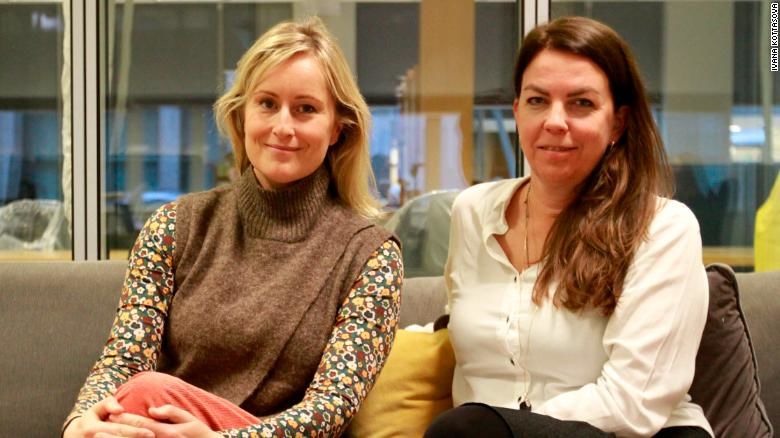 Unnur Anna Valdimarsdóttir and Arna Hauksdóttir are public health experts and epidemiologists at the University of Iceland.
"Even I must admit that I didn't want to believe it myself," she said. "And then I started to go through my friends and we started talking a lot about it, and it sounds right ... when you look at your girlfriends and you take 20 of them ... I would say maybe eight of them have that experience."
Valdimarsdóttir and Hauksdóttir said the results were particularly hard to square with Iceland's strong culture of gender equality.
"Iceland is a great place to be a woman, we have access to health care, childcare ... education and to a lot of things that most of the people living on this Earth don't have ... but we still have these numbers," Hauksdóttir said.
She said it is possible that the very advances Iceland has made in gender equality might explain the relatively high number of women reporting violence.
"In societies that have scored high on gender equality, you will still see very, very high figures [of violence] and it's paradoxical to see that, but the reason might have to do with women being very aware of when they're being violated in any way," she said. "Is that the case in other countries? These numbers may be closer to the truth."
The research revealed another worrying thing -- the proportion of women who have experienced violence was very similar across all sections of Icelandic society. "Different backgrounds, different levels of education, different levels of income ... so it's not class related," Valdimarsdóttir said. "Then you start to think: 'Is this some kind of law of nature? Is this an essential part of human behavior?'"
'The generational curse'
One group that was not surprised by the results of the trauma study was Öfgar, a feminist collective that aims to educate the public about violence and rape culture.
In fact, the group thinks the real numbers might be even higher.
"I don't have a single girlfriend that has not been sexually abused, harassed, molested or in a toxic relationship," Helga Ben, one of the activists, told CNN during an interview with the group in a cafe in central Reykjavik.
One by one, the five women described their experiences with date rape, forced consent, sexual abuse and harassment. They spoke about the shame they experienced over and over again.
They call it the "generational curse."
"The idea that Iceland is a feminist paradise has been shoved down our throats since we were little kids: 'Why are you so angry? Do you see these women in the third world countries? ... You have it so good,'" said Ólöf Tara, one of the women involved in the group.
"But the violence that women have been facing throughout the years, we never had the power to raise our voice about it. Violence thrives in silence, because if you speak out, somebody connects with your story and realizes this is their story too and then they may go and start seeking help and break the pattern, because it is a generational pattern. I got it from my mom and my mom got it from her mom, like my grandmother from her mom, and I'm gonna carry it to my kids if we don't speak and talk about it," Hulda Hrund Sigmundsdóttir added.
Öfgar has made it its mission to engage with younger people, trying to spread awareness through funny but hard hitting social media videos about issues like sexual consent and date rape.
They also offer help and support to victims and have played an instrumental role in the second wave of the #MeToo movement in Iceland.
The group said they realized they needed to "do something" when they kept receiving accusations of sexual violence and harassment about one particular man, a local celebrity in Iceland.
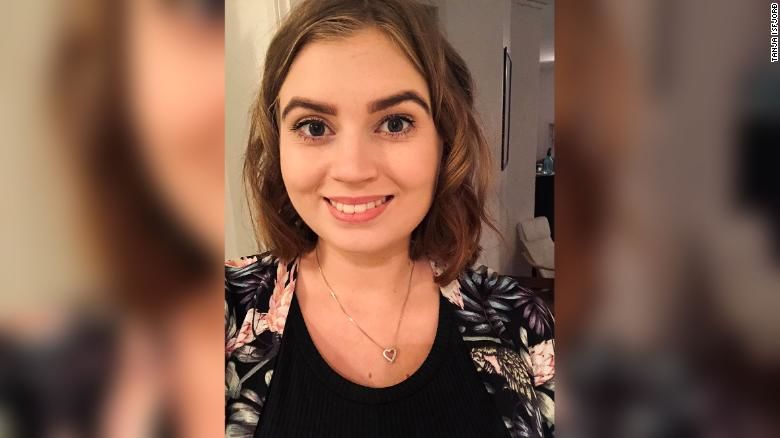
"We had survivors coming to us, talking about what he did and it was a 10-year-long span of violence against women, against young girls and we thought this can't go on, he can't keep going on and doing what he's doing," said Tanja Ísfjörð, who was joining the meeting remotely, speaking to the rest of the group from a laptop screen propped up on a low coffee table.
Without naming the man, Öfgar published testimonials from more than 20 women who said they had been abused and harassed by him, sparking a huge outcry across the country. More victims came forward, but the group also faced a significant backlash, including personal threats.
"We were accused of making up stories and trying to cancel [the man], yet the only ones who have been canceled are the survivors," Tanja Ísfjörð said.
The man was dropped from the line-up of a major cultural event in Iceland and alleges he suffered professional consequences following the accusations. He has denied wrongdoing and threatened to sue the group for damages. He has not been charged with any crime. CNN has repeatedly reached out to him for comment, but did not hear back.
The revelations sparked a new wave of the #MeToo movement in Iceland, with several other men, including members of the national football team, accused of sexual misconduct and coverup. The entire executive committee of the Icelandic Football Association resigned in August after its chairman Gudni Bergsson denied the association received complaints of sexual violence -- a claim that was later proven to be false. The alleged attacker, who was identified as Kolbeinn Sigþórsson, issued a statement later admitting that he behaved inappropriately, but denying any violence.
The 'correct way' is not working
The backlash against Iceland's #MeToo movement was one of the things that sparked the lawsuit against the government.
"With #MeToo, women are now coming out and naming the men who raped them, even if they haven't pressed charges against them, and many people are like: 'Whoa, whoa, whoa! You cannot do it like this, you have to do it the right way,'" Guðjónsdóttir told CNN.
"There's a lot of pressure on survivors to do the 'correct thing' and press charges and try to have the perpetrator convicted, but the 'right way' isn't working, the vast majority of cases, they don't even make it to the judge. So they don't get any judgment on whether the perpetrator is guilty or not. It's just a mess," she said.
It will likely take several years for the European Court of Human Rights to reach a decision on the lawsuit. Meanwhile, Árnadóttir's struggle goes on.
She says she has been diagnosed with post traumatic stress disorder (PTSD), had to take time off from work, and still sometimes finds it difficult to deal with everyday tasks. She blames her mental health problems on the judicial system, which she says has failed her.
"The Icelandic government acknowledges mistakes in the investigation of the case, resulting in its dismissal, due to the statute of limitation," Fjalar Sigurðarson, the information officer at Icelandic Ministry of Justice, told CNN in a statement.
He said the reason for the delay in the investigation was "uncertainty" about which charges to bring and added that "having cases lapse in the care of the police is very uncommon in criminal procedures in Iceland."
While the case concerning the physical attacks against Árnadóttir lapsed, her former partner was convicted of separate charges of threatening her in 2020.
According to court documents, he admitted to sending the threats, but said he never intended to follow up on them. He was handed a 45-day suspended prison sentence and ordered to pay damages, according to publicly available court documents. The country's National Court dismissed his appeal earlier this year, upholding the decision. CNN has reached out to the man's lawyer for comment.
"This goes to show that the case was taken seriously within the judicial system," Sigurðarson said.
Árnadóttir has poured all her energy into becoming an activist, speaking up about her experience and getting the attention of some of Iceland's top officials.
As a law professional herself, she has spoken about her case to the Minister of Justice, pushing for reforms.
The National Commissioner of Iceland's Police, Sigríður Björk Guðjónsdóttir has publicly apologized to her "for the harm that she received by our system," stressing that the police force is working on reforms and "adopting a victim-oriented approach" in gender-based violence cases.
There is a momentum building up for reform -- and for Árnadóttir, that's what matters the most. "I have a daughter, I have friends, I don't want anybody to have to go through what I did," she said. "We need to change the system."