

'The unvaccinated ask for jabs, but by then it's too late'
The BBC was in A&E and on the wards on the night of 2 December and morning of 3 December, following the doctors and nurses - and meeting some of the patients.
Selina Lambert Clark had gone out for the first time in two years, to celebrate her 75th birthday with friends. She had been walking up a hill in the rain when it happened.
"I didn't feel well. My legs and arms were heavy and I had pain in my chest. I knew what it was straight away," she says.
She managed to get through the restaurant door before collapsing. An ambulance was called and she was rushed to hospital with a suspected heart attack - her second in 10 years.
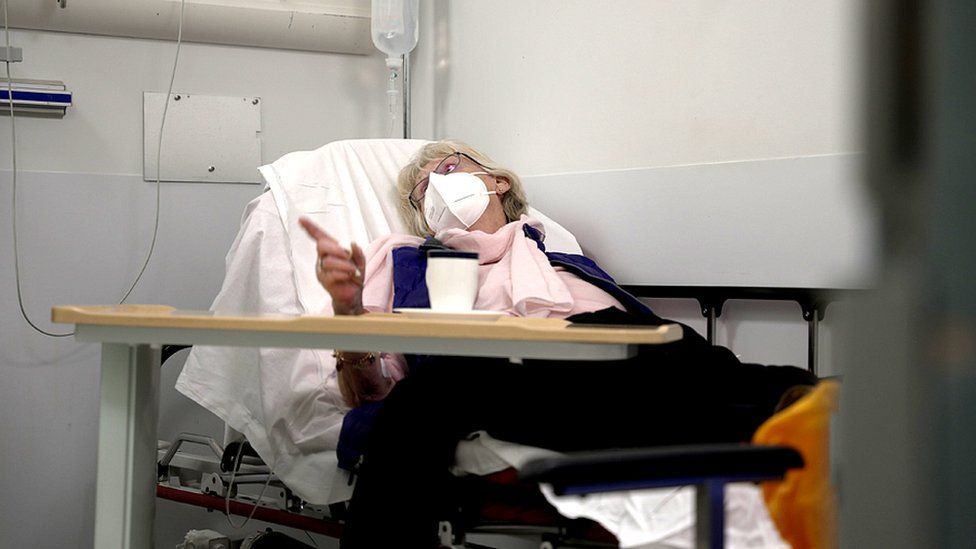 Selina Lambert Clark in the emergency department
A month later and Selina is back in A&E. It's 18:00 on a Thursday and she's hooked up to a drip at the Royal Victoria Infirmary (RVI) in central Newcastle, one the country's largest hospitals.
"Since [the heart attack] I've never felt right, really," she says - breathless and struggling to lift her left arm.
"I am three-quarters of a century old and I feel every day of it at the minute."
The doctors think Selina has picked up an infection and probably needs antibiotics. She has had blood tests and been given an electrocardiogram (ECG) to measure her heart rate.
She is one of about a dozen patients waiting for a bed on a ward this evening, as Newcastle's main emergency department fills up.
The RVI has a policy of unloading all of its ambulances rather than making paramedics queue outside. That means when it's busy, some patients wait on trolleys in individual bays - or in the corridor.
There is little free space this evening. It is the proper first day of ice and snow and doctors are seeing a lot of broken ankles and fractures. A young woman in a nightgown is on a trolley, doubled up in pain as a nurse places a hand on her back and checks on her.
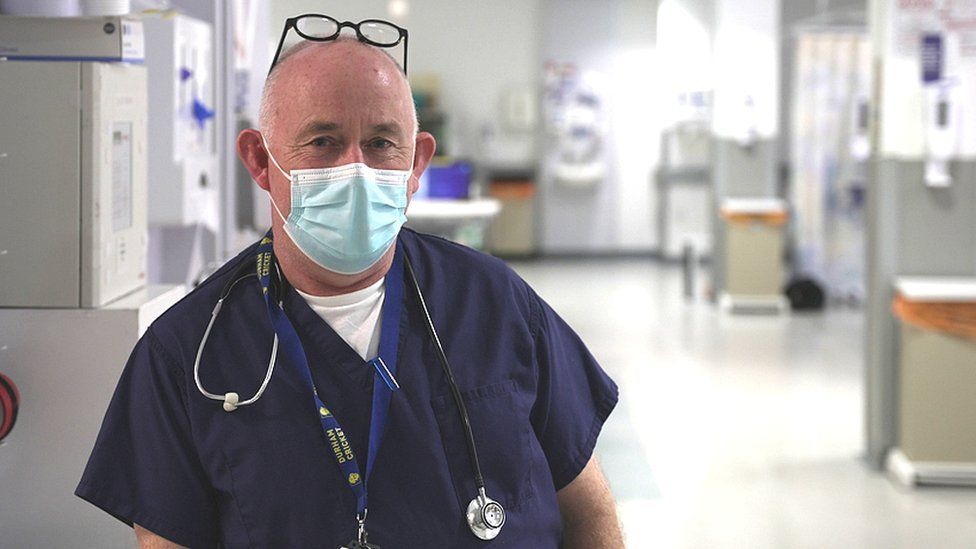 Dr Jim Connelly is one of the consultants
"You walk down there and it's not ideal," says Dr Jim Connelly, the consultant running the department. "Nobody ever wants patients treated on a corridor, so it's about trying to keep people moving through the system."
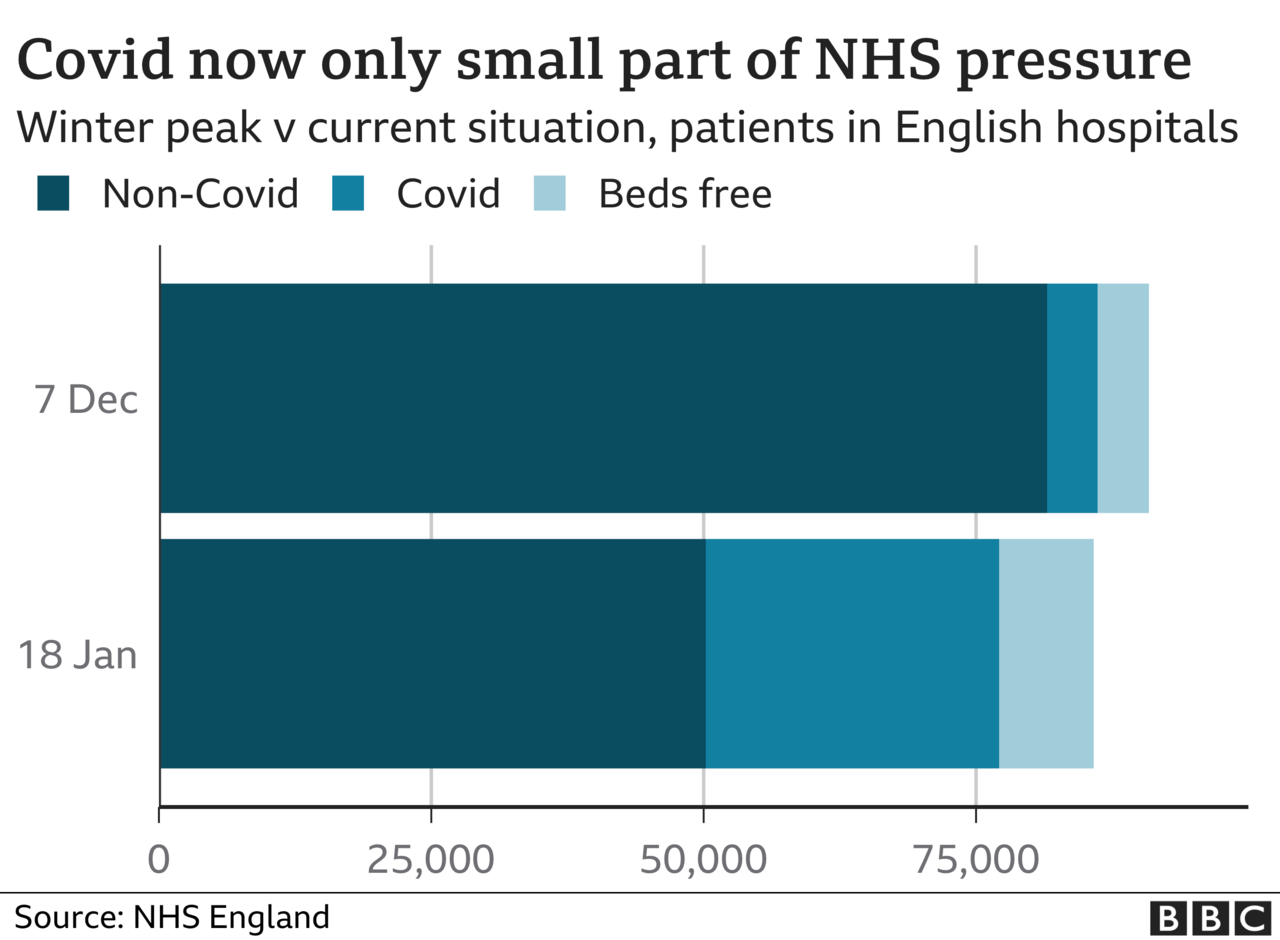
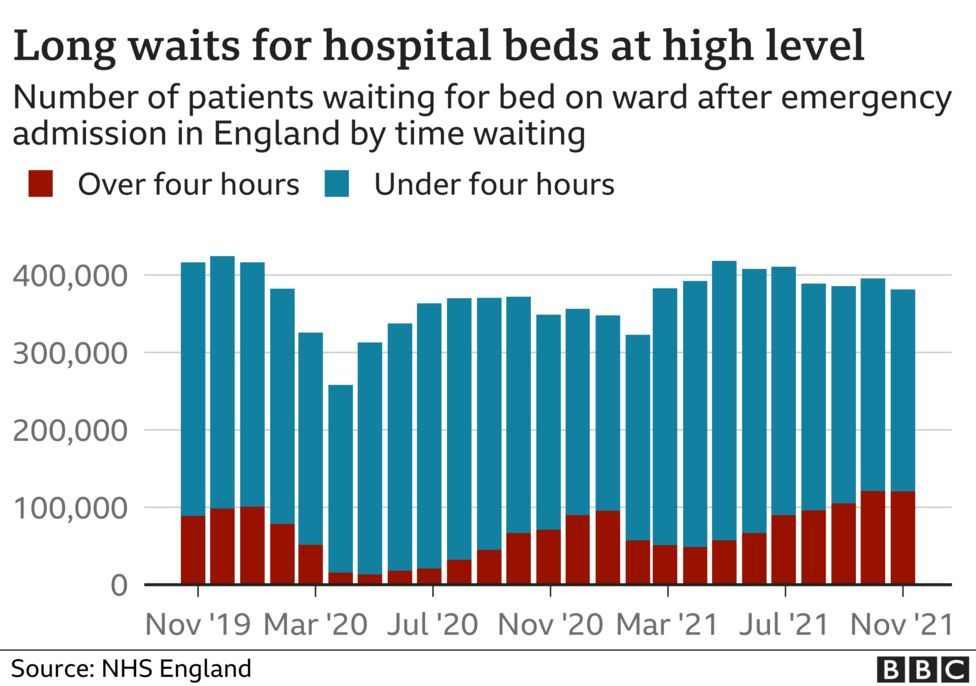
That is becoming much more difficult this winter. Hospital performance in England is at its worst level on record - with A&E waits now their longest since targets were introduced.
"Over the last few months the volume [of patients] has been higher than we've ever seen," he says.
"It's been tough on staff, especially junior doctors. Everyone wants to give the best they can but, to be honest, sometimes that's just not possible. The volume is too huge."
Newcastle's hospitals have seen a sharp rise in numbers of frail and elderly patients - many have missed regular health checks in lockdown. The surgery and treatment backlog caused by the pandemic has made the situation worse.
Doctors also say they are seeing more mental health related issues and alcohol abuse. Tonight a young patient is being operated on after being brought in with self-inflicted stab wounds.
This evening in A&E, the average wait to see a doctor is two-to-three hours. Anyone who needs to be kept in must then wait for a bed on a ward. Tonight, one patient with a bad fracture, complex health needs and requiring a specialist assessment waits 13 hours.
Just before 22:00, Selena is moved to the neighbouring assessment suite. She has spent seven and a half hours in A&E, while her partner has spent much of the time waiting outside. Covid rules mean family are not allowed in the emergency department itself.
"I phoned him to say he might as well go home because they're going to keep me in," she says.
"It really upsets me when I see how all the nurses and doctors are having to struggle. I didn't want to put them under any more pressure."
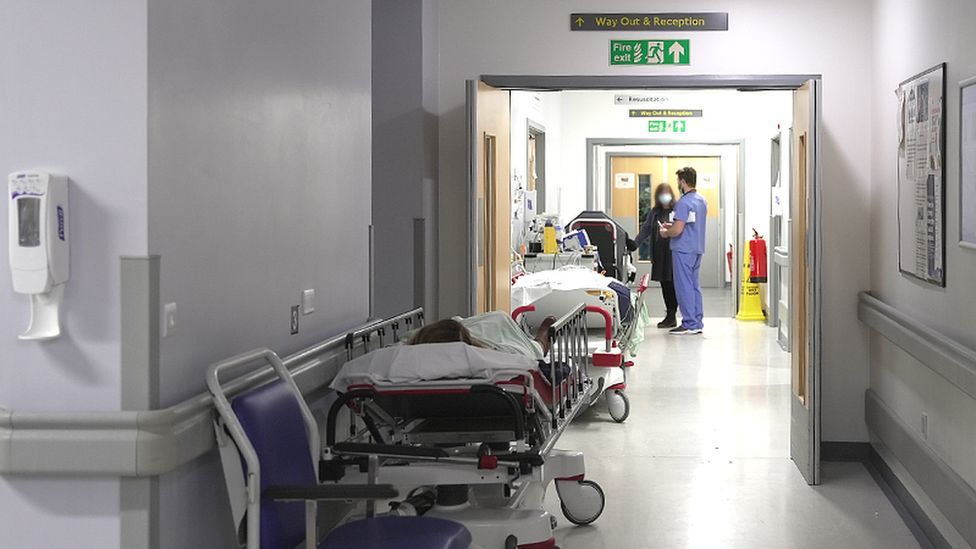 At busy times, some patients waiting for treatment are held on trolleys in corridors
Most of the patients coming into A&E at the RVI will be patched up and sent home. A proportion - about 30% - will need to be admitted for tests and treatment.
The next morning Jenny Cain, a deputy matron, is checking on the infirmary's seven general and specialist medical wards. Bed occupancy is "high" - about 90% across the whole hospital.
In a room off a main corridor, a young woman is being treated for flu. It is one of the first cases the team has seen this winter. Nearby, is the dedicated Covid respiratory ward where four patients are wearing oxygen masks.
Jenny joined the RVI 17 years ago as a trainee nurse. She has worked as a sister responsible for a Covid ward through most of the pandemic. Her husband is clinically vulnerable and waiting for an organ transplant, so they split the family home in half and kept their distance for months.
"There were a lot of deaths on the Covid wards. So it was emotional, it was draining," she says.
"The adrenaline kept us going for so long and then, as it has eased off, everyone has just flopped. We're burnt out."
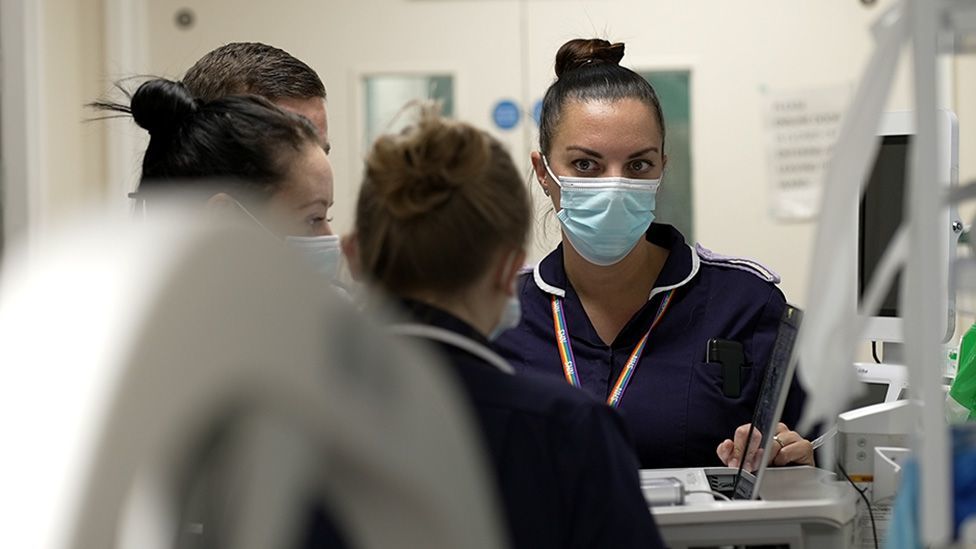 Deputy matron Jenny Cain with colleagues on one of the general medical wards
The number of patients with the virus in the RVI has been falling - down from 70 to 40 in the past month as booster jabs start to make a "massive, massive difference," according to Jenny.
Many of those being admitted are now unvaccinated. They often ask to be given the jab - though by then, it's really too late.
"Hindsight is a wonderful thing," she says.
But even with admissions falling, Covid can still disrupt the running of this hospital.
Staff must stay home for five days if someone in their household tests positive. One of Jenny's colleagues, a specialist nurse, has been off work for a month after her children, and then her partner, were infected, and she tested positive herself.
In her role, Jenny is on and off the phone constantly. She is trying to find beds for patients, trying to sort out staffing problems, trying to free up space so those still waiting in A&E can be moved into a ward.
Across the site, there are 63 patients well enough to be sent home or moved to the care of another hospital but who cannot be discharged. About a third are waiting for social care packages to be agreed with local authorities.
"We've got somebody on one of my wards who has been medically fit for 20 days now," she says.
"She's waiting for a care home, she's got complex needs. But there aren't many homes that will take her - only one or two have got any beds."
 Linda Parkinson waits to be discharged
In an individual room Linda Parkinson, 47, is getting stuck into fish and chips for lunch. She's packing her bags and going home after two weeks in hospital.
"I felt like I was going to die. My asthma has always been under control and this was the first time I've ever been admitted with it," she says. "It was not nice at all. I was trying to gasp for air and had to be put on oxygen."
Doctors say they are seeing more seriously ill patients - like Linda - with more complex needs.
Ask staff here how they are feeling, and words like tired, exhausted, burnt out often come back. But, almost two years into this pandemic, there's still a sense of determination and resilience, even with the looming threat of another Covid wave.
"It's been a real emotional rollercoaster," says Jenny Cain.
"It's been everything - proud and rewarding, upsetting, tiring. But the teamwork and the staffing has just been fantastic. Fantastic. I wouldn't go anywhere else."
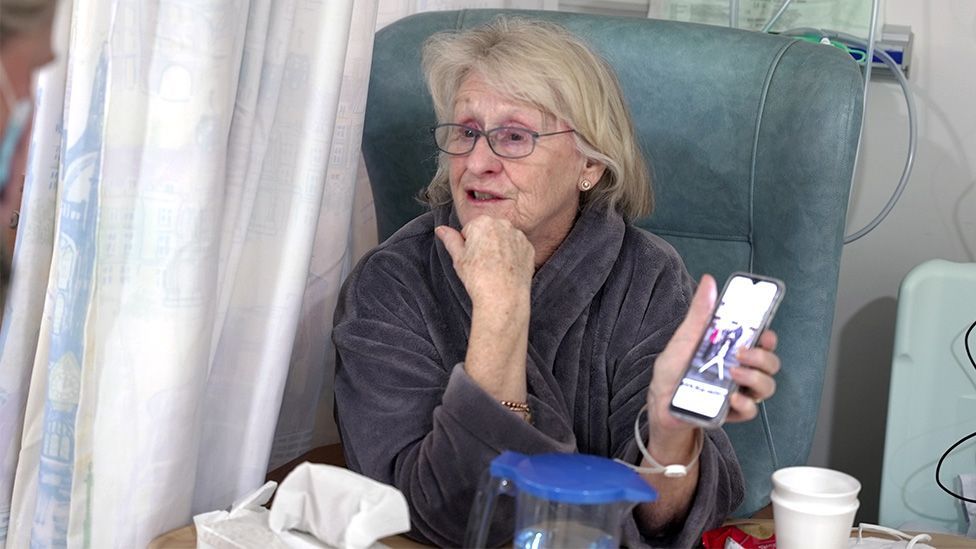 Selina Lambert Clark in the assessment suite is looking forward to being discharged
In a busy six-bed room in the hospital's assessment suite, Selina Lambert Clark - the heart patient moved from A&E last night - is sitting up and chatting. She looks like a different person - smiling as she talks on the phone to her niece.
"You know, I watch Parliament and I shouldn't. That's what probably gave me the heart attack," she jokes.
Selina has been given antibiotics to treat her infection and - to much relief - has just been told she can probably go home later today. To her, the nurses and paramedics have been "absolute angels".
From the hospital wards here you can clearly see Newcastle United's stadium, St James' Park, poking out the other side of the car park. She did have tickets to see the game at the weekend but grudgingly accepts that sitting in the cold for 90 minutes might be a bad idea.
"It doesn't matter, we are probably just going to lose anyway," she says as she starts packing her bag to leave. "I am just desperate to get back home now."