

The royal we: subtle transition as ageing Queen devolves more duties
While Prince Charles steps up to welcome world leaders to the Cop26 climate summit next week, the Queen will appear in a recorded video from Windsor to address delegates in Glasgow. It could well be a defining moment.
With the Queen’s advanced years, there has been a gradual devolving of some of the more arduous public engagements to younger members of the royal family. The Duke of Edinburgh’s death in April at 99 and the Queen’s recent cancellation of public engagements to rest on medical advice after undisclosed tests, which necessitated an overnight hospital stay, have focused attention on the inevitable transition – and what it entails.
Buckingham Palace announced on Friday that she had been advised by doctors to rest for at least the next two weeks and refrain from undertaking any official visits. She will be restricted to light duties only, including some virtual audiences.
Fewer engagements and more time spent at Windsor Castle seem likely in the future. She prefers it there, and it’s where she keeps budgerigars.
“Obviously, as the Queen gets older, more duties will be devolved upon other members of the royal family,” said Prof Vernon Bogdanor, an author, political scientist and expert on the British constitution. “The other royals can do anything except the constitutional functions, such as audiences with the prime minister and signing acts of parliament.”
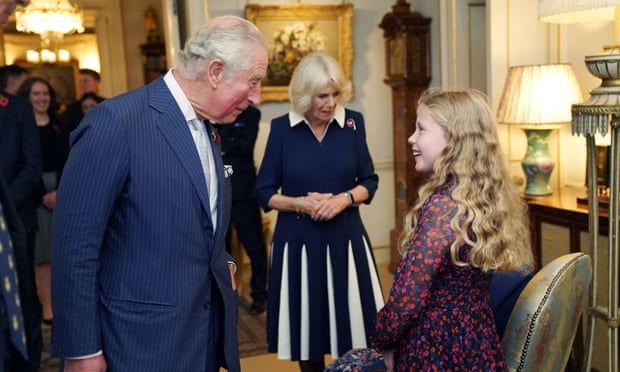 The Prince of Wales and Duchess of Cornwall talk with Poppy Appeal collectors at Clarence House, London, last week.
Should the Queen, 95, be temporarily indisposed, such as through illness, or be out of the country, the counsellors of state can step in. By law, the counsellors comprise the sovereign’s spouse and the next four people in the line of succession who are over the age of 21.
Today these are Charles, Prince William, Prince Harry and the Duke of York, according to the royal family’s official website. This is despite Harry having stepped down as a working royal and decamped to the US to become financially independent, and Andrew having been forced out of performing royal duties after controversy over the Jeffrey Epstein affair.
The mechanism means the counsellors of state – and only two are required – are authorised to carry out most of the official duties of the sovereign, for example attending privy council meetings, signing routine documents and receiving credentials of new ambassadors to the UK.
However, there are a number of core constitutional functions that may not be delegated: Commonwealth matters, the dissolving of parliament, the creation of peers and appointing a prime minister.
“The counsellors of state are a rubber stamp. They have no decision-making powers,” said Bogdanor. “If you look at the duties that only the Queen can perform, they are few.”
State opening of parliament, for example, is something Charles could undertake, Bogdanor said. It is not strictly necessary for the monarch to be present. Indeed, the Queen has missed it on two occasions, in 1959 and in 1963 when she was pregnant with Andrew and then Edward.
“Queen Victoria often wasn’t there towards the end of her reign,” Bogdanor noted. This was partly due to her long period of seclusion after Prince Albert’s death and her dislike of the Liberal prime minister William Gladstone. “So she didn’t want to give the Queen’s speech in person.”
Other key occasions in the royal calendar, such as trooping the colour and Remembrance Sunday, “part of the magic of monarchy, in that they are part of the way the monarchy presents itself, could all be done by others”, said Bogdanor, “They are not part of the basic constitutional function, and they could be presented by the Prince of Wales. But, as I understand it, the Queen takes the view that she needs to be seen, and therefore she needs to be at activities.”
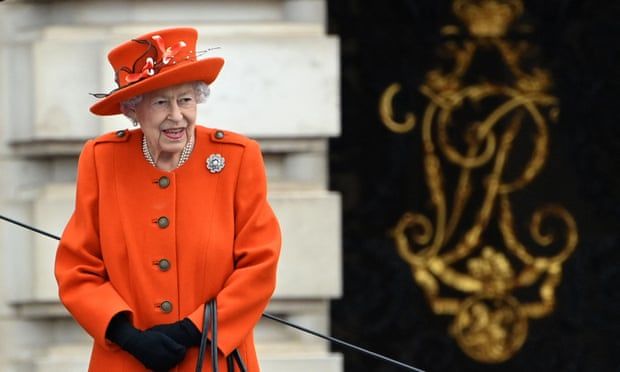 The Queen attending the launch of the Baton Relay for the Birmingham 2022 Commonwealth Games in London a few weeks ago.
Observers have commented on the Queen looking tired – “pinched”, as one put it – on her return from Scotland in September. She was last seen riding at Balmoral, and she has reportedly not been seen walking her dogs of late. In the absence of any details from Buckingham Palace on the tests she has undergone, which remain private, and its insistence that she is in “good spirits”, it can be assumed she is, naturally, slowing down but otherwise well.
Meanwhile, Charles, Camilla, William and Kate will be out in force in Glasgow, including attending a reception for world leaders. “The other members of the family are all stepping into the breach, and have been doing so for some time,” said the royal historian and author Hugo Vickers.
Charles already lays the wreath on his mother’s behalf at the Cenotaph on Remembrance Sundays, and has done since 2017. Persistent commentary over whether he should succeed her as the head of the Commonwealth was in effect silenced when the Queen declared it her “sincere wish”, and two days later Commonwealth leaders declared it their wish too.
Her decision to hand these responsibilities to Charles is illustrative of how Buckingham Palace and Clarence House see the heir gradually taking over more of his mother’s duties.
Since she no longer undertakes long-haul travel, Charles already represents her on official visits overseas, including at the biennial Commonwealth heads of government meeting. He and the Duchess of Cornwall have been at the Queen’s side at the state opening of parliament since Philip retired from public life in August 2017.
Investitures, once described by the Queen as one of the duties she regards as most important, are regularly conducted by Charles, William, and on occasion Princess Anne.
William and Kate, who live at Kensington Palace and have a second home near Sandringham, Norfolk, are rumoured to be considering a move to Windsor, nearer to the Queen.
“If the transition works well, it should just all be very, very subtle. I barely noticed when the Queen stopped doing most of the investitures,” said Vickers. “We all know it’s changing under the surface.”
The word “abdication” may not be in the Queen’s lexicon, but there is nothing to stop a “co-head” arrangement as a practical solution to the challenges of an ageing sovereign.
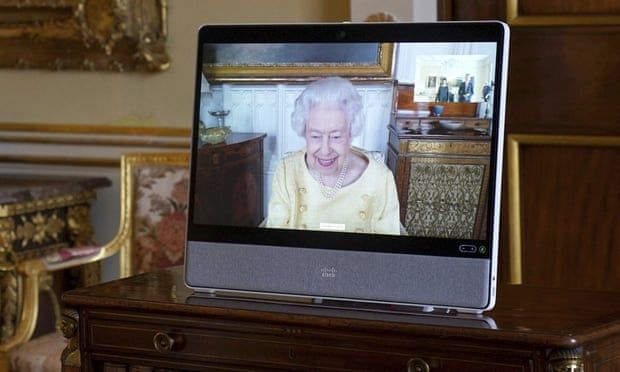 The Queen appears via video from Windsor Castle, during a virtual audience at Buckingham Palace.
The platinum jubilee next year, celebrating her 70 years on the throne, will “inevitably be more demanding and tiring” for her, said Vickers. He said the Queen’s private office “ought to be thinking very carefully about not overdoing it for her, because she is reluctant to say no and doesn’t like to disappoint people.”
In his role organising the Jubilee Walkways and the Commonwealth Walkways, Vickers said he strove for “maximum exposure of the Queen and minimum time spent by her. I have always taken great pride in getting my engagements down to as short a time as possible. In other words, if she is coming past a particular point, she pops out of the car, unveils something and pops back into the car again.”
The Covid pandemic has forced the Queen to turn to virtual engagements, which are less tiring, “and she has taken to Zoom like a prawn into aspic,” Vickers said. “But Charles and William will have to do a bit more. I can see in a perfectly arranged system it would happen seamlessly.”
During the pandemic she has spent more time at Windsor. “It’s easier than Buckingham Palace. She can operate from there perfectly well and she has got space to get some fresh air,” Vickers said.
“And she has got her budgerigars there. I haven’t seen them, but I have heard them. There’s even a budgerigar keeper. And I think she really enjoys spending some time with them.”