

The countries where gift giving is better for the planet
In the days leading up to the Christmas of 1999, my brother and I sat puzzling. It would soon be the turn of the millennium, and we wanted to do something special for our parents, other than our usual hand-drawn cards. But as newly minted teens, we neither had the cash to flash, nor the freedom to venture to the shops unsupervised.
After a bout of brainstorming, we settled on what we believed to be an ingenious idea — a wall calendar.
On A3 drawing paper, we pencilled in upcoming dates, tracing the large numbers over with glue before carefully covering them with bits of materials collected from around the house. Each month featured a special theme, and the materials varied accordingly. There were origami stars, paperclips, toothpicks, and pop-tops, fabric from old clothes, and – in my favourite month – dried soybeans, barley seeds, and peanut shells.
The final product was far too heavy and impractical for use, but that didn’t stop my parents from declaring it a true masterpiece and displaying it over my dad's desk at work.
These days, my brother and I live on different continents and our gift crafting days have long passed. Our family reunites every Christmas, but we now purchase our presents. Store-bought items save time, offering both convenience and plenty of options to pick out a gift that will actually be used.
But Christmas is also a time when mass consumerism, and its associated waste, becomes appallingly apparent.
Around 23 million Christmas gifts end up in landfill every year
The average Briton will spend £388 ($517) on presents this year. But roughly 23 million gifts will end up in the landfill once Christmas is over. The festive season also sees UK households discard 30% more rubbish, equivalent to 1.4 million tonnes of carbon dioxide (CO2e), compared to any other time of the year. Consumers bin an estimated 227,000 miles (365,000km) of wrapping paper, enough to reach the Moon – an alarming statistic given that 3.5kg of CO2 is emitted for every 1kg of paper produced.
The figures are similar in the US, with Americans generating 25% more trash, or 25 million tonnes, between Thanksgiving and New Year.
But gift-giving and decorating at Christmas, as well as other celebrations during the year, doesn't have to be a wasteful affair. There exist many enduring traditions around the world, from Norway to Japan, that involve children and adults making sustainable gifts and meaningful holiday symbols.
I had a go at making a few of these myself, both in an attempt to be more sustainable and to relive some happy gift-making memories from my childhood days. It was hard work and time-consuming, but it was good fun too. I constructed a gingerbread house and created star-shaped lanterns from scratch. The exercise also reminded me of an important lesson: that it's the time you spend with your loved ones – and not so much the material things you give them – that really matters.
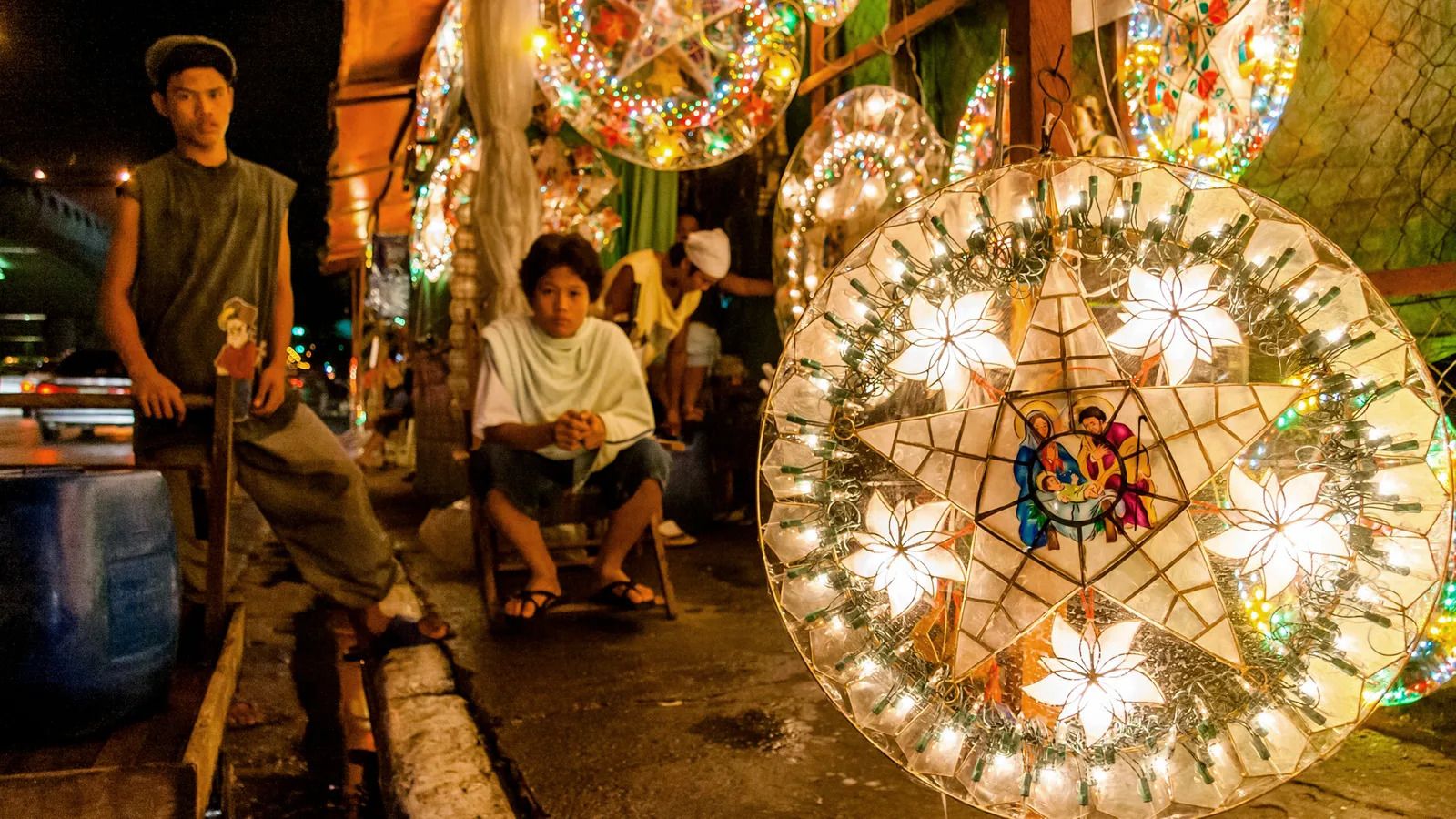 Filipinos hang parols, colourful star-shaped lanterns, in their windows during the festive season
Take baking cookies with your children, for example. "It's not so much about making high-quality confectionery," says Daniel Fischer, associate professor for consumer communication and sustainability at Wageningen University in the Netherlands. "But rather experiencing together the joy that can come from making something with your own hands that can smell so tempting and always tastes a little different."
It's a feeling that Marianne Hope knows very well. She grew up in Jar, a small town outside Oslo, Norway. Every December, the heady scent of gingerbread – cinnamon, cloves, and earthy molasses – would fill the house as her mother and grandmother baked seven different types of cookies.
"The smell was everywhere," recalls the 49-year-old photographer. "I didn't like eating the cookies that much, but the whole activity of baking was fun and cozy, and I loved to help."
"Making Christmas cookies is a Scandinavian tradition," she says. Bergen in Norway, for example, plays host to the world's largest gingerbread town every year.
When Hope moved to the Netherlands in 2002 and started her own family, she carried on the tradition, hoping to recreate a piece of home. In addition to gingerbread cookies, she makes pepperkakehus (a gingerbread house) too.
Beginning every Advent, she assembles her house – making the dough and baking it, before 'gluing' the pieces together with melted sugar. Hope's three children then decorate it with coloured sweets and chocolates. Homemade food gifts aren't just delicious, they're also sustainable as they don't generate waste.
The pepperkakehus stands proudly in the kitchen until 20 December, when her eldest son would typically have a birthday party and all the kids would smash it to bits and eat the pieces (the adults enjoyed theirs with mulled wine).
"Making pepperkakehus is a few days' work but it's worth it," she adds. It's a sentiment I can attest to, having attempted her recipe myself. Making the gingerbread dough was easy enough (and tasted absolutely divine), but I must have messed up somewhere as it wasn't as stiff as it should have been after baking it.
Assembling the house was the hardest part (kids might need some help from their parents here) because you have to make sure to get the dimensions right so the bits fit together, and the hot sugar "glue" can be tricky to work with. But the joy my friend's eight-year-old daughter had decorating it, and later eating all that sugar, was priceless. The resulting house was a tad lopsided but had that wonderful homemade look to it, with a door made from M&M's and walls lined with squiggly rows of marshmallows, gummy worms, and chocolate sprinkles.
At the end of the day, Hope says: "It’s not about the gingerbread house, but preparing for Christmas together that counts."
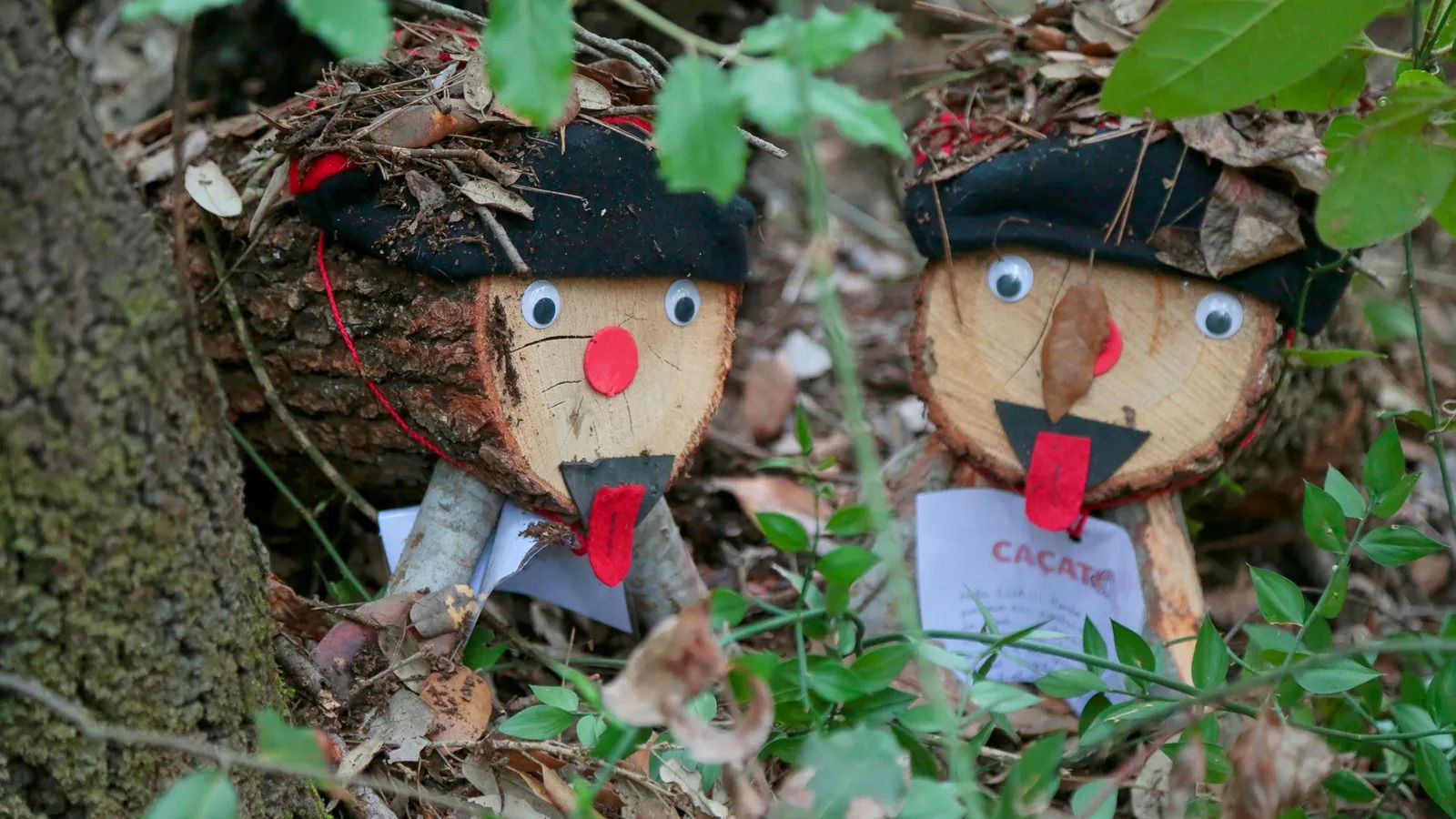 The Caga Tió (or 'pooping log') is a popular Christmas gift and decoration in Catalonia, Spain
Meritxell Codina, an air crash investigator from Sant Jordi de Cercs in Catalonia, Spain, couldn't agree more. In her hometown, a main feature in the run-up to Christmas is the Caga Tió (or "pooping log") – a hollow log with a smiley face, stick legs, and jaunty red hat. "In the US or UK, there is Santa Claus. But here we have tió," says Codina. (It also isn't the only scatalogical Christmas tradition from the region.)
Families take theirs out on 8 December, during the Feast of the Immaculate Conception. Children "feed" the log – with turrón (a Catalan nougat), chocolate, dried fruit, and so on – until Christmas rolls around and they hit it with sticks, singing a song to "encourage" it to poop out presents (which adults sneak in when the children go into a different room to pray for the tió).
The practice evolved from a wintertime pagan tradition of searching for a big log in the mountains to take home for the fireplace, says Barcelona-based historian Dani Cortijo. The tradition "mark[s] the beginning of a new season, paying homage to nature for giving us a way to survive a hard winter, especially in the cold mountains".
Codina, 34, grew up watching her parents make tiós for their friends. Her father would fell oak trees from their family forest in the mountains close to their hometown, and fashion them into the tió's body and legs. Her mother would then paint on the faces and affix a traditional Catalan hat, the barretina, to the logs.
This year, her family decided to turn their hobby into a business, which they named Caga Tió de Carbonís after one of the nearby mountains, and sell their logs on Instagram.
For Codina, the Caga Tió is as sustainable as a gift can get because it is made from organic materials taken from local surroundings. Once Christmas is over, some families choose to keep their log and reuse it the following year, others burn it.
Wood, if not burned, is among the most sustainable materials, says Sadegh Shahmohammadi, a sustainability data scientist at the Organisation for Applied Scientific Research in the Netherlands. "Wood absorbs carbon and stores it while growing. It's a renewable, biodegradable, recyclable and (often) long-lasting material."
Searching for local materials to make Christmas crafts was the name of the game when Leona Valenzuela, 39, was growing up in Manila, the capital of the Philippines. Filipinos traditionally hang parols, star-shaped lanterns, in their windows at Christmas time – a practice that dates back hundreds of years to the Spanish colonial era, when they were used to guide worshippers to church for dawn masses during the pre-Christmas festival of Simbang Gabi.
Parols represent the star of Bethlehem, and symbolise hope, faith, and the triumph of light over darkness.
Every year families make their own colourful stars from bamboo sticks and paper, and children learn to make them at school, says Valenzuela. "Every Filipino knows how to make a parol."
Recently, Valenzuela, who now lives in Singapore, taught me how to make her beloved parols. Although it took the better part of the day, crafting it was easy enough for her eight-year-old daughter Emmerlyn to join in.
We used a glue gun to fasten wooden ice-cream sticks together, and pasted bright crêpe paper over them to form our stars. Cutting the paper to fit the various segments of the three-dimensional star was time-consuming, but it was time well-spent chatting at the kitchen table as we beavered away. And it felt liberating to unleash our creativity – while our parols started out identical with their wooden frames, they diverged into a star with mini pompoms and streamer tails, and another adorned with cotton wool balls and potpourri-like stick-ons.
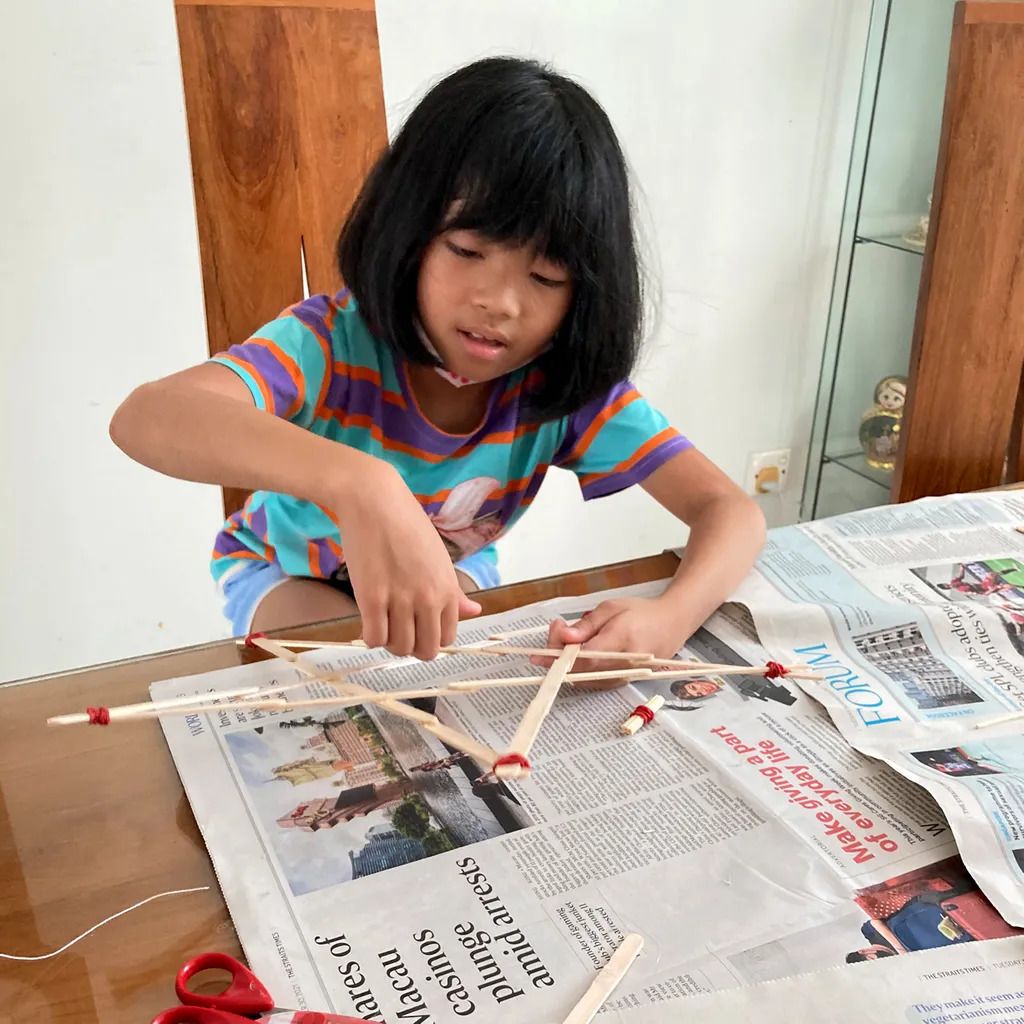 Emmerlyn Valenzuela, 8, makes a parol, a popular Christmas decoration in the Philippines
"The best part about making parols is that you have to use all your creativity," says Valenzuela.
Valenzuela's school would hold competitions for the most creative parols, and kids decorated theirs with candy wrappers, juice cartons, and even egg shells, she says. One year, Valenzuela asked her uncle for help and together they scooped out coconut husks to stick on her lantern – which won her the third prize of 500 pesos (£7.50/$10).
Paper is a good material to use when crafting, says Shahmohammadi. Just as long as it isn't coated with plastic, which can otherwise make recycling tricky.
The best part about making parols is that you have to use all your creativity - Leona Valenzuela
Cellophane, which is biodegradable and can be composted, is a popular material for parols, but plastics are a big no-no, he says. They take hundreds of years to decompose, and the recycling rate for them is low. In the EU and UK, for example, just over 40% of plastics are currently recycled.
Glitter is another material you should try and avoid, says Fischer, as they comprise "a mixture of aluminum and plastic, and fall into the category of microplastics because of their small size".
Microplastics can enter the human body via food, and have even been detected in the placenta of unborn babies. While their impacts on human health are still being studied, experiments show that microplastics harm marine life by blocking digestive tracts and exposing them to potentially harmful chemicals.
Instead of glitter, Fischer suggests using sand, salts, coloured seeds, and other natural materials.
Eco-friendly decorations and gifts aren't just limited to Christmas, of course. In India, for instance, Hindus celebrate Raksha Bandhan every August. In this festival that honours the bond between siblings, girls tie a rakhi – a silk or cotton bracelet – around their brothers' wrists to pray for their happiness and good health. In return, brothers pledge to protect their sisters.
Rakhis are often home-made or can be bought inexpensively at a store. A handmade rakhi will have a lower environmental footprint than a manufactured one, says Shahmohammadi.
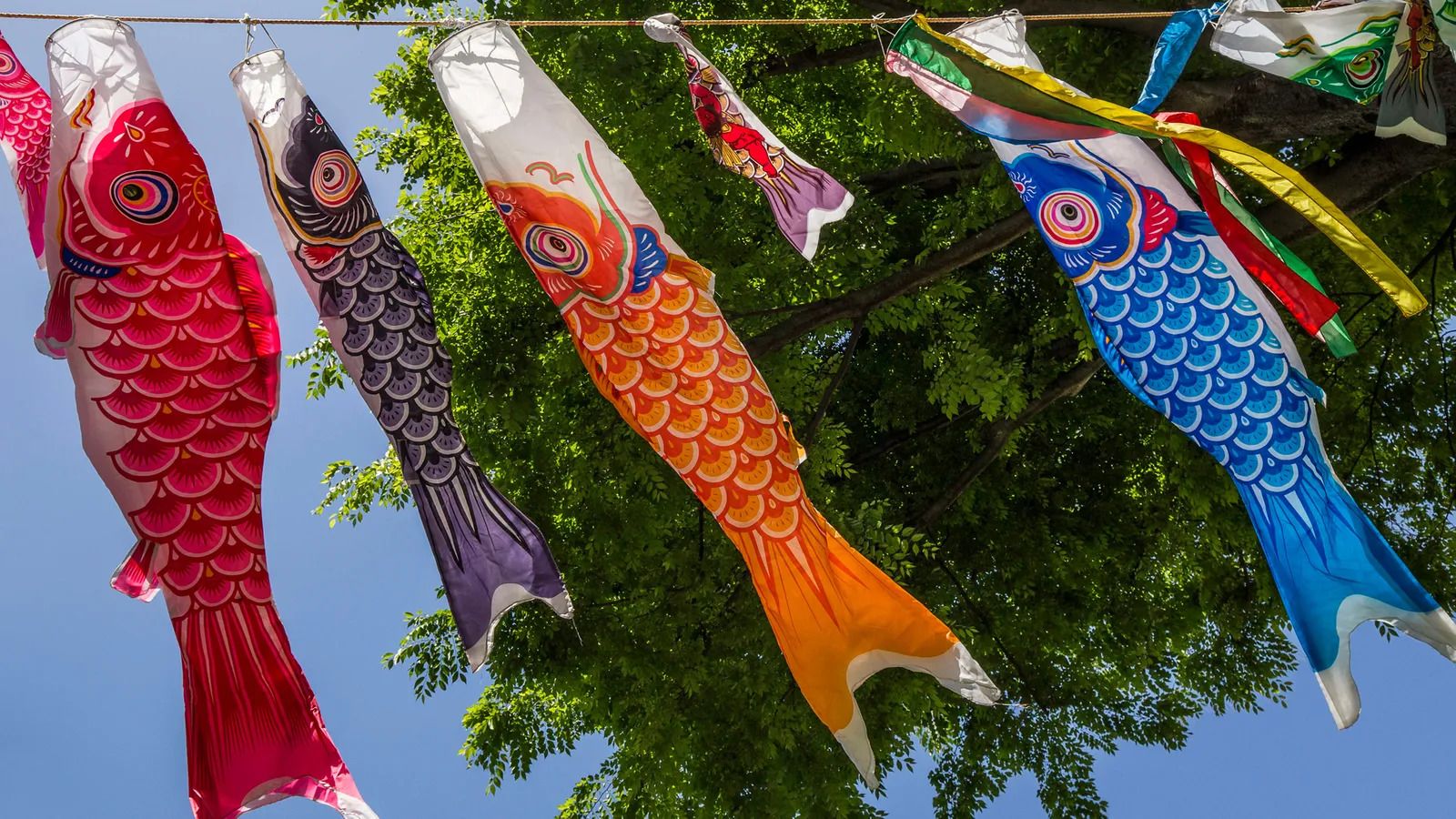 Koinoboris, large windsocks made from paper or cloth, are hung in Japan to celebrate Children's Day on 5 May.
Another Asian festival that features a sustainable gifting tradition is Kodomo no Hi, or Japanese Children's Day, which is celebrated on 5 May. It's a time of year when the weather is really good and the skies are incredibly blue, says Yayoi Muto, a 46-year-old homemaker who grew up in Kyoto. "You look out and see all these beautiful koinoboris 'swimming' in the air."
Koinoboris, large windsocks made from paper or cloth, are strung from homes or hung throughout neighbourhoods. The flags are shaped like carps – a symbol of strength and courage due their ability to swim upstream – and are flown to wish children success in their lives.
In general, people are becoming more eco-conscious during the holidays, says Fischer, especially the younger generation. "We are no longer in the phase where we argue about whether we need sustainability or should save the climate, but are now in the phase of 'how'."
For a more sustainable festive season, Shahmohammadi suggests replacing material presents with alternatives such as gifting a loved one an experience or planting a tree in their name at a reforestation site somewhere in the world.
But that requires a mindset change, he says. If presents are still preferred, consider buying secondhand, recycled items or making your own. Who knows, you may end up passing on treasured heirlooms to the next generation.
Importantly, make sure the gift will actually be used and is something that will last for a long time. "Products have been through the entire supply chain – manufacturing, packaging, transport," says Shahmohammadi. "When they last for just a day before being incinerated, landfilled or recycled, that's horrific."
If gifts to last a lifetime is the aim, both environmentally and sentimentally speaking, then my 13-year-old self can be proud. My mum still has her wall calendar, carefully wrapped in soft tissue and placed at the bottom of her drawer for safekeeping. We took it out the other day to have a look, and apart from a few soybeans falling off, it was perfectly preserved.