

Revealed: Migrant care workers in Britain charged thousands in illegal recruitment fees
Care workers recruited from overseas to look after elderly and disabled people in Britain are being charged thousands of pounds in illegal fees and forced to work in exploitative conditions to pay off their debts.
An Observer investigation has uncovered a network of agencies supplying workers to care homes and homecare agencies that charge recruitment fees to candidates.
By law, agents cannot charge a fee for finding or trying to find a candidate work. The practice of charging recruitment fees, previously exposed in the UAE and Qatar, is considered a human rights abuse that leaves workers vulnerable to exploitation.
But the fees are often disguised as a “processing”, “service” or “admin” charge, with many workers unaware they are illegal. Often, the breakdown of fees or full amount is not fully disclosed until the worker has reached the UK, by which time they have already paid for flights and relocation.
Workers from India, the Philippines, Ghana and Zimbabwe are among those charged for their recruitment, with fees ranging from £3,000 to £18,000.
Some have become trapped in debt bondage – a form of modern slavery – as a result of the fees. Suspected victims described how agents had deducted money from their salaries and withheld their passport or residence permit until they repaid the sum owed.
Others claim to have been subject to abuse and threats or paid less than the minimum wage. They cannot speak up because the sponsorship system for care workers means their visa is tied to their employer.
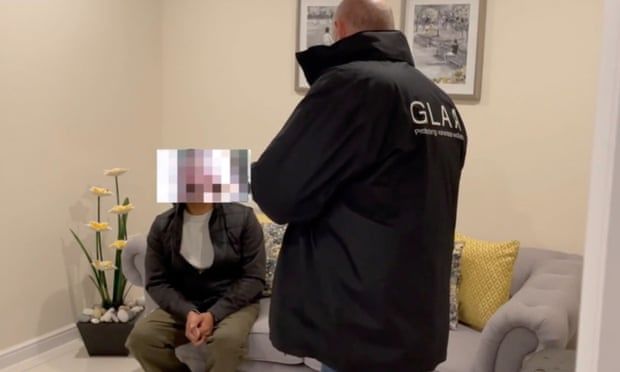 A couple were arrested by the Gangmasters and
Labour Abuse Authority on suspicion of exploiting vulnerable students
working in care homes in north Wales.
A couple were arrested by the Gangmasters and
Labour Abuse Authority on suspicion of exploiting vulnerable students
working in care homes in north Wales.
The findings come as Britain battles a worsening social care staffing crisis, with an estimated 105,000 vacancies nationally and thousands of patients facing long delays for care.
Many of the care workers used a government visa scheme introduced in February which added care workers to the shortage occupation list to attract international candidates.
But evidence collected by the Observer – including interviews with suspected victims, charities and labour experts; conversations with agents; and analysis of payslips, contracts and online chat groups – reveals the new visa route is being widely abused by agencies and traffickers, leaving workers open to exploitation.
In one exchange with an undercover reporter last week, an agency supplying Indian workers to care homes said the fee for candidates for arranging a £10-an-hour job would be 1.7m rupees, about £17,600.
Another quoted £4,500 for a “placement package” including a certificate of sponsorship, a cost normally borne by the employer, and “visa application support” – something only lawyers and registered immigration advisers can legally charge for.
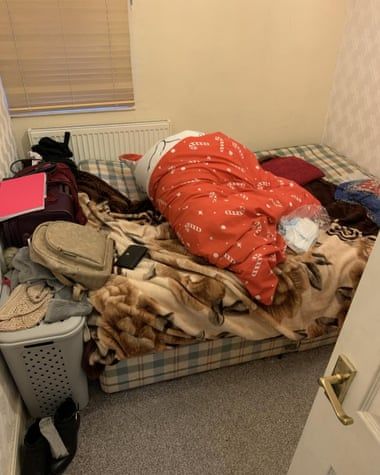 The Indian care workers’ accommodation.
Todd Maforimbo, who studied the supply of labour into the UK health sector and now campaigns on labour abuse, said he had been contacted by more than 30 care workers charged fees. “People are coming to look for a better life but they’re ending up in worse situations,” he said.
Modern slavery in the care sector is a growing problem, with several raids by the government’s labour abuse agency recently, and data from charities and the Care Quality Commission suggesting a rise in cases.
In one case in north Wales, nine Indian workers were found sleeping on mattresses in cramped and unsanitary conditions. Colleagues at the care homes where they were working reported them turning up “tired and smelling” and saw them eating leftovers from residents’ meals.
The workers, who came to Britain as students, are believed to have worked up to 80 hours a week for minimum wage, with their pay controlled by their alleged exploiters.
An internal report from the Gangmasters and Labour Abuse Authority, seen by the Observer, said more monitoring was needed by care homes as well as universities to “prevent debt bondage and highlight potential traffickers”.
The Department of Health said it took reports of illegal employment practices in the sector “very seriously”, and that agencies or employers found operating unlawfully could face prosecution.
It added that providers must comply with ethical standards laid out in its code of practice for international recruitment, which bans recruitment fees and says any costs incurred by agencies must be charged to employers.

