London Daily

Focus on the big picture.
Friday, Jun 26, 2026

Olympics U-turn on showing athletes taking the knee

Olympics U-turn on showing athletes taking the knee

Footage of Olympic athletes taking a knee in protest can now be included in official highlights after a ban lasting decades.

Recent changes to Rule 50 mean athletes are now allowed to make gestures on the field of play, provided they are done so without disruption and with respect for fellow competitors.

However, images of Olympic footballers kneeling on the pitch were excluded from official highlights reels and social media channels on the first day of play at the Tokyo Games.

Wednesday marked the first day it was allowed at the Olympics when players from five women’s football teams, including Britain, kneeled in support of racial justice.

The British and Chilean teams kneeled before the opening games followed by the US, Sweden and New Zealand players in later kickoffs.

Meanwhile, Australia players posed with a flag of the country’s indigenous people.

Despite such gestures now being permitted, the footage was not included in the official Tokyo Olympic highlights package provided by the International Olympic Committee (IOC).

Official Olympic social media channels also excluded pictures of the athlete activism.

In another U-turn, the IOC released a fresh statement on Thursday to say such moments will now be included in an apparent change of policy.

It said: “The IOC is covering the Games on its owned and operated platforms and such moments will be included as well.”

The Olympic body said hundreds of millions of viewers could have seen the footage watching networks that have official broadcast rights and “can use it as they deem fit”.

What is Rule 50?


Rule 50 of the Olympic Charter states “no kind of demonstration or political, religious or racial propaganda is permitted in any Olympic sites, venues or other areas”.

The same applies to advertising or other publicity unless they are authorised by the IOC Executive Board on an exceptional basis.

The IOC explains Rule 50 exists to “keep the field of play, the Olympic Village and the podium neutral and free from any form of “political, religious or ethnic demonstrations”.

However, it eased the decades-long ban on all demonstrations three weeks ago when it was clear some athletes - especially in soccer and track and field - would express opinions on the field in Japan.
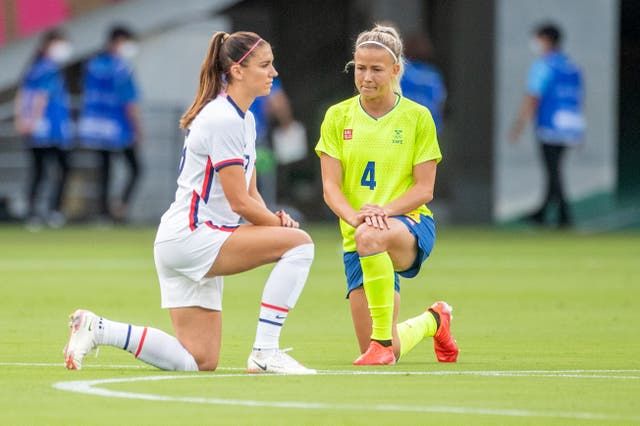
Alex Morgan, of US, and Hanna Glas, of Sweden, take a knee at Tokyo Stadium

What are the changes to Rule 50?


Two reviews of Rule 50 in the previous 18 months was carried by the IOC’s own athletes commission.

It had concluded Olympic competitors did not want distractions on their field of play.

The new guidance will allow the sporting stars to take a knee or raise a fist in pre-game or pre-race introductions but not on medal ceremony podiums.

The IOC will still discipline athletes who protest on the podium.

Sports governing bodies still have a veto and swimming’s FINA has said its athletes are prohibited on the pool deck from any gesture interpreted as protest.


Newsletter

Related Articles

0:00
0:00
Close
Robert Jenrick Defends £5 Million Donation to Nigel Farage Amid Political Scrutiny
Plymouth Museum The Box Wins 2026 Art Fund Museum of the Year Award
UK Government Faces Backlash Over Plans to Use Former Military Sites for Asylum Accommodation
Labour Party Faces Pressure Over Cabinet Stability as Senior Figures Clash on Policy Direction
Heathrow Airport Forecasts Passenger Decline in 2026 as Costs and Climate Disruption Mount
UK Energy Regulator Approves Expansion of Long-Duration Storage to Boost Power System Resilience
Crown Estate Reports Third Consecutive Year of £1 Billion Profit as Debate Over Royal Finances Intensifies
Teenager Charged With Murder in Wales Following Death of 14-Year-Old Boy
Nottingham University Hospitals Maternity Failures Trigger Calls for Public Inquiry Into Patient Safety
EasyJet Rejects £4.9 Billion Takeover Offer From Castlelake but Keeps Door Open for Further Talks
Record Heatwave Triggers UK Transport and Infrastructure Strain as Heathrow Revises Passenger Forecast Downward
Ofgem Approves Sixteen Long-Duration Energy Storage Projects to Strengthen UK Grid Stability
Labour Government Faces Internal Tensions Over Cabinet Decisions and Net Zero Policy Direction
British Food and Drink Exports Fall to Decade Low Amid Trade Friction and US Tariffs
Great Britain Grid Operator Spends £10 Million to Stabilize Electricity Supply During Heatwave Demand Surge
UK Parliament Committee Calls for Urgent National Adaptation Strategy as Extreme Heat Strains Public Infrastructure
Record-Breaking Heatwave Pushes England’s National Health Service to Critical Incident Status as Hospitals Struggle With Surge in Emergencies
UK Government Launches Review of Voluntary National Insurance Contributions System
UK Planning Inspectorate Reports Key Infrastructure and Planning Milestones in Annual Review
UK Government Reviews Travel Expense Reimbursement Rates for Employers and Employees
Civil Nuclear Constabulary Launches National Digital Memorial for Officers Killed in Service
UK and US Expand Collaboration on Nuclear Fusion Research and Workforce Exchange
Environment Agency Secures £275,000 Enforcement Deal with Anglian Water Over Permit Breaches
Independent Inspector Flags Ongoing Failures in UK Home Office Border Case Management
UK Government Considers Zero VAT Rate on Land for Social Housing Development
Bank of England Reports Sharp Drop in Emissions and Warns on Climate-Driven Financial Risk
Consumer Confidence in the UK Falls at Fastest Quarterly Rate Since 2022
UK Borrowing Costs Rise Sharply on Gilt Markets Amid Fiscal and Political Concerns
UK Government Plans Legislation to Bring British Steel into Public Ownership
UK Government Secures £210 Million Nuclear Fuel Deal to Support Ukraine Energy Security
London Ambulance Service Reports Record Emergency Call Volume Amid Severe Heatwave
United Kingdom Faces Record June Heatwave as Temperatures Hit 36.7°C in Somerset
UK Financial Services Reform Debate Intensifies Over Ministerial Regulatory Powers
UK Energy Price Cap Rise Expected to Keep Inflation Above Target Through 2026
UK Biohacking and AI Wellness Trends Drive Surge in Personal Health Monitoring
UK Social Care Sector Sees Workforce Shift as Overseas Recruitment Masks Domestic Labour Decline
Nuffield Trust Warns UK Health Budgets Remain Vulnerable Despite Record Spending Levels
UK Coal Pension Surplus Debate Returns to Parliament as Reform UK MP Seeks Clarity on Distribution
UK MPs Consider E-Petition Calling for NHS Newborn Screening for Spinal Muscular Atrophy
UK Parliament Debates E-Petition Calling for Inquiry Into Pro-Israel Influence in Politics
UK Economy Grew 0.6 Percent in Q1 2026 but Business Sentiment Weakens Over Geopolitical Risks
UK Financial Services Bill Enters Lords Committee Stage With Expanded Ministerial Powers
UK Armed Forces Bill Advances With Plans for Defence Housing Service and Drone Defence Measures
UK Treasury Proposes Higher Electricity Generator Levy and Updated Mileage Allowance Rules
UK Parliament Debates Health Bill Amid Persistent GP Access and Patient Satisfaction Concerns
UK Financial Sanctions Regulator Signals Faster, Intelligence-Led Enforcement Strategy
British Chambers of Commerce Warns Business Confidence Crisis Is Dampening UK Investment
UK Parliament Debates Carbon Budget Order as Pressure Mounts on Net Zero Delivery
UK Energy Price Volatility Reinforces Pressure for Faster Electrification of Economy
UK Defence and Aerospace Strategy Gains Momentum as Keir Starmer Pushes Industrial Cooperation in Berlin
×