

Nord Stream investigation tests EU intelligence sharing around the Baltic
Investigations into September’s attacks on Russia’s Nord Stream gas pipelines are testing levels of trust among nearby EU states as they weigh whether to share intelligence in efforts to establish the culprit.
Most observers believe Russia blew up the pipelines — which were built to transport gas from Russia to Germany — in an effort to further destabilize Europe's energy supplies ahead of winter. Russia denies involvement.
But for Sweden and Denmark, which control the subsea economic zones where the pipes blew up, and for Germany, where the pipes make landfall, the delicate task of establishing responsibility for the attack still lies ahead.
Key evidence is likely to come from the type of sensitive intelligence that EU members have traditionally been reluctant to share. Allegations last year that intelligence agencies in Denmark had allowed the U.S. to spy on senior Swedish and German lawmakers deepened mistrust.
“Intelligence is one of the fields where the EU is making very slow progress,” said Thomas Wegener Friis, an intelligence researcher at the University of Southern Denmark. “Simply because the states have their own agendas.”
Experts say locally controlled secret underwater sensors and submarines will be key to the investigation, along with intelligence from international partners like the U.S. and the U.K.
The site of the attacks — between the Danish island of Bornholm to the west, the Swedish coast to the north and the Russian exclave of Kaliningrad to the east — is seen as a particularly highly monitored area of the Baltic Sea.
Russian, Swedish and NATO subsea and surface vessels regularly traverse the zone, and in the days before the blasts, data collected by Swedish daily Dagens Nyheter showed Swedish ships were monitoring the area where the pipes exploded.
European countries now have to figure out how best to share findings from such missions and determine what information underwater assets might have picked up without compromising national sources.
It's a highly sensitive issue. The prosecutor leading the Swedish investigation has already said his country is not interested in signing up to a so-called Joint Investigation Team under the auspices of Eurojust, the EU agency set up to solve cross-border crime.
A spokesman for the Swedish prosecutor’s office said the decision related to “secrecy linked to national security” and declined to comment on the progress of Sweden's investigation. A spokesman for the Swedish security service said the country was “cooperating with both Germany and Denmark in this matter.”
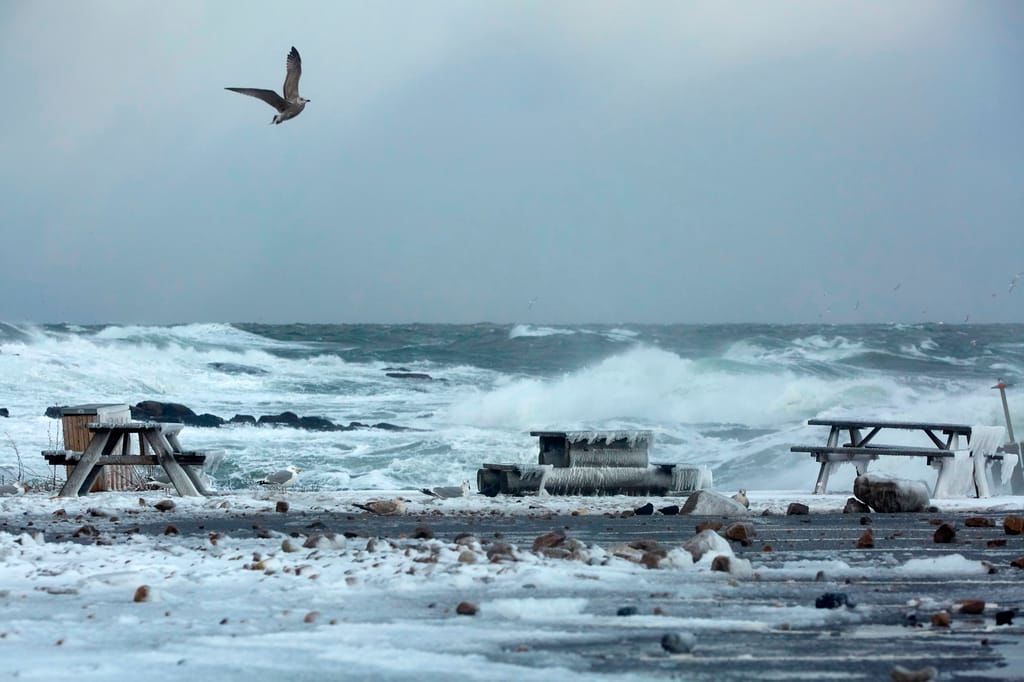 Snow and storms near the island of Bornholm in the Baltic Sea, where the Nord Stream pipeline leaked
Danish police said last week it was still “too early” to establish how Denmark, Sweden and Germany would cooperate on the investigation.
The German interior ministry said the country's attorney general had opened an investigation into the incidents. The attorney general could not be reached for comment.
Experts say that international efforts to investigate the Nord Stream blasts could still be effective even without a formal joint investigation, and Swedish authorities said this week they had made “certain seizures” during their work at the sites of the explosions, which could be a sign progress is being made.
“There’s still the opportunity to have informal talks between respective states’ governments, intelligence agencies and police agencies on findings without disclosing the sources,” said Oscar Jonsson, a researcher in war studies at the Swedish Defense University.
High alert
Countries are on high alert for other potential acts of sabotage against energy infrastructure in the Nordic region.
Sweden has already said Russia won’t be allowed access to its investigation into the Nord Stream attacks, and like other Western nations, Sweden is wary of what Russia might do next.
In an interview with POLITICO shortly before his appointment, Sweden’s new defense minister, Pål Jonson, said there is a risk that Russia could use the attack on the pipelines as a pretext to increase its navy presence closer to Sweden.
Stockholm, which applied to join NATO in May, has received assurances from existing alliance members — including the U.S. and the U.K. — that it won't be left alone to face security threats, Jonson said.
“This sabotage [of the Nord Stream pipeline] will lead to increased debate about the need to protect critical infrastructure especially on the energy side,” Jonson said, adding that the government planned to increase "resources to our intelligence community."
Tensions are also running high in Norway, where authorities last week said they had arrested six Russians suspected of flying unidentified drones over Norwegian oil and gas installations and other sensitive sites, including airports. Russia’s ambassador to Norway called the arrests “hysteria.”
Sweden, Denmark and Germany have not said when they expect their respective investigations into the Nord Stream blasts to be concluded.
Coordination among those countries and their various agencies represents a particularly difficult challenge at a time of heightened fear and mistrust, said Wegener Friis, the Danish intelligence researcher.
“Europe still has a long road ahead, if cooperation in this field is what we want. And that is an open and political question."