NI Protocol: MPs to vote on plans to ditch parts of Brexit deal
The government wants to change the NI Protocol to make it easier for some goods to flow from Great Britain to Northern Ireland.
Ahead of the vote, Foreign Secretary Liz Truss said the protocol was undermining peace in Northern Ireland.
But the EU opposes the move, saying it breaches international law.
The protocol is part of the 2019 Brexit deal and keeps Northern Ireland in the EU's single market for goods, preventing a hard border with the Republic of Ireland.
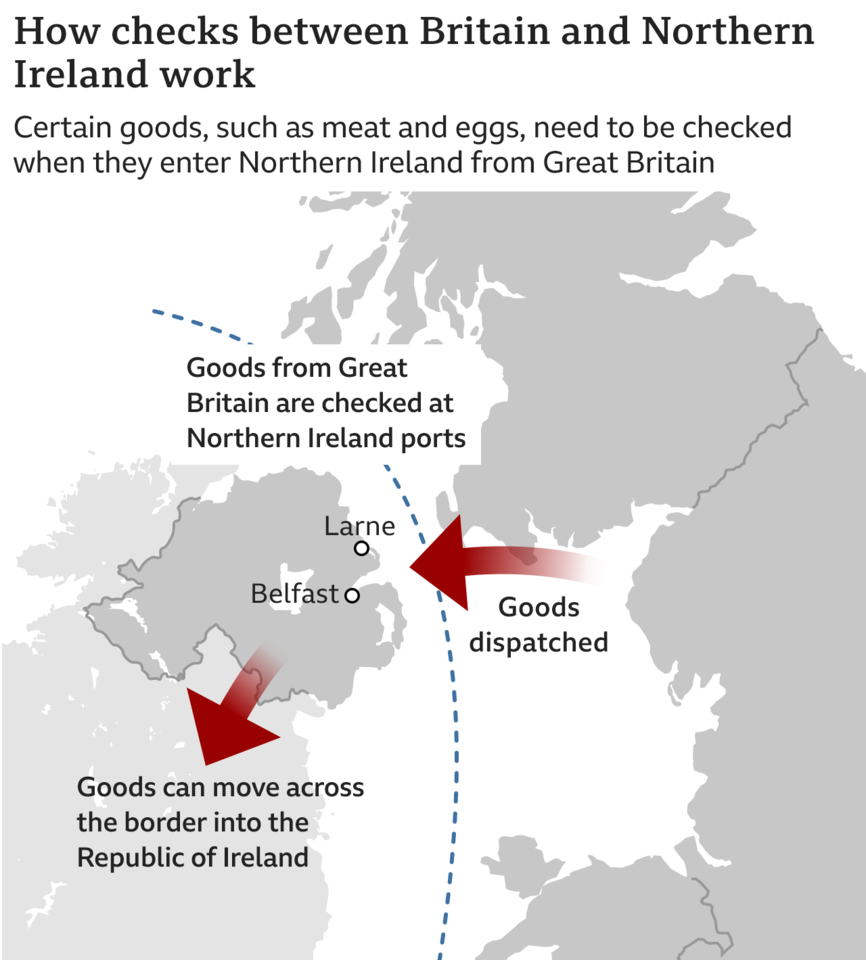
But it means checks on some items which come into Northern Ireland from other parts of the UK, creating a trade border in the Irish Sea.
The government's plans, published earlier in June, faced a fierce backlash from the EU, which launched legal action against the UK government over the legislation.
European Commission vice-president Maros Sefcovic has also indicated that further measures may follow if the bill proceeds, including a trade war between the UK and EU.
The protocol is opposed by unionists in Northern Ireland who argue it undermines Northern Ireland's place in the UK.
Sinn Féin won the most seats in May's assembly election but the Democratic Unionist Party (DUP), which came second, is refusing to re-enter a power-sharing executive until its concerns about the protocol are addressed.
Foreign Secretary Liz Truss said on Sunday night that the protocol was undermining the peace and stability secured in Northern Ireland by the Good Friday Agreement.
Three Northern Ireland parties - Sinn Féin, Alliance and the SDLP, who collectively won the most seats in May's election - say the protocol is necessary to mitigate the effects of Brexit in Northern Ireland.
What is in the Northern Ireland Protocol bill?
The UK government published plans for the bill earlier this month. At the centre of the proposal is the concept of green lanes and red lanes for trade.
This would mean:
* Goods coming from Great Britain (GB) into Northern Ireland (NI) and which are staying would use the green lane. This means there would be no checks and paperwork would be minimal
* GB goods moving through NI into Ireland or the wider European Union would use the red lane and continue to be checked at NI ports
London also wants any trade disputes resolved by "independent arbitration" and not by the European Court of Justice, and for Northern Ireland to benefit from the same tax breaks as elsewhere in the UK.
After a debate on Monday, MPs will then vote on whether the bill can proceed for further consideration.
Labour leader Sir Keir Starmer confirmed his party will vote against the legislation, adding that they would scrap the proposed laws if it was in power.
Prime Minister Boris Johnson may also face opposition from his backbenches after he overcame a vote of confidence among Conservative MPs earlier in June.

This is another big day at Westminster and one that could expose just how many problems Boris Johnson has with rebels in his own party.
Bruised from the by-election defeats last week, some may seek to punish him further by voting against the bill or abstaining.
However, according to several London sources, a large rebellion is unlikely.
Regardless, it's thought the government wants to push the bill through its remaining Commons stages before summer recess - a move that will spark strong reaction in Belfast and Brussels.
The DUP has welcomed the move but there's still some way to go before it will commit to return to power-sharing government in Northern Ireland.
Other parties, including Sinn Féin, say the bill breaks international law and are urging MPs to vote it down.
In a statement ahead of the vote, Ms Truss said: "This legislation will fix the problems the protocol has created, ensuring that goods can flow freely within the UK, while avoiding a hard border and safeguarding the EU single market.
"A negotiated solution has been and remains our preference, but the EU continues to rule out changing the protocol itself - even though it is patently causing serious problems in Northern Ireland - which therefore means we are obliged to act."
The EU has said it is unwilling to renegotiate the protocol but has offered to work on different aspects of how it is implemented.
Earlier this week, Taoiseach (Irish prime minister) Micheál Martin said the UK government's plans would be "economic vandalism" on Northern Ireland.
What is the Northern Ireland Protocol?
* The Northern Ireland Protocol is part of the Brexit deal: it means lorries don't face checkpoints when they go from Northern Ireland (in the UK) to the Republic of Ireland (in the EU)
* Instead, when goods arrive in Northern Ireland from the rest of the UK (England, Scotland and Wales), they are checked against EU rules
* The UK and the EU chose this arrangement because the Irish border is a sensitive issue due to Northern Ireland's troubled political history