London Daily

Focus on the big picture.
Sunday, Jul 19, 2026

NHS staff have lost thousands in real pay since 2011, studies find

NHS staff have lost thousands in real pay since 2011, studies find

Analyses by thinktank and GMB union show scale of cuts when pay adjusted for inflation

NHS staff in England have suffered real-terms falls in their pay of up to £2,949 over the last decade, new research by a leading health thinktank shows.

After adjusting for inflation, nurses’ and health visitors’ pay has dropped by £1,583, doctors’ by £779 and midwives’ by £1,813. However, scientific, therapeutic and technical staff have had the biggest cut – of £2,949.

The findings are contained in a Health Foundation analysis of official NHS staff earnings data covering the 10 years from March 2011 to March this year. They come amid a growing row about the government’s decision to award most NHS staff in England a 3% pay rise for this year, and the possibility that health unions may take industrial action after assessing their members’ views.

Some NHS staff have had a real-term rise in income since 2011. The Health Foundation found that ambulance staff now earn £2,767 more, while NHS infrastructure staff are on average £645 better off and those supporting clinical staff have had a tiny £63 rise.

However, overall the 1.2 million staff in hospital and community services are £462 a year worse off than they were in 2011. That reflects a decade in which most NHS personnel received either a very small annual salary rise of about 1%, or had their pay frozen.
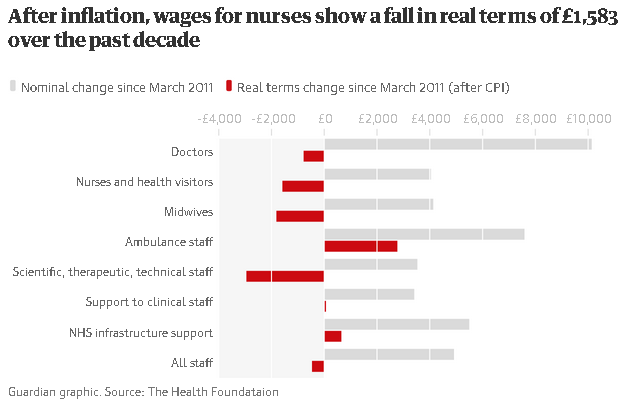

For example, the pay of nurses and midwives has risen in nominal, or headline, terms by £4,044 over the last decade, but after adjusting for inflation it fell in real terms by £1,583. The Royal College of Nursing responded to the 3% offer by warning that “the profession will not take this lying down”, and is likely to ballot its members about possible industrial action.

Similarly, while the income of doctors overall – both the 61,000 trainees and 51,000 consultants – has gone up by £10,136, after adjusting for inflation it fell by £779. For consultants alone, while their pay rose by £10,712 (11%), it is £5,537 (6%) less in real terms than in 2011.

Prof Anita Charlesworth, the thinktank’s director of research and of its Real Centre, which undertook the analysis, said: “This week’s pay offer to NHS staff is higher than originally proposed, but this comes off the back of a decade of government holding down pay to balance NHS budgets.

“After accounting for inflation, pay declines are particularly evident for nurses and health visitors, midwives, and scientific, therapeutic and technical staff. Some groups have experienced real-term increases in basic pay, notably ambulance staff (around £2,800) and infrastructure support staff (£600).”

Nihar Shembavnekar, who undertook the analysis, used the consumer prices index method of measuring inflation in his calculations. He is a former Treasury labour market economist.

Meanwhile, a separate analysis published today by the GMB union found that the pay of NHS workers in England has fallen by up to £9,000 over the last decade.

“Long-serving cleaners have had more than £1,000 pinched from their pay packet every year, 999 call handlers £3,500, nurses more than £6,000 [and] midwives more than £7,500”, the union said. It based its calculations on the retail prices index, the other way of assessing the rate of inflation.

Rehana Azam, the GMB’s national secretary, said that the union would be advising its members to reject the government’s “paltry” 3% offer.

Newsletter

Related Articles

0:00
0:00
Close
Brothers Andrew and Tristan Tate Who Turned "Toxic Masculinity" Into a Brand Arrested in Miami as Britain Seeks Their Extradition
Passenger Bound for Germany Refused to Sit Beside a Woman on a Plane — Then Slapped a Flight Attendant
Ukrainian Drone Barrage Kills Eight and Strikes Russian Logistics Network
Key Trends to Watch
Financial Conduct Authority Warns Cloud and Digital Risks Are Becoming a Financial Priority
Jeffrey Donaldson Appeals Sexual Abuse Conviction as Democratic Unionist Party Opens Review
Welsh Health Authorities Launch Emergency Meningitis Vaccination Programme for Students
Scottish Business Activity Falls for Third Month as Companies Face Rising Costs
Bank of England Regulators Demand Better Access to Digital Banking Services
United Kingdom Cuts Bilateral Aid to Several African Countries by Up to Ninety Per Cent
United Kingdom Introduces Tougher Deportation Rules After Rochdale Exploitation Scandal
NHS England Launches Wearable Technology Plan to Reduce Sepsis Deaths
Amazon Web Services Billing Error Sends Trillion-Dollar Invoices to British Companies
Bank of England Takes Direct Regulatory Role Over Major Global Cloud Providers
Extreme Summer Heat Drives Record Fire Risk and Rising Deaths Across Britain
United Kingdom Nationalisation of British Steel Sparks Diplomatic Dispute With China
United Kingdom Economy Shows Weak Growth Ahead of Major Autumn Budget
Andy Burnham Set to Become United Kingdom Prime Minister After Labour Leadership Victory
The Ten World Cup Finals That Defined Football History
Smartphones Are Getting More Expensive, Sales Are Collapsing, and Even Apple Admits: "Prices Will Rise"
The Monaco Bombing Has Become a Test of Ukraine’s Intelligence Accountability
Leadership Change and Strategic Rivalry Redraw the Political Map
Energy Risk, Uneven Growth and the New Geography of Global Capital
The AI Race Enters Its Infrastructure Era
Security and resilience remain long-term national priorities
Britain balances growth ambitions with public finance pressures
Regional devolution becomes a defining theme of the next Labour era
Industrial strategy returns to the centre of British economic policy
Political Instability Remains a Challenge for UK Investment Confidence
Brexit Economic Debate Continues as Public Concerns Over Long-Term Impact Remain
UK Climate Risks Rise as Met Office Warns Extreme Weather Is Becoming More Common
Housing Shortages and Regional Inequality Become Key Priorities Under Incoming Labour Leadership
National Health Service Reform Remains One of Britain’s Biggest Political Challenges
Bank of England Remains at Centre of UK Economic Debate Over Inflation and Growth
UK Economy Shows Recovery Signs but Households and Businesses Remain Under Pressure
Britain Deepens European Defence Cooperation as NATO Allies Seek Stronger Security Capabilities
United Kingdom Expands Sanctions Against Russian Cyber Networks Over Security Threats
UK Industrial Strategy Faces Test After Government Takes Control of British Steel
British Businesses Seek Policy Clarity as Andy Burnham Prepares to Lead Labour Government
Andy Burnham’s Labour Leadership Signals Major Shift Toward Regional Power and Devolution
British Steel Nationalisation Creates New UK-China Tensions Over Control of Strategic Industry
For 36 Years, He Scammed About 300 Luxury Hotels — Until He Was Caught
England's World Cup Exit Expected to Cost Hospitality and Retail £334 Million
Former ICC Prosecutor Aide Speaks Publicly About Allegations Against Karim Khan
Opposition Raises Questions Over June Heatwave Power Grid Pressures
Mastercard Explores Sale of Majority Stake in UK Payments Operator Vocalink
Boeing Forecasts Global Commercial Aircraft Fleet Will Double by 2045
London GP Surgeries Receive £18 Million to Expand Primary Care Capacity
Health Advisers Recommend Nationwide Meningitis B Vaccination for Teenagers
OECD Warns UK Economy Faces Slower Growth and Weak Productivity
×