London Daily

Focus on the big picture.
Saturday, Jun 20, 2026

Nazanin Zaghari-Ratcliffe: Why has she been freed now?

Nazanin Zaghari-Ratcliffe: Why has she been freed now?

It is almost six years since Nazanin Zaghari-Ratcliffe was first detained by the Iranian authorities in April 2016.

Since then there were repeated attempts to secure her release - all failed. So why is she now on her way home?

The basic answer is London-Tehran relations are better than they have been.

The International Revolutionary Guard and Iran's judiciary no longer feel they need Mrs Zaghari-Ratcliffe for leverage in relations with the UK.

She was a diplomatic pawn held hostage by the Iranian authorities to put pressure on London.

If Tehran wanted to make nice, they would treat her well, give her access to medical help, perhaps increase the frequency of visits, possibly even allow her a temporary furlough from jail.

If Tehran wanted to exert pressure on London, then her conditions might worsen and privileges might be withdrawn.

Paying debt 'a huge difference'


The UK paying the historic £400m debt for tanks sold but not delivered will have made a huge difference.

For years, the Foreign, Commonwealth and Development Office (FCDO) claimed the two issues were not connected. But in practice, the Iranians made them one and the same issue.

Some in the FCDO had wanted to pay the debt but were prevented initially by reluctance within the Treasury and the United States, fearing it would reward hostage-taking and even fund terrorism.

There were also fears the US would penalise any British financial institution that paid the money to the Iranian defence ministry in breach of international sanctions.

There is also the sheer relentlessness of the families' campaigning and the UK's diplomacy.

At first there were mistakes, such as Boris Johnson's false claim that Mrs Zaghari-Ratcliffe had been training journalists in Iran, a claim that prompted Iran to level fresh charges.
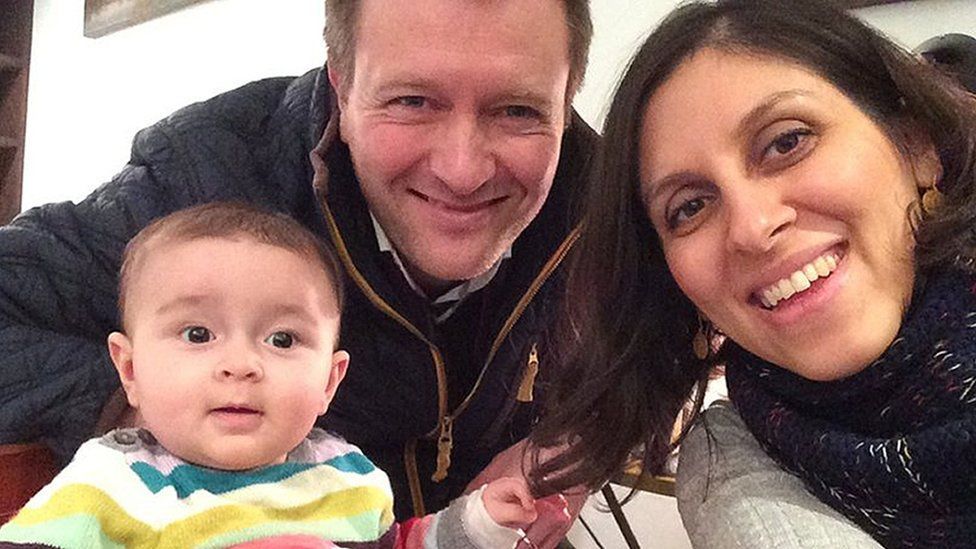
Nazanin Zaghari-Ratcliffe (right), pictured with her husband Richard and daughter Gabriella, who is now seven, was first detained by Iranian authorities in April 2016.


But the tireless campaigning by Nazanin's husband, Richard Ratcliffe, and others kept up the pressure on the UK government.

And that was reflected by the work of British diplomats behind the scenes, refusing to let Iran forget about the case.

There was almost a deal to release the detainees last year. It fell through. But since then British diplomats have visited Iran several times to try to reach a fresh agreement.

Iranian officials at their Ministry of Foreign Affairs were frequently frustrated that this dispute got in the way of the rest of the UK-Iran relationship.
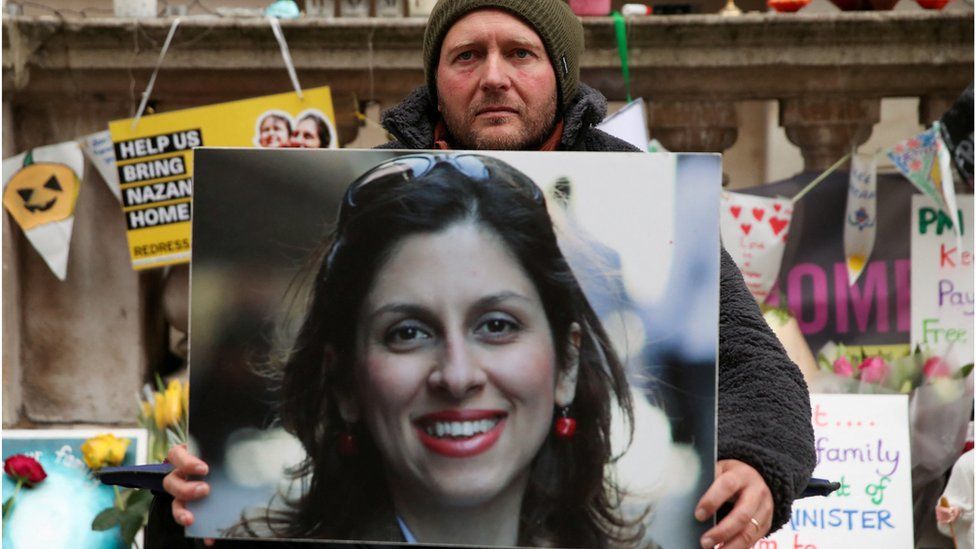
Mr Ratcliffe campaigned for his wife's release, including by going on hunger strike outside the Foreign, Commonwealth and Development Office last October.


But the Iranian diplomats were not in charge - the IRGC and the judges were.

Eventually, enough people with the Iranian government seemed to have realised that a permanently hostile relationship with the UK was not in Tehran's best interests.

That might apply directly to the talks taking place in Vienna, designed to revive the agreement under which Iran limited its nuclear activities in return for seeing economic sanctions lifted.

A new deal?


Iran's economy has been suffering, Iran clearly wants to agree a new deal, better relations with the UK might make that happen.

The deal has still not been agreed but diplomats say agreement is getting close.

And in recent weeks, during the Ukraine conflict, Britain and Iran's interests have also come closer together.

If sanctions can be lifted and Iran can start selling its oil again, that could help reduce global energy prices.

That is in the interests of both the UK and Iran. In that context, both sides might want to clear the diplomatic decks and make a deal more likely.

Newsletter

Related Articles

0:00
0:00
Close
Long-Term Economic and Political Effects of Brexit Continue to Shape UK Policymaking
Digital Disinformation Emerges as a Growing National Security Challenge in the United Kingdom
Britain's Dependence on Global Energy Routes Drives Push for More Resilient Supply Chains
Rising Energy Costs Continue to Threaten Britain's Cost-of-Living Recovery
Concerns Grow Over Far-Right Organizing and AI-Driven Online Radicalization in Britain
UK-Led Global Partnerships Conference Calls for Reform of International Development Finance
Middle East Tensions Continue to Weigh on UK Business Confidence
Reports of Middle East Peace Deal Ease Pressure on UK Energy Prices
UK Warns Middle East Conflict Could Worsen Global Food Insecurity
UK Economy Loses Momentum After Strong Start to 2026
Bank of England Holds Interest Rates at 3.75% Despite Easing Inflation
Brexit's Legacy Remains Deeply Divisive Ten Years After the UK Voted to Leave the European Union
International Anti-War Conference Opens in London as Debate Over European Rearmament Intensifies
UK Health Authorities Introduce Drug Price Concessions Amid Record NHS Medicine Shortages
Sir David Attenborough Supports Sherwood Forest Conservation Efforts After Loss of Major Oak
Aardman Animations Marks 50 Years With Major Exhibition in Bristol
Drax Cleared After Investigation Into Wood Pellet Sourcing Practices
Jaguar Land Rover Shifts Toward Hybrid Vehicle Production for US Export Strategy
UK Police Arrest Liberal Democrat MP Cameron Thomas on Suspicion of Assault
Health Concerns Grow Over Elevated Kidney Cancer Rates Near Lancashire PFAS Factory
Royal Navy F-35 Jets Conduct First NATO Air Warfare Exercise from Finnish Airspace
UK NHS Issues Price Concessions for Medicines Amid Severe Drug Shortages
Heathrow Third Runway Project Faces Sharp Downward Revision in Expected Economic Benefits
Amber Heat Warning Issued Across Parts of England and Wales as Temperatures Rise
Train Collision Near Bedford Disrupts UK Rail Network and Leaves Multiple Injured
Bank of England Data Suggests Brexit Has Reduced UK Economic Output by Around Six Percent
UK Borrowing Costs Hold Near 4.8 Percent as Political Uncertainty Fuels Market Pressure
Andy Burnham Emerges as Front-Runner to Succeed Keir Starmer After Landslide Makerfield Victory
Prime Minister Keir Starmer Faces Mounting Pressure to Resign After Labour By-Election Defeat in Makerfield
Payment Fraud Losses Reach £1.28 Billion and Raise National Security Concerns
Lending to Small Businesses Climbs to Highest Level Since Late 2024
Middle East Conflict Clouds UK Economic Recovery Despite Strong First-Quarter Growth
Bank of England Moves to Simplify Capital Rules for Smaller Lenders
UK Government Fast-Tracks National Security and Cyber Resilience Legislation
Ofcom Investigates Telegram Over Alleged Role in Organising Arson Attacks
MPs Press Fujitsu to Speed Compensation for Post Office Horizon Victims
Bank of England Delays Final Basel III Implementation Changes to Support UK Banking Competitiveness
Pound Falls as Political Uncertainty and Bank of England Signals Weigh on Markets
0Andy Burnham Wins Makerfield By-Election and Emerges as Main Challenger to Keir Starmer
Dorset Council Tests AI Tools to Streamline Local Planning Applications
UK Researchers at Kew Gardens Use AI to Speed Up Identification of Threatened Plant Species
UK Gilt Yields Ease Toward 4.8% as Inflation and Labour Market Data Weigh on Bonds
Bank of England Data Shows Resilient SME Lending Despite Economic Slowdown
UK Finance Reports Weakening Services Activity as Business Confidence Softens
UK Introduces Mandatory Internal Complaints Process Under Data Use and Access Act
Bank of England Governor Andrew Bailey Flags Geopolitical Uncertainty as Key Risk to Inflation Outlook
Bank of England Holds Interest Rates at 3.75% as Policymakers Signal Cautious Stance on Inflation Risks
Cornwall Clergy Raise £40,000 for Church Repairs Through Everest-Themed Charity Challenge
UK Business and Social Landscape Reflects Strain From Geopolitical and Domestic Pressures
Tensions Grow in UK Over Sikh Kirpan and Religious Symbolism in Public Debate
×